What if the secret to a high-value kitchen isn’t a sledgehammer, but a precision spray gun? Many homeowners assume that achieving a designer look requires a $20,000 gut renovation; however, market data from January 18, 2026, shows that professional updates can be achieved for a fraction of that cost, typically ranging from $100 to $150 per door. It’s common to feel paralyzed by the fear of picking transitional kitchen cabinet colors that could look dated in two years or clash with your existing stone. You want a space that feels fresh today and remains stylish through 2030.
Serving Lakewood, CO, Littleton, CO, Golden, CO, Roxborough Park CO. Ken Carl Ranch CO, Washington Park Area,
Cabinet Painting Service Areas in Denver & Surrounding Cities, Cabinet Refinishing in Denver County,
Arvada, CO, Wheat Ridge, CO,
and Castle Pines CO. Englewood CO. Centennial CO.
Cabinet Painting in Arapahoe County, CO
Including Centennial, CO, Greenwood Village, CO,
Cherry Hills Village, CO,
and Aurora, CO.
Cabinet Painting in Adams County & Broomfield, CO
Cabinet Painting Service Areas in Denver & Surrounding Cities, Cabinet Refinishing in Denver County,
Serving Lakewood, CO, Littleton, CO, Golden, CO, Roxborough Park CO. Ken Carl Ranch CO, Washington Park Area,
Arvada, CO, Wheat Ridge, CO,
and Castle Pines CO. Englewood CO. Centennial CO.
Cabinet Painting in Arapahoe County, CO
Including Centennial, CO, Greenwood Village, CO,
Cherry Hills Village, CO,
and Aurora, CO.
Cabinet Painting in Adams County & Broomfield, CO
We agree that your home should be a timeless sanctuary rather than a source of renovation anxiety. This guide will help you discover the perfect balance of modern and traditional with the top transitional cabinet color palettes and expert selection tips for your 2026 kitchen refresh. You’ll learn how to master warm neutrals, understand how high-altitude sunlight affects your paint, and see why a factory-smooth finish is the key to a cohesive, high-value design.
Key Takeaways
- Learn why “Greige” serves as the foundational shade for the transitional movement by blending classic warmth with modern sleekness.
- Identify the top transitional kitchen cabinet colors for 2026, including creamy off-whites and earthy tones like mushroom and warm stone.
- Discover how to identify hidden pink or blue undertones and how Denver’s high-altitude sunlight can dramatically shift your paint’s appearance.
- Choose the right finish between satin and semi-gloss while understanding how specific LED bulb temperatures (3000K vs 4000K) alter your final look.
- Understand why professional spray application is the only way to achieve the smooth, factory-quality finish required for a truly transitional aesthetic.
Table of Contents
What defines transitional kitchen cabinet colors?
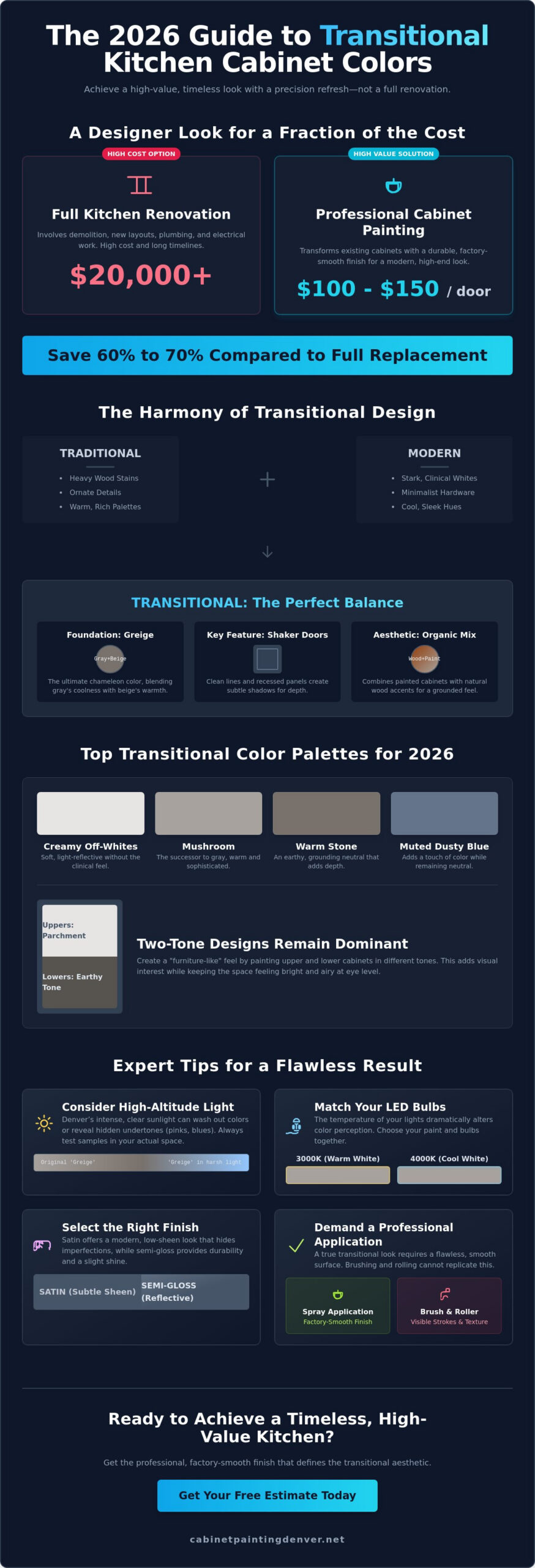
Transitional style isn’t just a safe middle ground between old and new; it’s a deliberate tension between warm traditional textures and cool modern hues. While traditional kitchens rely on heavy stains and ornate details, and modern spaces lean toward stark, clinical whites, transitional kitchen cabinet colors find harmony in the "in-between." This aesthetic allows you to keep the architectural soul of your home while introducing the clean, airy feeling of a contemporary remodel. To understand the roots of this movement, it helps to look at the broader definition of What is Transitional Style? and how it prioritizes comfort through a neutral, cohesive palette.
The foundation of this movement is "Greige," a sophisticated blend of gray and beige that adapts to its surroundings. In a kitchen with traditional crown molding but modern, flat-panel hardware, a greige palette bridges the gap by providing enough warmth to feel inviting and enough coolness to look current. It’s the ultimate chameleon color. Because it shifts with the light, it prevents the space from feeling too "one-note," which is a common pitfall in strictly modern designs.
To better understand how these colors translate into real-world design, watch this helpful video on upcoming trends:
For Denver homeowners, choosing these balanced tones is a strategic financial move. As of March 9, 2026, professional Kitchen Cabinet Painting in the metro area can save you 60% to 70% compared to the $10,000 to $25,000 cost of full replacement. By selecting transitional kitchen cabinet colors, you ensure your investment appeals to the widest possible pool of buyers. These shades don’t scream for attention, which helps them survive the 10-year trend cycle that often leaves "ultra-trendy" kitchens looking dated within 24 months.
The psychology of the transitional palette
The success of a transitional space relies on organic balance. This often means mixing painted surfaces with natural wood accents, like a walnut island paired with creamy mushroom perimeter cabinets. This neutrality is intentional. By avoiding high-contrast "shock" colors, you create a calm environment that feels grounded. It’s about longevity; you’re selecting shades that feel as relevant in 2036 as they do in 2026.
Clean lines vs. color depth
Shaker-style doors are the hallmark of transitional design because their recessed panels create subtle shadows. When you apply muted tones like dusty blue or warm stone, these shadows add depth without the need for the heavy glazes popular in the early 2000s. These colors react beautifully to both natural sunlight and modern LED fixtures. Transitional colors are the bridge between 1990s oak and 2020s minimalism. By focusing on "muted" versions of popular colors, you achieve a sophisticated look that feels expensive and custom-made.
Top transitional cabinet color palettes for 2026
Stark white is losing its grip on the market. In its place, creamy off-whites are providing the soft, light-reflective quality homeowners crave without the clinical feel of a hospital room. These "new neutrals" serve as the perfect backdrop for transitional kitchen cabinet colors because they play well with both vintage brass hardware and modern stainless steel appliances. By May 2026, the shift toward "warmth" has become the defining characteristic of high-end Denver kitchen refreshes. This isn’t just a matter of preference; it’s about balancing warm vs. cool tones to create a space that feels both expansive and cozy.
Two-tone designs remain a dominant strategy for adding visual interest without overwhelming the room. A popular 2026 configuration involves painting upper cabinets in a light parchment shade while grounding the space with a deep, earthy tone on the lower cabinets or the island. This approach creates a "furniture-like" feel that is a hallmark of the transitional style. It allows you to experiment with bolder colors while keeping the overall atmosphere bright and airy at eye level.
The mushroom and taupe revolution
Mushroom is officially the 2026 successor to the cool, blue-based grays that dominated the 2010s. This earthy blend of gray and brown offers a "stone-inspired" depth that feels sophisticated and expensive. When you pair mushroom cabinets with matte black or oil-rubbed bronze hardware, you achieve a timeless look that masks everyday wear and tear better than traditional white. These shades are particularly effective in Colorado homes, where the intense high-altitude sun can make cooler grays look icy or flat. Choosing a taupe with a warm undertone ensures your kitchen feels inviting even during the snowy winter months.
Deep blues and greens in a transitional context
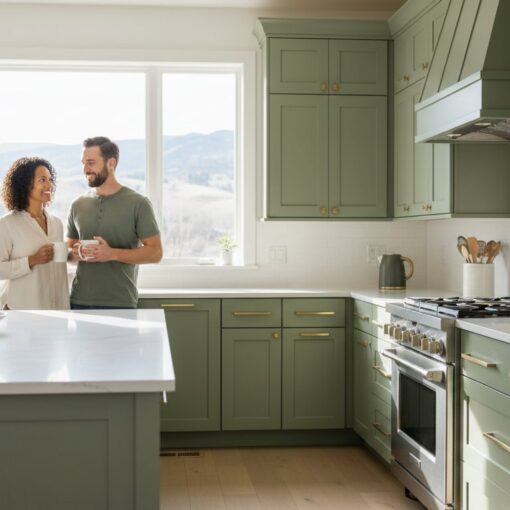
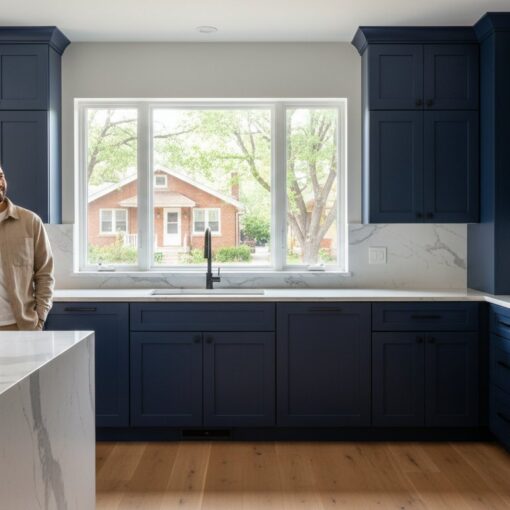
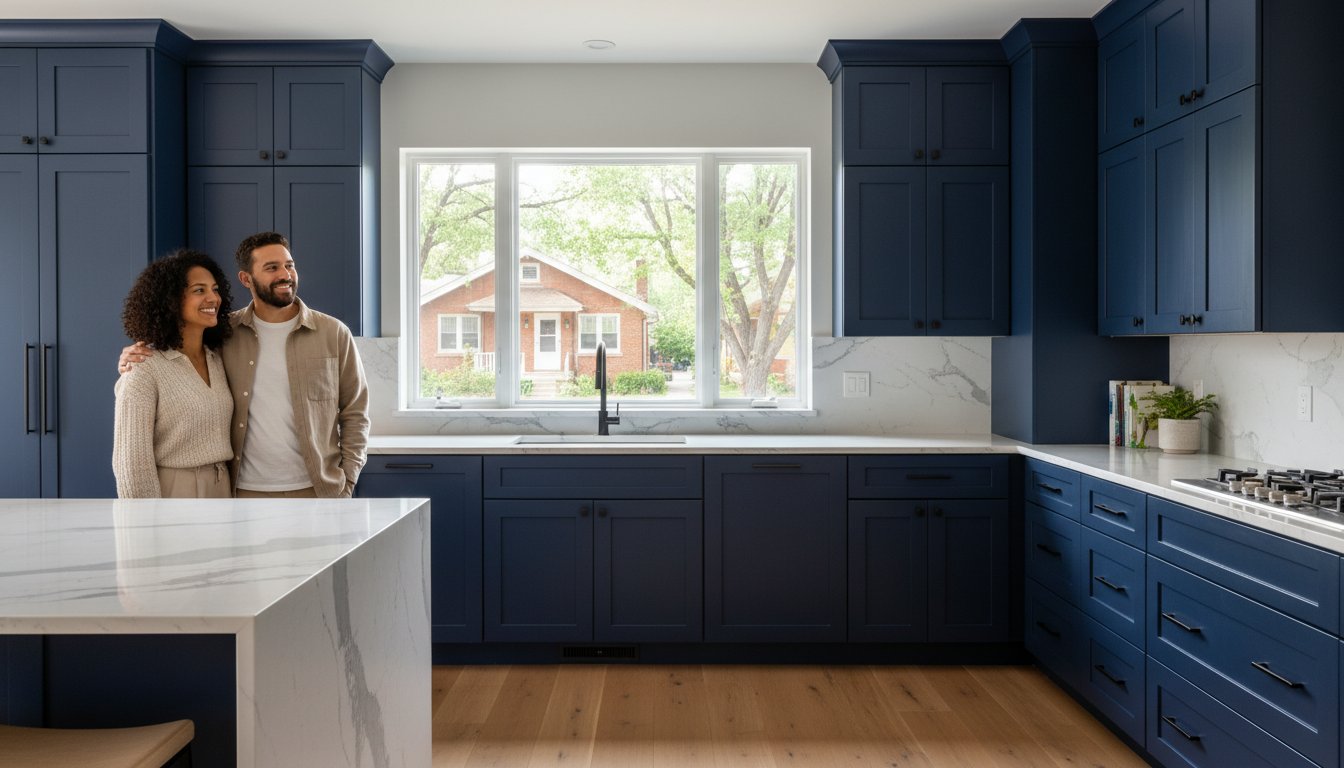
Moody accents like navy and forest green have evolved into "new neutrals." These colors provide a rich contrast to traditional oak or walnut flooring without clashing. In a transitional space, these are often used as "near-blacks"—shades so dark they only reveal their true pigment under direct light. Sage and muted olive greens are also trending, as they bring the Denver outdoors inside, creating a connection to nature that feels grounded and calm. If you’re struggling to decide which deep hue won’t make your space feel cramped, a consultation for professional cabinet painting can help you sample these complex tones in your specific lighting environment.
Using these darker colors as accents on a kitchen island or a built-in pantry adds a layer of "custom" design that significantly boosts home value. Because professional painting costs roughly 30% to 50% of the price of buying new custom cabinets, you can afford to be more intentional with your color story. The goal for 2026 is depth; move away from the flat, one-dimensional colors of the past and embrace the layered, organic palettes that define the modern transitional home.
Balancing warm vs. cool tones in your kitchen
Selecting the right transitional kitchen cabinet colors requires more than just picking a swatch you like at the store. You have to account for the hidden undertones that only reveal themselves once the paint is on your doors. A "white" isn’t just white; it might have a pink, blue, or yellow base that clashes with your granite. In a successful transitional space, designers often follow the "80/20 Rule." This means 80% of your kitchen should lean toward one temperature (like warm off-whites) while 20% provides a temperature contrast (like cool slate hardware) to keep the room from feeling lopsided. This balance is a core principle in any professional guide to transitional kitchen design, ensuring the space feels layered rather than flat.
Denver homeowners face a unique challenge known as the "High-Altitude Light Factor." At 5,280 feet, the UV rays are approximately 20% stronger than at sea level. This intense sunlight shifts color temperatures toward the blue end of the spectrum. A color that looks like a warm taupe in a showroom in Georgia might look like a sterile gray in a sun-drenched Washington Park kitchen. Before committing to transitional kitchen cabinet colors, it’s vital to view your samples during the 300 days of sunshine we get annually to see how the high-altitude light interacts with your specific undertones.
Your existing countertops also dictate your temperature choice. If you have traditional "busy" granite with flecks of brown and gold, you’ll need a warmer cabinet tone to create a cohesive look. Conversely, the popular white-and-gray quartz surfaces found in modern builds demand a cooler or more neutral "greige." Matching these elements ensures your kitchen looks like a deliberate design rather than a collection of mismatched parts.
Warm tones for a cozy traditional feel
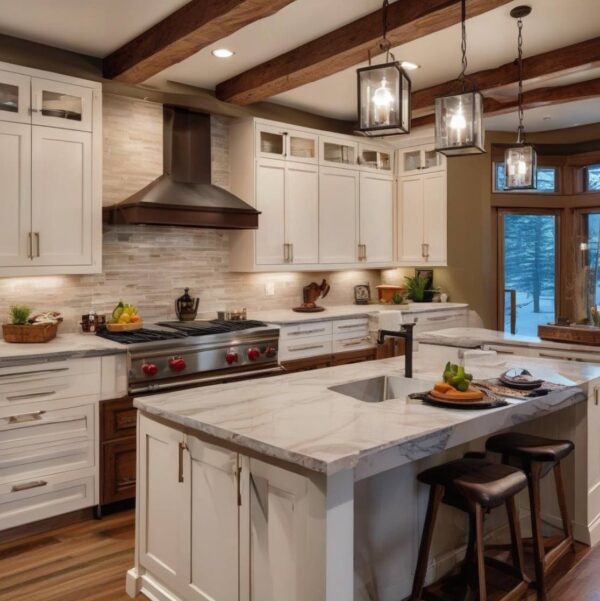
In north-facing Denver kitchens, natural light is often limited and carries a cool, bluish tint. Choosing a creamy off-white or a warm mushroom shade can counteract this "basement feel" and make the space feel cozy. These warm tones complement traditional hardwood flooring beautifully, especially medium-toned oaks or walnuts. When you pair warm cabinets with natural wood accents, you lean into the traditional side of the transitional spectrum without sacrificing a modern edge.
Cool tones for a crisp contemporary edge
Cool grays and "near-blacks" are excellent for modernizing a kitchen with heavy traditional architecture. However, you must avoid "hospital white," which can feel clinical and cold in a large space. To soften a cool palette, use matte finishes that diffuse light rather than reflecting it. Cool undertones with a hint of blue or violet can effectively neutralize the aggressive orange hues found in 1990s honey oak floors. This allows you to update your aesthetic through Kitchen Cabinet Painting without the massive expense of replacing your entire floor.
Practical tips for selecting your cabinet finish
The color you choose is only half the battle. The finish determines how that color interacts with the light in your Denver home. For transitional kitchen cabinet colors to truly pop, a factory-smooth finish is non-negotiable. Brush marks or roller textures scream "DIY," which clashes with the sophisticated, clean lines of a transitional aesthetic. Professional spraying ensures the surface is uniform, allowing the subtle nuances of your mushroom or taupe palette to shine without distraction.
Lighting is the invisible designer in your kitchen. If you use 3000K LED bulbs, which have a warm, amber glow, your creamy off-whites might look overly yellow. On the other hand, 4000K bulbs mimic daylight and provide a crisp, modern feel. However, 4000K can sometimes make warm stone colors look a bit flat. Designers in 2026 often recommend 3500K bulbs as the perfect middle ground for transitional spaces. They preserve the warmth of the wood elements while keeping the painted surfaces looking sharp and clean.
Sheen and durability considerations
Satin remains the king of transitional design for a reason. While matte finishes are gaining ground in 2026 for their high-end, soft-touch appearance, they can be harder to maintain in a busy Denver household. Satin provides a 25% to 35% sheen level. This is just enough to reflect light and make a small kitchen feel larger without the dated, plastic look of high-gloss. It’s also much easier to wipe down after a Sunday morning pancake breakfast. Keep in mind that higher sheens make colors appear slightly lighter, while matte finishes can make deep navies or forest greens look darker and more velvety.
Hardware: The jewelry of the kitchen
Hardware acts as the jewelry of your cabinets. In a transitional space, you don’t have to stick to one metal. Mixing honey bronze pulls with a polished nickel faucet creates a curated, lived-in feel that looks professionally designed. The scale of your hardware also matters. Overly large, modern bars lean the kitchen toward minimalism. Smaller, more traditional knobs pull it back toward classic roots. If you’re ready to transform your space with a factory-quality finish, consider our expert Kitchen Cabinet Painting services to ensure your hardware has a perfect, durable surface to rest on.
A well-selected finish protects your investment. Since professional painting in Denver can save you 60% to 70% compared to the $10,000 to $25,000 cost of full cabinet replacement, it’s worth getting the sheen right the first time. Whether you choose a classic satin or a trendy matte, the goal is a cohesive look that withstands the rigors of daily life while maintaining its 2026 style.
Achieving the look with professional cabinet painting in Denver
Achieving the perfect balance of transitional kitchen cabinet colors requires a surface that looks like it came straight from a high-end showroom. While a DIY brush-and-roller approach might work for a rustic farmhouse look, it often fails the transitional test. The transitional aesthetic relies on crisp, clean lines that bridge the gap between old-world charm and modern minimalism. Professional airless or HVLP spraying is the only way to eliminate the unsightly texture of brush strokes, ensuring your new mushroom or navy cabinets have the velvety, factory-smooth finish required for this style.
Success starts long before the first drop of paint touches the wood. Proper preparation is the most critical phase of any kitchen cabinet painting project. Our team meticulously degreases, sands, and primes every surface to ensure the bond is permanent. In Denver’s dry climate, where humidity levels can drop below 15% in the summer, paint can dry too quickly and crack if not applied with professional-grade equipment and specialized coatings. We use products designed to withstand the expansion and contraction common in Colorado homes, keeping your colors vibrant for years.
Choosing professional painting isn’t just a design choice; it’s a financial one. As of May 2026, homeowners in the South Denver area typically pay between $2,500 and $4,500 for a mid-size kitchen refresh. This represents a massive 70% savings compared to the $10,000 to $25,000 required for a full cabinet replacement. We’ve seen hundreds of local transformations where 1990s honey oak cabinets were turned into transitional masterpieces using muted taupes and deep charcoals, instantly boosting home resale value without the month-long construction headache.
Our process for a flawless transitional finish
To minimize disruption, we take your cabinet doors and drawer fronts to our specialized shop for off-site spraying. This controlled environment is free from dust and pet hair, allowing for a perfectly smooth, modern look. Meanwhile, we mask off your kitchen and paint the frames on-site. Once everything is cured, we handle the final re-installation and hardware alignment. This ensures every door hangs straight and every handle is perfectly centered, completing the crisp look that defines the transitional movement.
Why Denver homeowners trust us for color transformations
We understand the local nuances of Colorado architecture and the way our unique high-altitude light shifts color temperatures. Whether you’re in a historic bungalow in Highland or a modern build in Cherry Creek, we help you select transitional kitchen cabinet colors that work with your specific floor plan. You can browse our cabinet painting Denver gallery for inspiration and see real-world examples of our work. Ready for a change? Get your free cabinet painting quote today and start your journey toward a timeless, 2026-ready kitchen.
Start Your 2026 Kitchen Transformation Today
Choosing the right transitional kitchen cabinet colors is about more than just following a trend; it’s about creating a home that feels balanced and enduring. You now understand how to navigate the shift toward warm neutrals and why Denver’s 5,280-foot altitude requires careful attention to paint undertones. By pairing these sophisticated palettes with a professional spray finish, you can achieve a factory-quality look that increases your home value without the $25,000 cost of full replacement documented by industry experts on March 9, 2026.
As a locally owned and operated Denver business, we take pride in helping our neighbors revitalize their spaces. Every project includes an expert color consultation to help you finalize your palette with confidence. We’re ready to provide the durable, smooth finish your cabinets deserve, ensuring your kitchen refresh looks flawless under the intense Colorado sun. We don’t just paint; we transform the heart of your home.
Get Your Free Denver Cabinet Painting Quote and take the first step toward a kitchen that stays stylish for the next decade. Your home’s next chapter starts with the perfect color choice and a finish that lasts.
Frequently Asked Questions
What is the most popular transitional cabinet color for 2026?
Mushroom and warm taupe have overtaken stark white as the most popular choices for 2026. These shades provide the warmth homeowners want without the heavy feel of traditional wood stains. By opting for these transitional kitchen cabinet colors, you create a space that feels grounded and high-end. Current design data indicates that a majority of new refreshes now favor these earthy, nature-inspired neutrals over the cooler grays of the previous decade.
Can I use transitional colors in a small kitchen without making it feel cramped?
You can absolutely use transitional palettes in small kitchens by focusing on light-reflective "new neutrals" like parchment or soft greige. These colors prevent a cramped feeling while adding more character than a basic white. Using a satin finish helps bounce light around the room, which is particularly effective in smaller Denver condos or bungalows where natural light might be limited to a single window.
How do I know if my kitchen style is traditional or transitional?
Your kitchen is likely transitional if it features Shaker-style doors and clean lines but lacks the heavy carvings of traditional design. Traditional styles often rely on deep wood stains and ornate crown molding. Transitional design acts as a bridge, combining those classic architectural elements with contemporary, solid-color finishes and streamlined hardware for a look that feels both timeless and updated.
Do transitional cabinet colors work with granite countertops?
Transitional colors are specifically designed to work with the varied tones found in granite and quartz countertops. If your granite has brown or gold flecks, a warm mushroom or creamy off-white will pull those colors together for a cohesive look. This versatility is why transitional kitchen cabinet colors are the top choice for 2026 refreshes, as they allow homeowners to update their look without the cost of replacing expensive stone surfaces.
Is it better to paint or refinish cabinets for a transitional look?
Choosing Kitchen Cabinet Painting is the best way to achieve the smooth, opaque finish required for a transitional aesthetic. While some consider refinishing, that process often focuses on restoring wood grain which can lean too traditional. A professional spray application provides the clean, factory look that defines modern transitional style. It’s a cost-effective alternative that saves homeowners 60% to 70% compared to full cabinet replacement.
What hardware finish looks best with greige transitional cabinets?
Honey bronze and matte black are the standout hardware finishes for greige transitional cabinets in 2026. Honey bronze adds a touch of traditional warmth that prevents the gray tones from feeling too cold. Matte black provides a sharp, contemporary contrast that emphasizes the clean lines of Shaker doors. Mixing these metals, such as using bronze for pulls and black for the faucet, creates a curated, designer-level appearance.
How long does professional cabinet painting take in Denver?
A standard professional project in the Denver area typically takes between 3 to 5 business days to complete. This timeline includes the off-site spraying of doors and the on-site preparation of cabinet frames. Because we utilize specialized drying equipment and our high-altitude climate naturally aids in faster evaporation, you can return to using your kitchen much sooner than with traditional brush-applied methods.
Will painting my cabinets increase my home’s resale value in Colorado?
Painting your cabinets is one of the highest ROI improvements for Colorado homes. According to 2026 market trends, a professional finish can increase home value by thousands while costing only 30% to 50% of a custom cabinet installation. In competitive markets like Denver or Boulder, a fresh, transitional look makes your property stand out to buyers who want a move-in-ready, modern aesthetic without the wait of a full remodel.