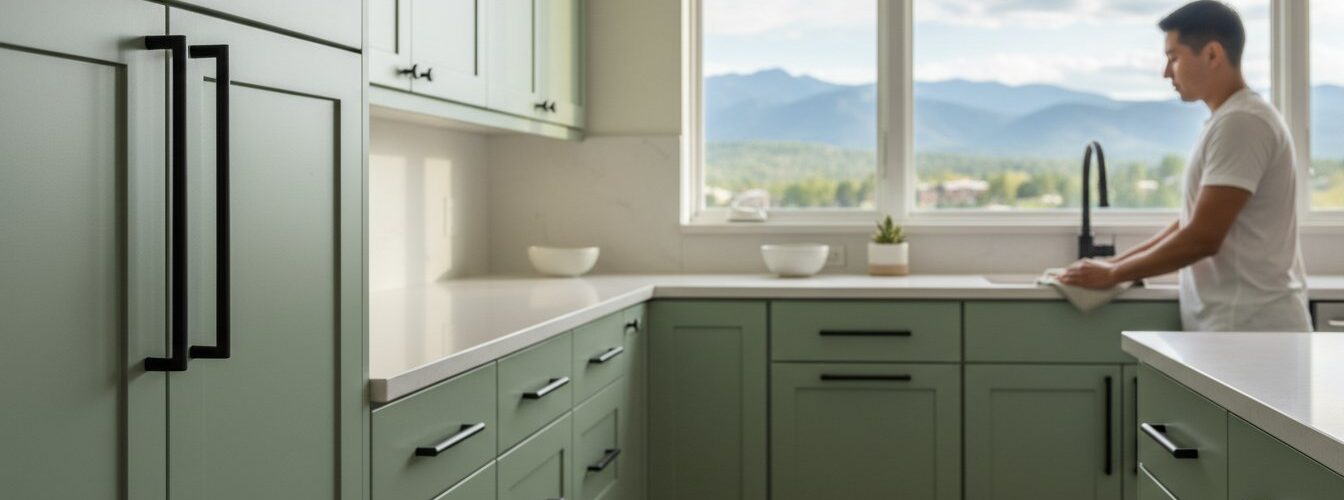
Did you know that 60% of DIY cabinet projects show visible signs of chipping or peeling within just 18 months? This high failure rate creates a valid concern for homeowners who want to ensure their investment provides long term value rather than a temporary aesthetic change. It’s common to feel uncertain about the durability of a painted surface when faced with daily kitchen activity and routine cleaning requirements.
Serving Lakewood, CO, Littleton, CO, Golden, CO, Roxborough Park CO. Ken Carl Ranch CO, Washington Park Area,
Cabinet Painting Service Areas in Denver & Surrounding Cities, Cabinet Refinishing in Denver County,
Arvada, CO, Wheat Ridge, CO,
and Castle Pines CO. Englewood CO. Centennial CO.
Cabinet Painting in Arapahoe County, CO
Including Centennial, CO, Greenwood Village, CO,
Cherry Hills Village, CO,
and Aurora, CO.
Cabinet Painting in Adams County & Broomfield, CO
This guide provides a transparent look at how long do painted cabinets last and outlines the professional standards required for a finish to exceed a decade of use. You’ll learn the technical differences between amateur attempts and professional Kitchen Cabinet Painting, including the impact of industrial spraying and proper cure cycles. We’ll also detail the specific maintenance protocols for Bathroom Cabinet Painting and Bookshelves cabinet painting to ensure your surfaces remain functional and visually consistent for years to come.
Key Takeaways
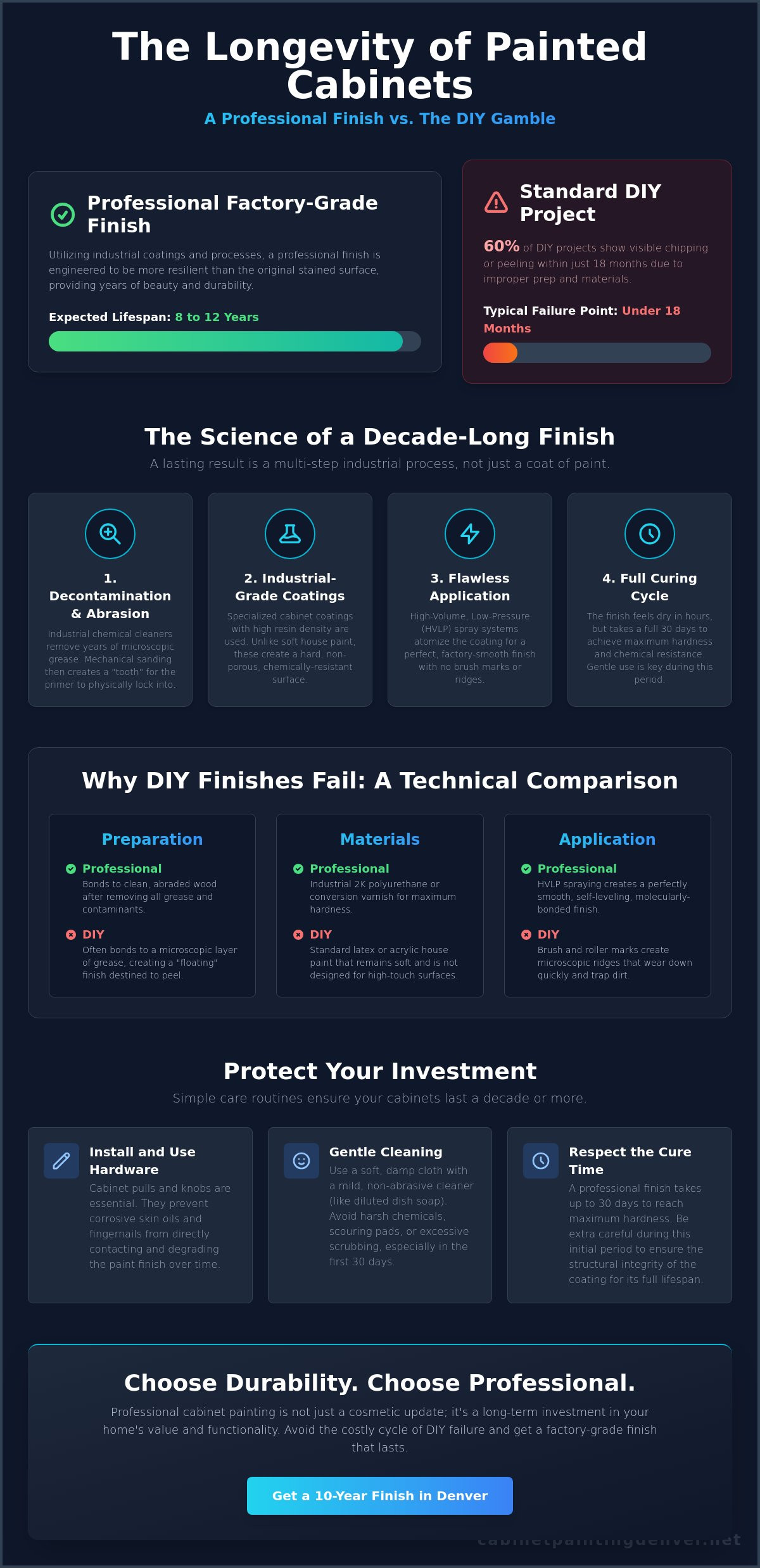
- Understand how long do painted cabinets last by distinguishing between standard DIY applications and professional factory-grade finishes that endure for 8 to 12 years.
- Identify why standard house paints fail on cabinetry and why specialized industrial-grade coatings are required for a lasting result.
- Learn how installing proper hardware protects your Kitchen Cabinet Painting by preventing skin oils from damaging the finish.
- Discover the specific maintenance protocols and humidity requirements necessary to preserve professional Bathroom Cabinet Painting and Bookshelves cabinet painting.
- Evaluate the cost-per-year benefits of professional painting versus full replacement to maximize your home improvement budget.
Table of Contents
-
Understanding the Lifespan of Professionally Painted Cabinets
-
Why Professional Cabinet Painting in Denver is a Long-Term Investment
Understanding the Lifespan of Professionally Painted Cabinets
Determining how long do painted cabinets last depends on the technical execution of the project. The industry standard for professional cabinet coatings is a lifespan of 8 to 12 years. Many homeowners mistakenly believe that adding color to wood makes it fragile. In reality, a factory-grade finish is often more resilient than the original stained surface. The longevity depends heavily on the substrate. Dense hardwoods like maple provide a stable base, while oak requires specific grain-filling techniques to ensure the finish doesn’t settle unevenly over time. High-quality MDF is also an excellent candidate for Kitchen Cabinet Painting because it doesn’t expand and contract as much as solid wood.
To understand the technical requirements of a lasting finish, one must look at The Science of Durability. Professional coatings rely on high-performance binders and resins that create a hard, non-porous surface. This is distinct from standard wall paint, which remains soft and susceptible to hand oils. Proper chemical bonding ensures that the finish resists the heat and humidity common in active households.
To better understand this concept, watch this helpful video:
Professional Spraying vs. DIY Brushing
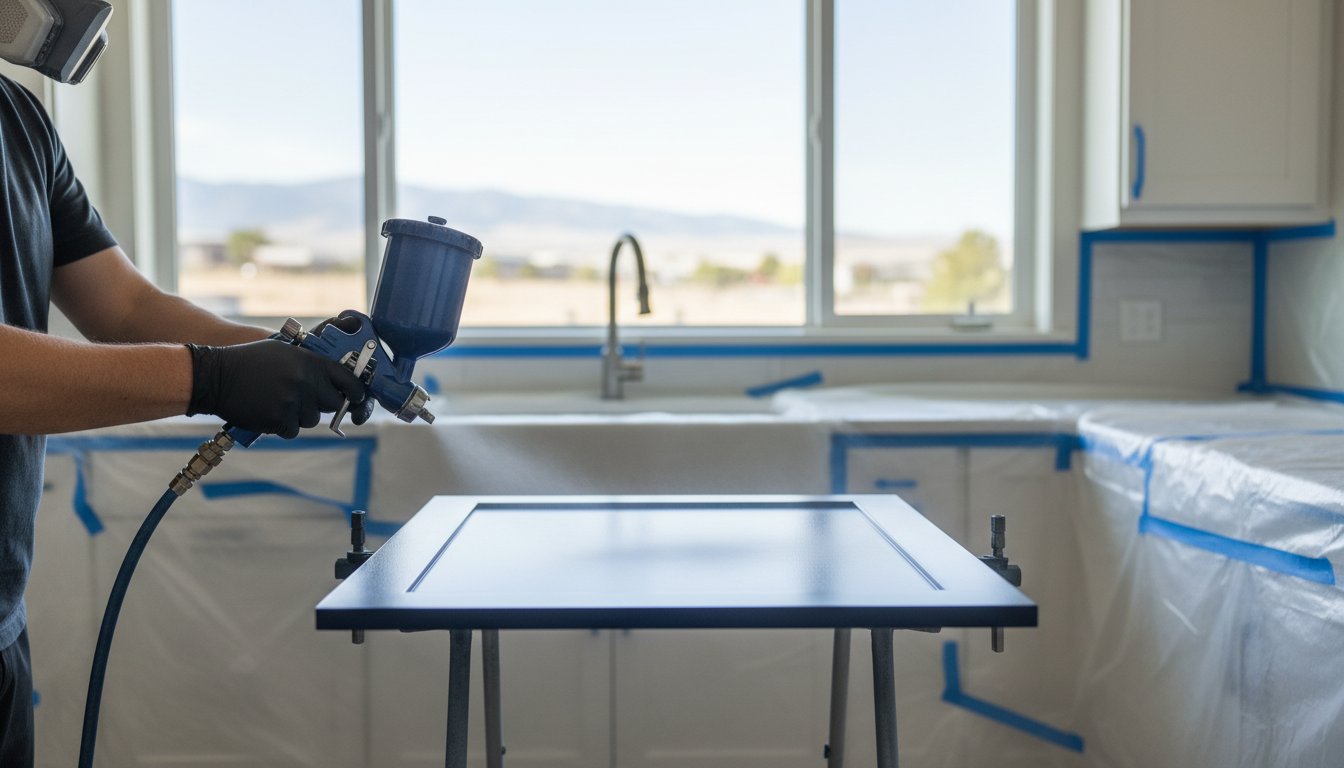
DIY projects often fail because brush and roller marks create microscopic ridges. These high points are the first to wear down, while the valleys trap grease and moisture. Professional Kitchen Cabinet Painting utilizes High-Volume Low-Pressure (HVLP) systems to atomize the coating. This process creates a mechanical bond that integrates with the wood fibers rather than just sitting on top of them. Professional coatings are formulated with self-leveling properties that allow the wet film to flatten into a perfectly smooth, tension-free surface before it dries.
The 8-10 Year Benchmark: What to Expect
A professional finish follows a predictable aging curve. During the first five years, the coating should remain pristine with regular cleaning. Around year eight, you might notice slight wear in high-friction areas, such as the edges of the trash pull-out or the undersides of handles. Professional primers are essential here; they block tannins from seeping through the paint film and causing yellowing over the years.
Whether you are investing in Bathroom Cabinet Painting or Bookshelves cabinet painting, the first 30 days are the most important. While the surface feels dry within hours, it takes weeks to reach maximum hardness. Avoiding heavy scrubbing during this window ensures the finish remains intact for its full projected lifespan. Understanding how long do painted cabinets last requires acknowledging this initial cure phase as part of the structural integrity of the project.
The Science of Durability: Why Some Finishes Fail
The question of how long do painted cabinets last often leads to a technical discussion about surface preparation. Most finish failures aren’t caused by the paint itself. They’re caused by what stays underneath the coating. Kitchens are chemically aggressive environments. Microscopic grease particles and fatty acids settle on surfaces daily. If these aren’t removed with industrial chemical cleaners before the first coat is applied, the primer will bond to the grease instead of the wood. This creates a "floating" finish that will eventually peel or chip under minor stress.
Mechanical sanding is equally vital for long term success. This process creates "tooth," which refers to a series of microscopic grooves in the substrate. These grooves provide a physical surface for the primer to lock into. Without this mechanical bond, the finish relies entirely on chemical suction. When humidity levels shift, the wood naturally expands and contracts. A suction-only bond often snaps during these cycles, leading to widespread adhesion failure. If you are considering Kitchen Cabinet Painting, ensuring your contractor follows these prep steps is the only way to guarantee a ten-year lifespan.
Industrial-Grade Coatings vs. Standard House Paint
Standard latex or acrylic house paints are designed for walls. They are flexible but remain relatively soft even after drying. Cabinetry requires high resin density to withstand thousands of touches and impacts. Professional kitchen cabinet painting utilizes catalyzed finishes or high-performance hybrids. These coatings undergo a chemical cross-linking process during the drying phase. This creates a hard, durable shell that resists skin oils and common household chemicals better than any retail-grade product.
Elasticity is another critical factor. Wood is a dynamic material. It moves with the seasons. Industrial coatings are formulated to be "long-oil" or high-flex, meaning they move with the wood without cracking. This structural integrity is a primary reason why professional finishes outlast DIY efforts by several years.
The Critical Role of Proper De-Gleaning and Priming
Simple soap and water cannot dissolve the stubborn resins and oils found in a kitchen. Professionals use specific degreasing agents to ensure the substrate is chemically clean. You can perform a "degreaser test" by applying a drop of water to the cleaned surface. If the water beads, grease is still present and the paint will not stick. Proper cleaning is the foundation of any durable Bathroom Cabinet Painting or Bookshelves cabinet painting project.
The primer acts as the essential chemical bridge. Bonding primers are engineered to stick to non-porous surfaces like factory-finished wood or laminate. They provide a stable foundation for the topcoat to adhere to. Understanding the Key Factors That Impact Longevity helps homeowners appreciate why these procedural steps are non-negotiable. The timing between coats is also critical. Every product has a specific "flash-off" time, which is the duration required for solvents to evaporate before the next layer is applied. If this window is ignored, trapped solvents will soften the finish from the inside out, preventing the surface from ever reaching its maximum rated hardness. This technical precision is what determines how long do painted cabinets last in a high-traffic home.
Key Factors That Impact Your Cabinet Finish Longevity
The environment surrounding your cabinetry dictates how long do painted cabinets last as much as the initial application. Kitchen Cabinet Painting in a high-traffic family home faces significantly different stressors than Bathroom Cabinet Painting in a guest suite. Frequent contact with household oils, constant door cycling, and proximity to heat sources create a demanding environment for any coating. Physical contact remains the primary cause of finish degradation. Fingers carry natural oils and acidic sweat that can soften even high-quality paint over time.
Installing proper hardware is a procedural requirement to Extend the Life of Your Painted Cabinets. Handles act as a physical barrier, ensuring that hands don’t touch the painted surface during daily operation. Lower cabinet faces are particularly vulnerable in homes with children or pets. These surfaces face frequent mechanical impacts and moisture from spills, requiring a finish with high impact resistance to maintain its integrity.
The Impact of Denver’s Arid Climate and UV Exposure
Regional environmental conditions play a decisive role in finish stability. Denver’s low humidity levels cause natural wood to lose moisture and shrink. This movement can lead to "bridging" cracks at the seams of five-piece doors where the center panel meets the stiles and rails. To mitigate this, cabinet painting Denver protocols require specific moisture-stable preparation to ensure the coating remains flexible enough to handle wood movement. High-altitude UV exposure is another factor. Intense Colorado sunlight can cause dark-painted islands to absorb significant heat, potentially leading to premature fading or thermal stress on the finish if the product isn’t UV-stable.
Daily Wear, Tear, and High-Touch Areas
Identifying "danger zones" allows for better long-term maintenance. Trash pull-outs and spice cabinets are the most frequently used components in a kitchen. These areas experience double the wear of standard storage units and are often the first to show signs of age. Heat and steam also pose significant risks to upper cabinets. Placing a high-heat coffee maker or a toaster directly under painted uppers can cause the finish to soften or delaminate due to constant thermal cycling.
Professional-grade clear coats serve as a sacrificial barrier in these high-stress zones. They absorb the mechanical wear and chemical exposure, protecting the pigmented layer beneath. Whether you are maintaining Bookshelves cabinet painting or a full kitchen, managing these environmental factors is essential to reaching the ten-year mark. Understanding how long do painted cabinets last involves recognizing that usage patterns directly influence the rate of wear on your surfaces.
How to Extend the Life of Your Painted Cabinets
Achieving a ten-year lifespan is a shared responsibility between the professional applicator and the homeowner. While a factory-grade finish provides the foundation, your daily maintenance protocol determines how long do painted cabinets last in a functional environment. A professionally applied coating can last 8 to 15 years, but this timeline relies on preventing mechanical and chemical stress. One of the simplest procedural requirements is the installation of high-quality felt bumpers on every door and drawer. These small pads prevent direct door-to-frame impact, which protects the edges of the finish from the repetitive stress of thousands of closures.
Environmental management is equally critical for the structural integrity of the wood. You should maintain a consistent indoor humidity level to prevent the wood from excessive swelling or shrinking. This stability protects the paint film from cracking at the joints. Additionally, you must never hang wet dish towels over painted cabinet doors. The constant moisture wicks into the wood fibers at the top edge of the door, eventually causing the finish to delaminate or bubble. If you want to ensure your investment is protected from the start, consider professional Kitchen Cabinet Painting to establish a high-performance foundation.
Proper Cleaning Protocols and Approved Products
The "Soft Touch" cleaning rule is the gold standard for 2026. You should only use a clean microfiber cloth and a mild, pH-neutral soap solution for routine maintenance. Avoid abrasive sponges, scrubbing pads, or "magic" erasers, as these contain micro-abrasives that will dull the sheen and strip the topcoat over time. Ammonia-based cleaners and vinegar are also prohibited; these substances are chemically aggressive and can break down the resin binders in the paint. When dusting intricate moldings or Bookshelves cabinet painting, use a soft-bristled brush attachment or a static duster to remove debris without scratching the surface.
Immediate Care for Spills and Moisture
Implement a "dry-wipe" rule for any liquid contact. Sinks and dishwashers are high-moisture zones where splashes occur daily. These areas require immediate attention to prevent water from sitting on the surface for extended periods. When running a dishwasher, ensure the steam vents away from the cabinet faces. If your unit lacks a front-venting system, keep the door closed until the cycle has cooled completely to avoid blasting the underside of your cabinets with high-heat vapor. For minor incidental nicks that occur during heavy use, keep a professional touch-up kit on hand to seal the wood substrate immediately. This prevents moisture from entering the wood and causing wider finish failure. Following these specific steps is the most effective way to maximize how long do painted cabinets last in your home.
Why Professional Cabinet Painting in Denver is a Long-Term Investment
Deciding to update your kitchen involves more than just selecting a color. It’s a strategic financial calculation. When homeowners ask how long do painted cabinets last, they’re really asking about the total value of their investment over time. In the competitive Denver real estate market, a factory-quality finish significantly impacts home resale value. Prospective buyers prioritize updated aesthetics that don’t require the immediate headache of a full renovation. Professional Kitchen Cabinet Painting provides this modern update while retaining the structural integrity of your original cabinetry.
Refinishing is also the environmentally responsible choice for a 2026 home. Replacing a full set of cabinets involves sending hundreds of pounds of solid wood and composite materials to local landfills. By choosing to update the existing substrate, you reduce waste while achieving a contemporary look. This sustainable approach is a core requirement for many modern homeowners who value both efficiency and procedural clarity in their home improvements. Whether you are investing in Bathroom Cabinet Painting or Bookshelves cabinet painting, the goal is a durable result that stands up to daily use for a decade or more.
Evaluating ROI Over a Decade
The cost to paint kitchen cabinets is a small fraction of the expense required for a full demolition and replacement. When you spread that initial investment over a ten-year lifespan, the annual cost of the update becomes incredibly low. Professional cabinet refinishing preserves high-quality, old-growth wood that is often structurally superior to the materials found in modern, entry-level replacement options. A professional finish doesn’t look "painted" in the traditional sense. It lacks the brush marks and uneven texture associated with amateur work, providing a smooth, durable surface that mimics the feel of new wood.
Choosing a Specialized Denver Contractor
Long-term success depends entirely on specialized expertise. You should hire a dedicated cabinet painter rather than a general house painter. General contractors often lack the controlled environment and specialized industrial coatings required for high-touch cabinetry. Ask specific questions about their spray booth configuration and the chemical composition of their primers. A transparent estimate should detail every step of the cleaning, sanding, and priming protocols. You should also verify local Denver references for projects that are at least five years old. This provides objective proof of how long do painted cabinets last when maintained under local environmental conditions. This verification ensures your project is a ten-year solution rather than a temporary fix.
Secure Your Ten-Year Kitchen Transformation
A durable cabinet finish is the result of technical precision and high-performance materials. While amateur applications often show wear within months, professional methods ensure your surfaces remain resilient against daily kitchen activity. By prioritizing industrial-grade coatings and professional HVLP spray finishing, you establish a surface that maintains its aesthetic integrity for a decade or more. This approach is equally effective for Bathroom Cabinet Painting and Bookshelves cabinet painting projects.
Success in our local climate requires an understanding of how long do painted cabinets last when exposed to low humidity and high UV levels. Professional application provides the mechanical bond necessary to prevent peeling and chipping under these specific conditions. You can achieve a factory-grade look that enhances your home value without the high cost of full replacement. Our local Denver expert service focuses on delivering these long-term results through procedural clarity and specialized equipment.
Take the first step toward a revitalized home today. Get Your Free Cabinet Painting Quote in Denver to secure a finish built for longevity. Your cabinetry deserves a professional foundation that stands the test of time.
Frequently Asked Questions
Do painted cabinets chip easily?
Professional finishes do not chip under normal household use. Chipping is usually a symptom of poor surface preparation or using standard wall paint instead of industrial-grade coatings. When a coating is applied using HVLP spray systems, it creates a mechanical bond with the wood that resists impacts. High-traffic areas remain intact if the substrate was properly degreased and sanded before the first coat was applied.
How many years will painted cabinets look new?
A professional finish typically looks new for 8 to 12 years. Determining how long do painted cabinets last depends on your maintenance habits and the quality of the initial application. Using felt bumpers and avoiding abrasive cleaners helps preserve the original sheen and prevents mechanical wear. While minor wear may appear in high-touch zones after a decade, the overall appearance remains consistent with proper care.
Can I repaint cabinets that were already painted?
You can repaint previously painted surfaces if the existing coating is stable and well-adhered. The process involves removing any failing paint and sanding the surface to create a fresh "tooth" for the new layer. This is a common requirement for Kitchen Cabinet Painting updates. If the previous layer was a DIY project using latex paint, it may require more extensive preparation to ensure the new industrial coating bonds correctly.
What is the best type of paint for long-lasting cabinets?
Water-based acrylic-alkyd hybrids and urethane enamels are the current industry standard for durability. Products like Benjamin Moore ADVANCE or Sherwin-Williams Emerald Urethane Trim Enamel provide the hardness of oil-based paints without the yellowing or high VOC levels. These coatings are specifically engineered to resist hand oils and household chemicals, making them ideal for Bathroom Cabinet Painting and other high-moisture areas.
Is it better to paint or replace cabinets for longevity?
Painting is the superior choice for longevity if your cabinet boxes are structurally sound. High-quality older cabinets are often made of better wood than modern entry-level replacements. Professional painting allows you to keep the superior construction while updating the aesthetic. You should only consider replacement if the wood is rotting or the layout no longer functions for your needs.
How do I clean painted cabinets without damaging the finish?
Use a soft microfiber cloth dampened with a solution of warm water and mild dish soap. This method removes grease and dirt without scratching the surface or degrading the resin binders. Never use "magic" erasers, vinegar, or ammonia-based cleaners. These products are abrasive or chemically aggressive and will eventually strip the protective topcoat from your Bookshelves cabinet painting or kitchen units.
Does the wood type affect how long the paint lasts?
Wood species significantly impacts finish longevity. Tight-grained woods like maple and poplar provide a smooth surface that holds paint exceptionally well. Open-grained woods like oak require a grain filler to prevent the paint from settling into deep pores over time. MDF is also a highly durable substrate because it doesn’t expand and contract as much as solid wood during seasonal humidity shifts.
Why is my cabinet paint peeling near the sink?
Peeling near the sink is almost always caused by moisture ingress. When water sits on the edges of doors or drawers, it eventually wicks into the wood fibers. This causes the wood to swell, which breaks the bond between the primer and the substrate. Wiping splashes immediately and ensuring your dishwasher vents properly are essential steps to prevent this type of finish failure in wet areas.