Cabinet painting is one of the few home updates where the math fits on the back of a napkin. You spend a known amount on a finish, you compare it against the cost of tearing out and replacing the boxes, and you look at what buyers in your part of the metro are willing to pay for a kitchen that photographs well. That is the whole equation. The tricky part is filling in honest numbers instead of hopeful ones, especially if you are planning a 2026 sale or refinance in Arvada or Park Hill. Here is what the available Denver data actually supports, what it leaves open, and how to set expectations you can defend when your agent or appraiser asks why you chose paint over replacement.
Why the Kitchen Does Most of the Selling
Denver cabinet refinishing coverage makes one point repeatedly: buyers judge the kitchen first. That single sentence explains most of the return story. A kitchen is the most photographed, most compared, and most emotionally loaded room in a listing. Buyers scrolling through photos decide within seconds whether a house feels cared for, and cabinet faces take up more visual space in those photos than almost anything else.
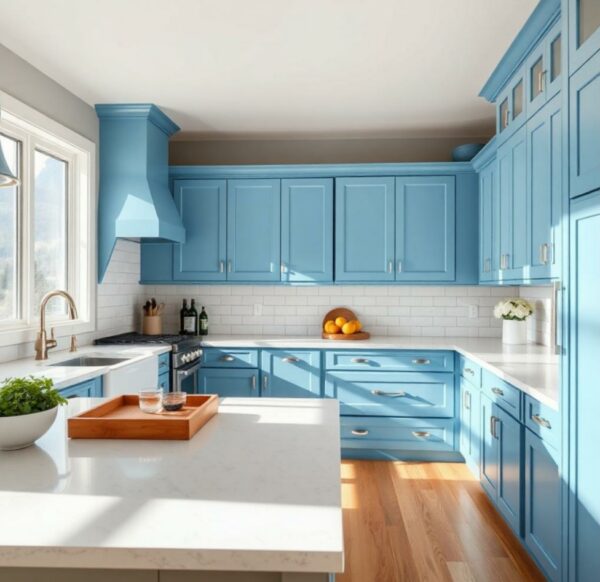
This matters more than any single finish detail. A kitchen with tired, yellowed, or chipped cabinet fronts signals deferred maintenance even when the appliances are new. The same kitchen with a clean, even, sprayed finish reads as move-in ready. You are not selling paint. You are removing an objection before it forms, and that is the mechanism behind the resale return that refinishing is known for.
What Cabinet Painting Costs Compared With Replacement
Published Denver figures put cabinet painting at a fraction of the cost of new cabinets, which is the foundation of the entire return calculation. The exact number depends on door count, layout, condition, and finish level, and no reputable painter should quote you a firm price over the phone without seeing the kitchen.
Two reference points show how wide the published range runs. Houzz lists an average cost for cabinet refinishing in Denver between $1,800 and $4,320. Separately published Denver figures place full cabinet refinishing at roughly $2,000 to $20,000 per project, with a midpoint near $11,000. Those are not contradictory so much as differently scoped: a small galley with flat fronts sits at the bottom, and a large kitchen with extensive repairs, a color change, and premium finish work sits near the top.
| Reference point | Published range | What it tells you |
|---|---|---|
| Houzz average, Denver cabinet refinishing | $1,800 to $4,320 | A useful floor for straightforward projects with limited repair work |
| Published Denver full refinishing figures | Roughly $2,000 to $20,000, midpoint near $11,000 | Shows how much scope, size, and finish level move the number |
| Cabinet replacement | Not established in the cited figures | Get your own written bids before comparing; replacement pricing varies too much to assume |
The Return You Can Actually Measure
Denver refinishing sources describe the update as hitting one of the best returns of any pre-listing project, largely because the cost basis is low relative to the perceived change. That is the honest framing. A return is not a guaranteed check at closing. It is the gap between what you spent and what a buyer is willing to pay for a kitchen that no longer needs work.
Three things drive that gap in your favor. First, the spend is modest compared with a full cabinet replacement, so the break-even point arrives sooner. Second, the change is highly visible in listing photos, which is where buyer interest is won or lost. Third, the work is fast relative to replacement, which matters if you are on a listing timeline. You should still treat any projected percentage as an estimate, not a promise. Appraisers value the house, not your invoice, and neighborhood comparables do a lot of the deciding.
Arvada and Park Hill: Same Instinct, Different Kitchens
Arvada and Park Hill sit in different parts of the metro and attract somewhat different buyers, but the underlying behavior is identical. Buyers walk in, look at the kitchen, and start mentally subtracting. New counters with sad cabinets still read as a project. Painted cabinets with a good counter and clean hardware read as finished.
The practical takeaway is to shop your own block rather than the internet. Pull five recent listings near you in Arvada or Park Hill that sold quickly, and look at what their kitchens had in common. If every comparable has a light, warm-neutral cabinet color and yours are dark cherry with visible wear, the return case for painting is strong. If your neighborhood sells on lot size and square footage regardless of finishes, calibrate downward, paint for your own enjoyment, and stop expecting the kitchen to carry the sale.
What a Factory-Grade Sprayed Finish Actually Involves
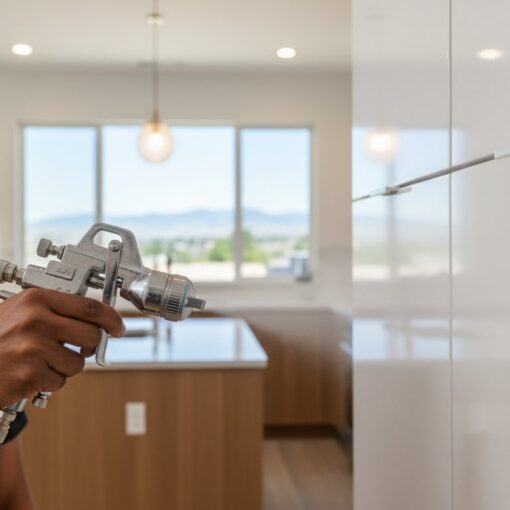
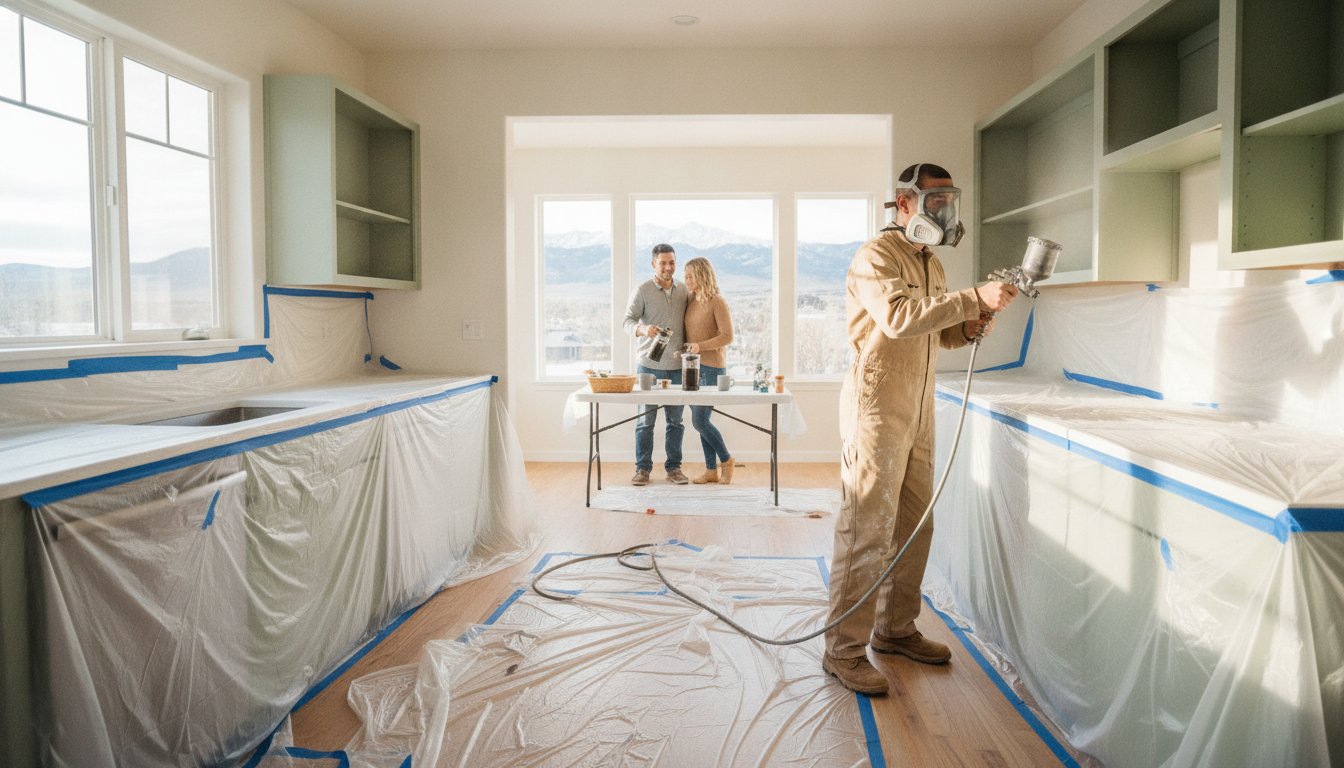
Finish quality is the difference between a return and a redo. A sprayed finish applied with proper equipment lays down evenly, without the brush marks and lap lines that make a DIY job obvious to a buyer standing three feet away. Prep is where that outcome is decided: cleaning, degreasing, sanding, masking, and repairing damaged corners and edges before a single coat goes on.
Ask any painter you interview how the doors and drawers leave the house and how they come back. One Denver cabinet painting operation notes that the crew returns on the final day for professional reinstallation, which is the detail that separates a controlled shop finish from a tarp-and-tape job in a lived-in kitchen. Cabinet Painting Denver works in the same model, using an HVLP sprayed finish and backing the work with a three-year warranty. Warranty terms, cure time, and reinstallation scheduling are all fair questions to put in writing before you sign.
What the Project Week Looks Like
Timelines in Denver are shorter than most homeowners expect. One Denver cabinet painting service advertises projects completed in only about five days. That is a reasonable planning assumption for a standard kitchen, though repairs, additional colors, and large door counts push it out.
Plan for a disruptive but short stretch. You will lose normal kitchen access for most of the work, so set up a temporary coffee station and a plan for meals. Then expect a cure window after reinstallation, during which you avoid heavy scrubbing and harsh cleaners. That curing period is not a delay tactic; it is what allows the finish to harden into the durable surface you paid for.
Where Returns Get Eaten
Most disappointing outcomes trace back to process, not to color choice. Watch for these:
- Painting over grease and old finish without proper prep, which leads to peeling within a season or two.
- Choosing a color for its trend value instead of its resale range, then repainting before listing.
- Skipping repair of loose hinges, swollen edges, and damaged corners so fresh paint highlights the flaws.
- Awarding the job to the lowest bid without asking about spray equipment, prep steps, or warranty coverage.
- Booking too close to a listing date and rushing the cure.
How to Vet a Cabinet Painter in 2026
A short interview protects the whole investment. Ask each bidder the same questions and compare the answers, not just the totals.
- Describe the prep sequence in detail, including degreasing and sanding.
- Confirm whether doors and drawers are sprayed off site or finished in place.
- Ask which products are used and how long they need to cure before normal use.
- Request the warranty in writing, including what it covers and for how long.
- Ask what happens if a door is damaged during removal or reinstallation.
- Get an on-site estimate rather than a phone quote, since condition drives cost.
Setting Expectations Before You Sign
Go in expecting a modest spend, a visible transformation, a fast timeline, and a strong but not guaranteed resale return. Treat published cost ranges as a starting bracket and your own written estimate as the real number. If your goal is a 2026 sale, schedule the work early enough to allow for cure time and photos. If your goal is enjoying the kitchen, the return shows up every morning, and the resale benefit becomes a bonus rather than the point. Either way, you will be making the decision with real Denver figures instead of a sales pitch.
Frequently Asked Questions
Is cabinet painting cheaper than replacing cabinets in Denver?
Yes, based on published Denver figures. Cabinet painting is described as costing a fraction of new cabinets, and refinishing ranges run from roughly $1,800 to $4,320 on the low end up to about $20,000 for large, complex projects. Replacement costs vary too widely to assume, so gather your own written bids before making the comparison final.
How long does professional cabinet painting take?
One Denver cabinet painting service advertises projects completed in only about five days, which is a reasonable planning assumption for a standard kitchen. Larger door counts, damage repair, and color changes extend that timeline. Add a cure window after reinstallation before you resume normal cleaning and heavy daily use of the cabinets.
Do painted cabinets actually add resale value?
Denver refinishing sources describe cabinet refinishing as hitting one of the best returns of any pre-listing update, because buyers judge the kitchen first. That supports a strong return, but it is not a guarantee. Your result depends on neighborhood comparables, the rest of the kitchen, and how well the finish is applied.
What should I ask before hiring a cabinet painter?
Ask how the crew preps the surfaces, whether doors and drawers are sprayed off site, which products are used, how long the finish needs to cure, and what the written warranty covers. Also confirm who returns for reinstallation on the final day. Get an on-site estimate, since condition and layout drive the price.