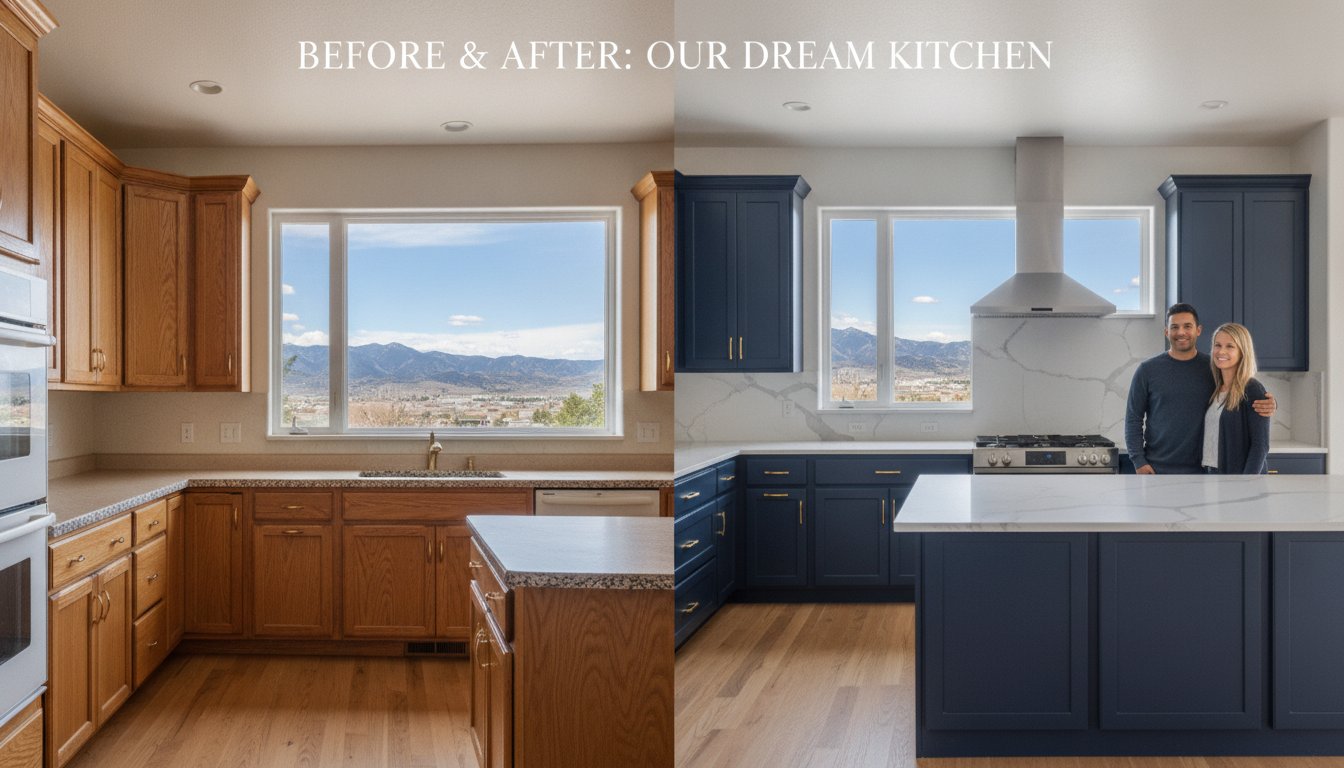
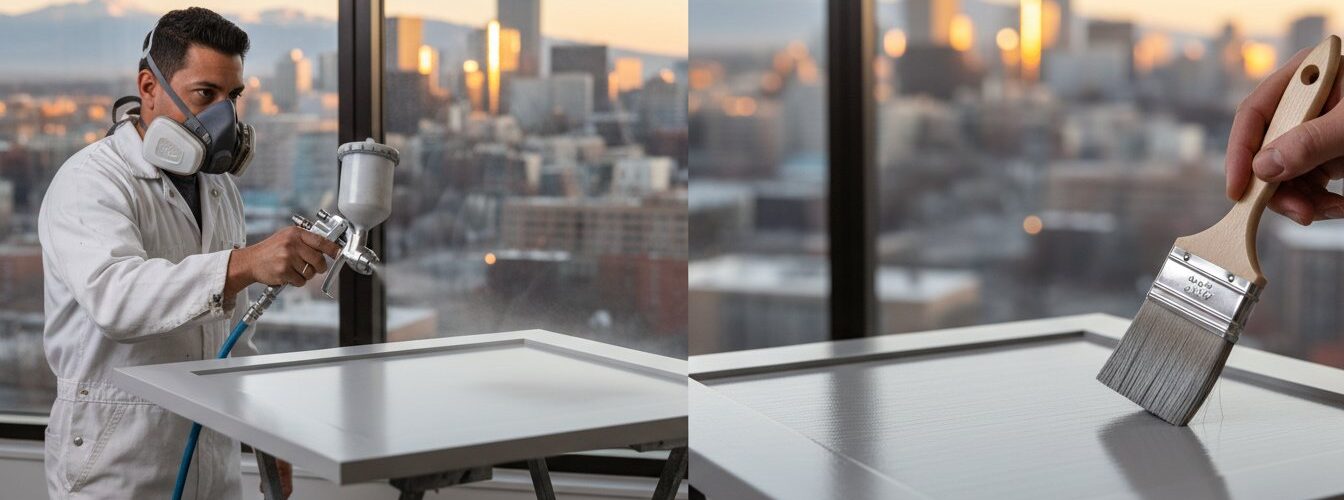
You’ve spent countless hours scrolling through inspiration, dreaming of a kitchen with a flawless, modern finish. But the fear of visible brush strokes ruining your cabinet doors is real, and the thought of fine paint dust settling on every surface in your home can be paralyzing. It’s a common dilemma that leads homeowners right to the central question: what is the best approach? The debate over professional cabinet spraying vs brushing is filled with strong opinions, but the right choice for your home depends on more than just aesthetics.
Cabinet Painting Service Areas in Denver & Surrounding Cities, Cabinet Refinishing in Denver County, CO
Serving Lakewood, CO, Littleton, CO, Golden, CO,
Arvada, CO, Wheat Ridge, CO,
and Parker CO. Castle Pines CO. Englewood CO. Centennial CO.
Cabinet Painting in Arapahoe County, CO
Including Centennial, CO, Greenwood Village, CO,
Cherry Hills Village, CO, Englewood, CO,
and Aurora, CO.
Cabinet Painting in Adams County & Broomfield, CO
Serving Thornton, CO, Westminster, CO,
Northglenn, CO, Commerce City, CO,
In this definitive 2026 guide, we’ll cut through the noise to help you make an informed decision. We’ll compare these two methods head-to-head, examining everything from the final texture and long-term durability against daily wear and tear to the project timeline and overall return on investment. You’ll gain the clarity you need to choose the perfect finish that maximizes your kitchen’s beauty and boosts your home’s value for years to come.
Key Takeaways
-
Understand how the application method-atomized spray vs. manual brushing-directly impacts your kitchen’s final look and even its appraisal value.
-
Discover which finish provides a smoother, factory-like surface and better resists chipping, and learn how to avoid the dreaded "orange peel" effect.
-
The debate over professional cabinet spraying vs brushing often overlooks a critical factor: the extensive prep work required for a flawless spray finish.
-
Learn why a hybrid approach, combining different techniques for cabinet boxes and doors, often delivers the most durable and beautiful results.
Table of Contents
-
Professional Cabinet Spraying vs. Brushing: Why the Method Defines Your Kitchen’s Value
-
The Mechanics of the Finish: How Spraying and Brushing Actually Work
-
Spraying vs. Brushing Comparison: Durability, Texture, and "The Orange Peel" Effect
-
The Prep Work Paradox: Why Spraying Takes Longer Before the Paint Flows
-
The Hybrid Solution: How Cabinet Painting Denver Achieves Perfection
Professional Cabinet Spraying vs. Brushing: Why the Method Defines Your Kitchen’s Value
When updating your kitchen, the debate over professional cabinet spraying vs brushing is more than a technicality-it’s a decision that directly impacts your home’s aesthetic and financial value. The core difference lies in the application. Brushing is a manual process that applies paint in layers, while professional spraying uses specialized equipment to atomize paint into a fine, consistent mist. This atomized finish creates a seamless, factory-like surface that manual methods simply cannot replicate.
To better understand this concept, the video below offers a clear comparison of the two methods:
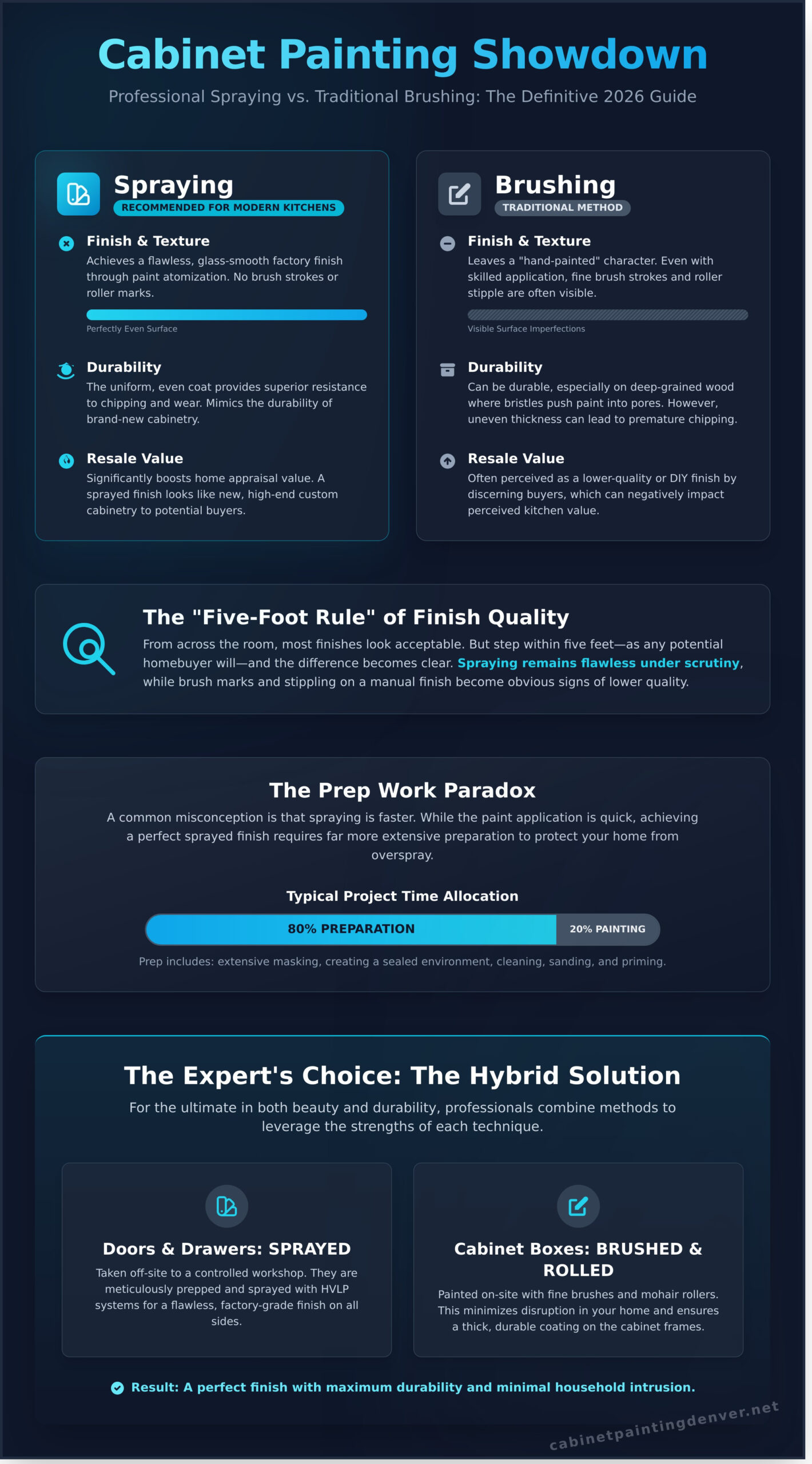
We often refer to the "Five-Foot Rule" when discussing finish quality. From across the room, a brushed finish might look fine. But step within five feet-as any potential homebuyer or guest will-and the imperfections of a manual job become obvious. Brush strokes, roller stipple, and uneven paint build-up in corners are tell-tale signs of a lower-quality finish. A sprayed finish, however, remains flawless even under the closest scrutiny.
The Visual Impact: Smooth Factory Finish vs. Hand-Painted Character
Modern kitchen designs like Shaker and slab-style cabinets demand a pristine, smooth finish. Their large, flat surfaces are unforgiving and will highlight every imperfection. While high-end paints like Benjamin Moore Advance are formulated with excellent "leveling" properties, even the most skilled painter cannot eliminate brush marks entirely. Spraying leverages atomization, a key principle in how spray painting works, to create a perfectly even film. This is the only way to achieve a true factory finish and prevent your expensive cabinets from looking like a cheap DIY project.
Resale Value: What Denver Buyers Look For in 2026
In the competitive Denver real estate market, "refinished" must look "new" to add value. Homebuyers today expect modern, clean lines and a high-end aesthetic. A professionally sprayed finish mimics the look of brand-new custom cabinetry, immediately elevating your kitchen’s perceived value. This makes the cost of a professional spray job a wise investment. It delivers the visual impact of a full cabinet replacement for a fraction of the price, directly boosting your home’s appraisal and appeal to discerning buyers.
The Mechanics of the Finish: How Spraying and Brushing Actually Work
To truly understand the difference in professional cabinet spraying vs brushing, we need to look beyond the surface and into the physics of paint application. One method relies on controlled friction to transfer paint, while the other uses pressurized air to create a fine, even mist. This fundamental difference impacts everything from the paint’s bond with the wood to its final thickness and long-term durability.
The Art of Brushing and Rolling
Hand-brushing is a traditional craft that involves physically working the paint into the cabinet surface. Professionals use a combination of high-quality tools, like a fine-bristled angled brush for cutting in corners and a short-napped mohair roller for flat surfaces. The primary challenge is maintaining a "wet edge" to prevent lap marks where fresh paint overlaps a semi-dry area. For woods with deep grain, like oak, brushing can be advantageous as the bristles physically push the coating deep into the pores, ensuring a solid bond.
The Science of Professional Spraying: HVLP and Airless
Professional spraying relies on a process called atomization, where paint is broken into microscopic droplets to form a uniform cloud. This cloud settles evenly onto the cabinet surface, creating a seamless coat that is impossible to replicate by hand. The two primary technologies are:
-
HVLP (High Volume, Low Pressure): The gold standard for fine-finishing. It uses a high volume of air at low pressure to deliver precise, soft spray patterns with minimal overspray, resulting in a flawless, factory-like finish.
-
Airless Sprayers: These systems use extreme hydraulic pressure to force paint through a tiny tip. They are built for speed and applying thick coatings, making them better suited for exterior work than detailed cabinet finishing.
The application method directly influences the "mil thickness"-the measurement of a dry paint coat. Professional spray equipment allows for thin, consistent coats that cure properly and flex with the wood. In contrast, brushing can create thicker, uneven layers that are more prone to chipping. The quality of the application is a critical factor in overall finish durability and preparation, as a proper bond prevents premature failure. This is why professional-grade, calibrated spray guns offer far superior control and atomization compared to consumer-grade rentals, ensuring a stronger, longer-lasting finish.
Spraying vs. Brushing Comparison: Durability, Texture, and "The Orange Peel" Effect
When you run your hand over a finished cabinet, the difference between application methods is instantly clear. A brushed cabinet has a distinct, hand-applied character with subtle brush strokes. In contrast, a professionally sprayed finish is impeccably smooth, mimicking the flawless surface of brand-new, factory-finished cabinetry. This distinction goes far beyond aesthetics; it directly impacts long-term durability, cleanability, and the overall integrity of the coating.
Texture and Aesthetics: Eliminating the "Orange Peel"
The dreaded "orange peel" is a bumpy texture that resembles the skin of an orange, a common pitfall of improper spray technique or paint formulation. Professionals prevent this by meticulously calibrating their equipment and thinning the coating to a perfect consistency. The goal is a "mirror finish"-a perfectly uniform surface that reflects light evenly, whether in a high-gloss or a modern satin sheen. The secret sauce to achieving this is rigorous sanding between every single coat, which creates an ultra-smooth foundation for the next layer to bond to flawlessly.
Long-Term Durability and Coating Integrity
A durable finish depends on a consistent coating thickness across the entire surface. This is where the debate over professional cabinet spraying vs brushing often finds a clear winner. Spraying atomizes the paint, creating a seamless film that wraps uniformly around sharp corners and into detailed crevices where brushes struggle to reach effectively. Brushing, conversely, risks "over-brushing"-working the paint too much, which thins the protective layer and can lead to premature chipping and wear. While a novice sprayer might create runs and a sloppy painter might leave bristles behind, a true craftsman adheres to strict professional painting standards to prevent these common flaws and deliver a lasting result. Ultimately, coating failure is often the direct result of improper mil thickness-either too thin from over-brushing or too thick from sags and runs.
This smooth, non-porous surface from spraying isn’t just for looks. It’s far easier to wipe clean, as there are no tiny ridges from brush strokes to trap dirt and grease. For high-traffic kitchens, this advantage in maintenance and durability makes professional spraying the superior choice for a finish that looks new for years to come.
The Prep Work Paradox: Why Spraying Takes Longer Before the Paint Flows
One of the biggest misconceptions in the professional cabinet spraying vs brushing debate is the timeline. While spraying itself is fast, the meticulous preparation phase is where true professionals invest the majority of their time. We operate on the 80/20 rule: about 80% of the project involves preparation and containment, while only 20% is dedicated to the actual painting. This upfront investment is what guarantees a flawless, durable finish and protects your home from start to finish.
This intensive prep work is why a professional spray job is ultimately cleaner and less disruptive for the homeowner than a typical DIY brushing project, which can involve open paint cans, accidental drips, and lingering dust for weeks.
Taping and Masking: Protecting Your Denver Home
Before a single drop of paint is sprayed, we transform your kitchen into a self-contained, temporary spray booth. This isn’t just about laying down a few drop cloths. It’s a comprehensive process designed to eliminate the #1 fear: overspray. Our containment strategy includes:
-
Complete Surface Protection: We mask all floors, countertops, backsplashes, and appliances with durable paper and plastic sheeting.
-
Dust and Fume Control: We install plastic zip-wall systems to completely seal off the kitchen from the rest of your home. A HEPA air filtration system is then used to capture airborne particles and create negative air pressure, ensuring all dust and fumes are vented outside.
The Controlled Environment: Off-Site Spraying for Doors
While the cabinet boxes are prepped and sprayed on-site, we remove all doors and drawer fronts and transport them to our dedicated spray shop. This off-site process is crucial for achieving a factory-like finish. By spraying the doors horizontally on drying racks, we can apply a heavier, more even coat of paint that self-levels perfectly without any risk of drips or runs. This controlled environment, away from the dust and climate variables of a Denver job site, is key to the unparalleled smoothness and durability that only professional spraying can offer. Once cured, we carefully transport them back for re-installation, completing your kitchen’s transformation.
The Hybrid Solution: How Cabinet Painting Denver Achieves Perfection
After weighing the pros and cons, the ultimate question isn’t just about spraying vs. brushing; it’s about achieving a flawless, durable finish with minimal disruption to your home. At Cabinet Painting Denver, we’ve perfected a hybrid process that leverages the best of both worlds, delivering a true factory-quality result that lasts.
The debate over professional cabinet spraying vs brushing often misses the most effective strategy. We combine on-site precision for your cabinet boxes with a specialized off-site process for all removable parts. Your cabinet doors, drawers, and hardware are carefully transported to our controlled finishing shop. Here, they undergo a multi-step preparation and spraying process in a dust-free environment, allowing for a perfectly smooth, hard-cured coating that simply can’t be replicated in a home. This meticulous method ensures:
-
A Flawless Surface: No dust, debris, or airborne particles marring the finish.
-
Optimal Curing: We control temperature and humidity for maximum coating durability.
-
A True Factory Finish: We use industrial-grade equipment to apply thin, even layers for a stunning, modern look.
By blending techniques, we provide the most efficient and effective path to a high-end kitchen transformation. This hybrid system is the gold standard for achieving a durable, factory-grade finish in 2026 and beyond, ensuring your investment looks incredible for years to come.
Our Signature Process for Cabinet Boxes
While your doors are in our shop, our team meticulously preps and finishes your cabinet frames and fixed components on-site. We use specialized, fine-finish rollers and high-end enamel paints to create a surface that is an exact color and texture match to your sprayed doors. This minimizes overspray in your home while ensuring the high-touch frames are incredibly durable. After curing, we perform a Voltie-level re-installation, perfectly aligning every door and piece of hardware for a seamless result.
Schedule Your Professional Cabinet Consultation
Ready to see how our hybrid process can transform your kitchen? Getting an accurate quote is simple. We begin with a detailed consultation to assess your project, discuss your vision, and help you select the perfect color and sheen from our premium product lines. You’ll understand every step of our process and receive a transparent, detailed estimate for your Denver home. Book your free estimate with Cabinet Painting Denver today!
The Verdict: Why Spraying is the Clear Winner for Your 2026 Kitchen Remodel
When it comes to your kitchen’s future, the debate over professional cabinet spraying vs brushing is about more than just application-it’s about achieving lasting value and impeccable style. As we’ve explored, only professional spraying delivers that perfectly smooth, factory-grade finish free of brush marks and texture. While the preparation is more intensive, it’s the secret to a durable, flawless result that elevates your entire home.
At Cabinet Painting Denver, we’ve perfected this process. With our 5-star reputation, we combine meticulous on-site work with our specialized off-site spray booth to guarantee a stunning, resilient finish for your cabinet doors. We’re ready to guide you through the latest trends with a complimentary 2026 Color Consultation included with your project.
Don’t settle for less than a pristine, modern look. Get a Free Quote for Professional Cabinet Spraying in Denver today and take the first step toward the stunning kitchen you deserve.
Frequently Asked Questions
Is it cheaper to brush or spray kitchen cabinets?
While brushing may seem cheaper initially due to less prep and equipment, professional spraying often provides better long-term value. Spraying is significantly faster, which can reduce labor costs on larger projects. The primary investment in spraying is the meticulous masking and prep required for a flawless finish. Ultimately, the superior durability and factory-like appearance achieved with spraying mean you won’t need to repaint as soon, making it a cost-effective choice over time.
Can you see a difference between sprayed doors and brushed cabinet frames?
Yes, a difference is often visible upon close inspection. Sprayed surfaces have a perfectly smooth, uniform finish with no texture. A brushed surface, even when done by a skilled painter, will have faint lines from the bristles. This is a critical factor in the professional cabinet spraying vs brushing decision. For a truly seamless, high-end look, we recommend spraying both the doors and the cabinet frames to ensure a consistent appearance throughout your kitchen.
Does spraying cabinets use more paint than brushing?
Spraying does consume more paint than brushing, typically around 20-30% more. This is due to "overspray," which is the fine mist of paint that doesn’t adhere directly to the surface. However, this process is what allows the paint to be applied in very thin, even layers. This method builds a stronger, more durable coating that cures to a harder shell than a thicker, brushed-on coat, justifying the extra material for a superior and longer-lasting result.
How long does a sprayed cabinet finish last compared to brushing?
A professionally sprayed cabinet finish is generally more durable and lasts longer than a brushed finish. The atomized application creates a harder, more cohesive coating that resists chipping and wear. When applied correctly using premium cabinet-grade paint, a sprayed finish can last 8 to 15 years. A brushed finish may show wear more quickly, especially on high-traffic doors and drawers, often requiring touch-ups or repainting sooner.
Is spraying cabinets messy for the rest of my house?
When performed by a professional, cabinet spraying is a very clean process for your home. We take extensive measures to contain the work area completely. Your kitchen is sectioned off with plastic sheeting from floor to ceiling, and floors are protected. We also use negative air machines and ventilation systems to exhaust fumes and overspray particles directly outside. This meticulous preparation ensures no paint or dust escapes into your living spaces.
Can I spray my cabinets myself with a rental unit?
While it’s possible, we strongly advise against it for a high-stakes project like kitchen cabinets. Achieving a smooth, durable finish requires professional-grade equipment, precise paint thinning, and advanced application techniques to avoid drips, sags, and an uneven texture. The extensive prep work-thorough cleaning, sanding, and masking-is also critical and often underestimated. For a result that looks and feels new, hiring an experienced professional is the best investment.
What is the best paint for spraying cabinets in 2026?
Looking ahead, the top-tier paints for cabinet spraying will continue to be specialized coatings that offer maximum durability. We anticipate advanced water-based polyurethane and alkyd enamel formulas to lead the market. Products like Sherwin-Williams Emerald Urethane Trim Enamel or Benjamin Moore ADVANCE are excellent choices. These paints self-level to hide imperfections and cure to a hard, furniture-grade finish that resists stains, scratches, and yellowing for years to come.
How long does the professional spraying process take from start to finish?
For an average-sized kitchen, the entire professional spraying process typically takes 5 to 7 days. This timeline allows for proper execution of every critical step. This includes a full day for removing hardware and meticulously prepping the site, 2-3 days for sanding, priming, and applying multiple finish coats with adequate drying time in between, and a final day for reassembly, quality inspection, and a thorough cleanup of your home.