
In the 2026 Denver real estate market, properties with updated, neutral-colored cabinetry sell 15% faster than those with dated wood tones. If you’re considering an update, the most critical question is how long does professional cabinet paint last when faced with daily wear and tear. You need a finish that doesn’t chip after a year and avoids the massive expense of a full kitchen tear-out. Choosing professional Kitchen Cabinet Painting provides a factory-quality result that maintains its integrity for 10 years or more.
It’s natural to worry about the disruption of long construction projects or the durability of a new finish. This guide explains how professional applications for kitchen, bathroom, and bookshelf cabinets maximize your home’s ROI while providing a 10 to 15 year alternative to replacement. We’ll explore how Denver’s dry climate affects curing, the technical standards for industrial-grade coatings, and the procedural steps required to secure a long-lasting, high-equity finish for your home.
Key Takeaways
- Professional finishes for kitchen and bathroom cabinets are engineered for a 10-15 year lifecycle when maintained with proper care.
- Compare the cost-to-value ratios of refinishing versus full replacement to maximize your home’s equity in the 2026 Denver real estate market.
- Understand the chemical cross-linking process and preparation standards that determine how long does professional cabinet paint last in high-traffic environments.
- Discover how updating existing millwork for kitchen and bathroom cabinets reduces environmental impact by diverting significant waste from local landfills.
- Identify the specific structural criteria used to evaluate if your current cabinetry is a viable candidate for a professional factory-grade finish.
Defining the Lifecycle and Value of Professional Cabinet Refinishing
Home equity in 2026 is defined by the intersection of durability, cost, and aesthetic longevity. For many homeowners, the decision to update a kitchen or bathroom hinges on one specific metric: how long does professional cabinet paint last? While retail-grade products often fail within 24 months, professional finishes for Kitchen Cabinet Painting and Bathroom Cabinet Painting are engineered for a 10 to 15 year lifecycle. This longevity transforms a cosmetic update into a legitimate asset preservation strategy.
Professional applications utilize industrial-grade coatings that undergo a specific chemical cross-linking process. This creates a surface harder than the original wood, capable of resisting the oils, heat, and moisture typical of a high-traffic kitchen. By choosing to revitalize existing high-quality millwork, you avoid the “opportunity cost” of a full remodel, which often involves thousands of dollars in demolition labor and material markups for inferior modern particle-board replacements.
Review the following technical overview to understand the curing process for industrial coatings:
Financial Value vs. Functional Longevity
The financial advantage of professional refinishing is found in the direct savings on material costs and the elimination of demolition fees. Standard retail paints are designed for walls and lack the resin density required for cabinetry. The science of paint has advanced significantly, and modern industrial coatings provide a non-porous, cleanable surface that outperforms raw wood in stain resistance. Beyond the balance sheet, there’s a psychological value in maintaining a construction-free home. Most projects are completed in a fraction of the time required for a full replacement, minimizing kitchen downtime and household stress.
Asset Preservation: Protecting Your Original Millwork
Many older Denver homes feature solid wood cabinet boxes that are structurally superior to the medium-density fiberboard (MDF) found in modern “big box” replacements. Professional cabinet refinishing seals these original assets against grease and moisture saturation, which are the primary causes of wood degradation. This process also aligns with environmental goals. Choosing to refinish rather than replace keeps approximately 1,200 pounds of wood out of Denver metro landfills. It’s a functional choice that preserves the architectural character of the home while ensuring the cabinetry remains a durable, high-value asset for another decade.
ROI and Real Estate Impact in the 2026 Denver Market
In the 2026 Denver real estate market, kitchen aesthetics dictate initial buyer perception and final appraisal values. Properties in high-demand neighborhoods like Washington Park command a premium when they offer move-in ready interiors. A minor kitchen remodel that includes refinishing cabinets delivers a 113% return on investment. This is significantly higher than the 36% to 65% ROI typically seen with full kitchen replacements. Homeowners frequently ask how long does professional cabinet paint last to ensure their investment remains a selling point for years to come.
Strategic refinishing prevents “over-improvement” in mid-range homes. Replacing high-quality existing boxes with expensive custom cabinetry often fails to recoup costs. Instead, professional painting updates the space to meet 2026 standards without the financial burden or waste of structural changes. Appraisers and home inspectors now prioritize factory-finish quality, as these industrial coatings provide the durability required for modern households. For homeowners focusing on equity, professional kitchen cabinet painting provides the necessary aesthetic shift with minimal capital risk.
Impact on Resale Value and Buyer Perception
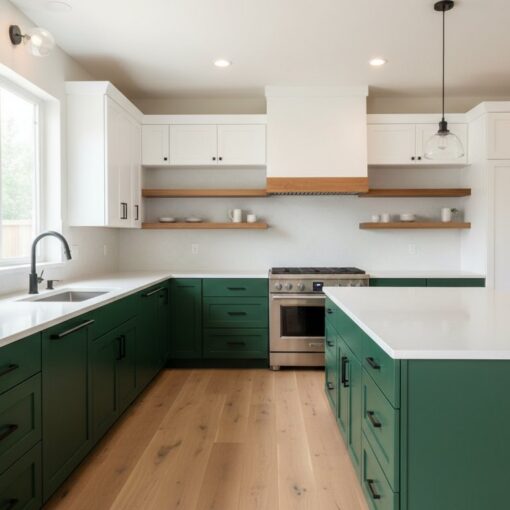
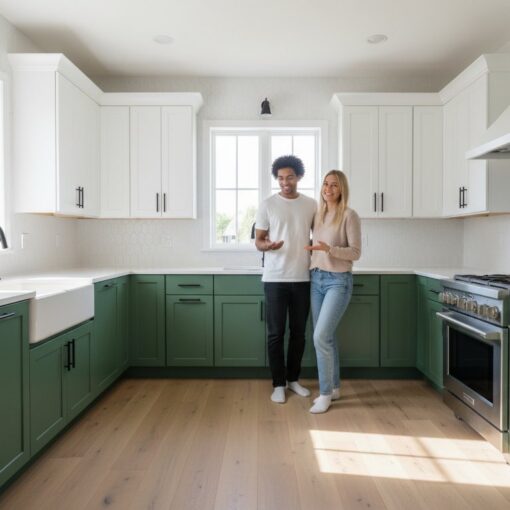
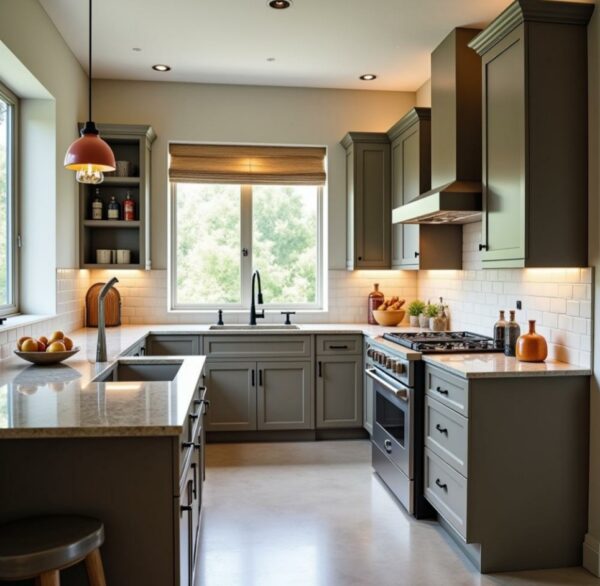
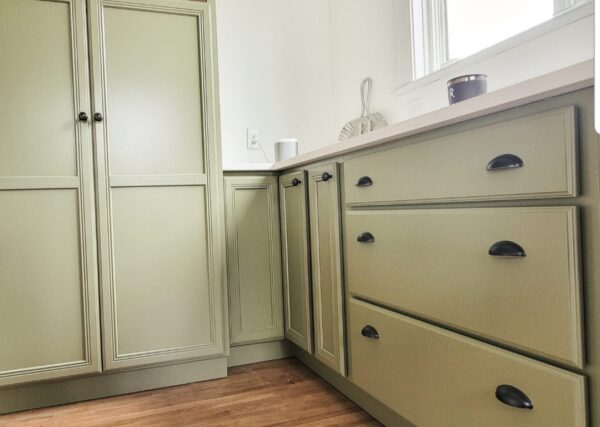
Modern palettes in 2026 prioritize warm neutrals, sage greens, and mushroom tones. These colors appeal to a broad demographic, making a home more marketable to the influx of buyers entering the Denver metro area. A flawless cabinet painting denver project can help a property sell 15% faster than those featuring dated wood tones. Buyer psychology is heavily influenced by the perception of a “new” kitchen. When they see a factory-quality spray finish, they view the home as updated, even if the underlying structural elements remain original.
Maximizing Equity with Minimal Capital Outlay
Professional refinishing costs a fraction of the price of new custom cabinetry. This allows homeowners to reallocate saved renovation funds toward other high-ROI home improvements like stone countertops, tile backsplashes, or updated lighting. When considering these upgrades, the durability of industrial coatings addresses the question of how long does professional cabinet paint last, providing a 7 to 10 year solution in high-traffic kitchens. This longevity ensures the home remains “market-ready” even if the sale doesn’t happen immediately.
Consulting with a professional cabinet painter ensures the project aligns with local market expectations for finish quality and color choice. This strategic approach preserves the “bones” of the home while delivering the modern look buyers demand. By choosing to paint kitchen, bathroom, or bookshelf cabinets, you maintain the architectural character of the property while significantly boosting its market value.
Durability Science: How Long Does Professional Cabinet Paint Last in Denver?
Determining how long does professional cabinet paint last requires an understanding of chemical bonding. Unlike standard wall paint that dries through simple evaporation, professional industrial coatings cure through a process called cross-linking. This chemical reaction creates a molecular bond that’s significantly harder and more resilient than any retail-grade product. In the specific context of Kitchen Cabinet Painting or Bathroom Cabinet Painting, this durability is the primary factor in long-term asset preservation.
Denver’s semi-arid climate and low humidity levels present a unique challenge for wood surfaces. Wood is a hygroscopic material, meaning it constantly absorbs and releases moisture, leading to expansion and contraction. Standard paints lack the flexibility to move with the wood, which often results in hairline fractures at the joints. Professional coatings used in Denver are specifically formulated to maintain elasticity while providing a rigid, impact-resistant surface. This balance ensures the finish remains intact despite the city’s dry air and fluctuating indoor temperatures.
The Professional Process: Factory Finish vs. DIY
A durable finish starts with mechanical and chemical adhesion. The professional process follows a strict protocol to ensure the coating doesn’t just sit on the surface but bonds to it. This includes industrial degreasing to remove cooking oils, followed by mechanical abrasion to create a profile for the new coating. High Volume Low Pressure (HVLP) spray systems are used to achieve a smooth, factory-grade surface. Off-site finishing for doors and drawer fronts is mandatory to avoid dust contamination, which is a common cause of finish failure in DIY projects.
Resistance to Daily Kitchen Wear and Tear
Modern industrial polyurethanes are designed to resist the specific stresses of a kitchen environment. These coatings are non-porous, preventing steam and grease from penetrating the wood fibers. They also offer high impact resistance, protecting the cabinetry from the daily bumps of active households. While some believe painted surfaces are more fragile than stained wood, the reality is that a professional factory finish provides a superior protective barrier against household chemicals and moisture. When maintained with pH-neutral cleaners, these surfaces easily reach the 10-year mark, providing a definitive answer to how long does professional cabinet paint last in a high-traffic home.

The Sustainable Value of Refinishing Existing Assets
Choosing to refinish existing cabinetry is a high-impact environmental decision for the 2026 homeowner. In the Denver metro area, replacing a standard kitchen’s cabinetry sends approximately 1,200 pounds of wood to local landfills. When homeowners investigate how long does professional cabinet paint last, they’re often looking for a solution that justifies keeping these original materials. By opting for professional Kitchen Cabinet Painting or Bathroom Cabinet Painting, you extend the functional life of high-quality wood by 10 years or more. This supports a circular economy where existing household assets are revitalized rather than discarded.
The carbon footprint of manufacturing new cabinets is substantial. It involves timber harvesting, factory processing, and long-distance transportation logistics. On-site refinishing eliminates these industrial stages, focusing resources on the application of modern coatings. In 2026, professional coatings are formulated with low-emission, eco-friendly VOC profiles. These industrial products provide the same factory-grade durability as traditional finishes but without the heavy environmental or indoor air quality impact. It’s a responsible choice for families who want to modernize their space without contributing to industrial waste.
Sustainable Choices for the 2026 Homeowner
“Restoration” is now the leading trend in high-end sustainable interior design. Refinishing solid wood cabinets is structurally superior to installing new particle board or MDF alternatives that have a shorter lifecycle. Solid wood has a higher density and better energy efficiency during the manufacturing phase than composite materials. This approach aligns with modern green building goals by maximizing the utility of materials already present in the home. It ensures that the question of how long does professional cabinet paint last is answered by a finish that matches the longevity of the wood it protects.
Reducing the Impact of Demolition
A major kitchen teardown creates significant environmental disruption through dust, noise, and vibration. Refinishing avoids these issues while preserving old-growth wood species that are often unavailable in modern cabinet lines. The hidden environmental costs of waste disposal and the logistics of hauling debris are completely bypassed. It’s a cleaner, quieter, and more responsible way to modernize a home. You maintain the architectural integrity of the property while utilizing high-performance coatings that stand up to daily use.
Contact our team for a professional kitchen cabinet painting quote to start your sustainable home update today.
Strategic Decision Making: Is Professional Refinishing Your Best Move?
The final decision to refinish relies on the structural integrity of your current cabinetry. If your cabinet boxes are sturdy and the layout functions well, professional painting is the most efficient path to a modern kitchen. High-quality millwork provides the necessary foundation for industrial coatings to bond effectively. Before committing to a project budget, many homeowners ask how long does professional cabinet paint last to ensure their investment is protected. When applied to solid wood “bones,” a factory-grade finish provides a durable 10 to 15 year solution. It’s a strategic move that avoids the high costs and waste of a full tear-out.
Budgeting for this update requires a clear understanding of the project scope. You should review the cost to paint kitchen cabinets to align your expectations with current 2026 market rates. Selecting a partner with local Denver expertise is essential. Local professionals understand how the city’s unique altitude and low humidity affect paint curing and wood contraction. A successful transformation requires a partner who provides a transparent process and specific maintenance protocols. Use this final checklist to evaluate your project readiness:
- Verify that cabinet boxes are free of significant structural rot or water damage.
- Confirm that the current kitchen layout meets your daily functional needs.
- Identify the wood species to ensure the correct primer and bonding agents are used.
- Establish a clear timeline that accounts for off-site door finishing and on-site box painting.
The “Broken Layout” Exception
Painting is a powerful aesthetic tool, but it won’t fix fundamental design flaws. If your kitchen’s work triangle is inefficient or the space feels cramped, a full replacement might be necessary. However, many homeowners find that combining Kitchen Cabinet Painting with minor modifications, such as adding a central island or updating hardware, solves these issues at a fraction of the cost. A consultation with professional cabinet painters often reveals hidden potential in an existing space. They can identify where simple adjustments can modernize the workflow without requiring structural demolition.
Next Steps for Your Denver Kitchen
Moving forward requires a professional assessment of your cabinetry’s condition. A technician should evaluate the existing finish to determine the level of degreasing and sanding required for proper adhesion. It’s also vital to review color samples in your specific kitchen lighting. Denver’s intense sunlight can make certain shades appear different than they do in a showroom. Understanding how long does professional cabinet paint last in your specific environment helps set realistic expectations for the finish’s lifecycle. Secure a transparent, fixed-price quote to ensure your 2026 project date and begin the process of revitalizing your home’s most valuable assets.
Maximizing Your Home Equity Through Strategic Refinishing
Choosing Kitchen Cabinet Painting, Bathroom Cabinet Painting, or bookshelf painting is a high-yield investment for the 2026 market. These services provide an immediate aesthetic shift while preserving the structural integrity of your home’s original millwork. You now understand how long does professional cabinet paint last when industrial coatings are applied with technical precision. This 10 to 15 year solution outperforms retail alternatives and supports Denver’s sustainability goals by diverting approximately 1,200 pounds of wood from local landfills. It’s a strategic move that balances modern design with long-term asset protection.
Achieving a factory-quality HVLP spray finish requires specialized expertise in Denver’s high-altitude wood preparation. We provide transparent pricing with no hidden fees to ensure your project remains on track and within budget. Our task-oriented approach focuses on procedural clarity and durable results for every homeowner. Request a Professional Quote from Cabinet Painting Denver to secure your project date. Revitalizing your existing assets is a responsible and profitable way to modernize your living space today.
Frequently Asked Questions
Does painting kitchen cabinets really add value to a home?
Professional painting adds significant value by updating the aesthetic to 2026 standards. Properties with neutral-colored cabinetry sell 15% faster in the Denver market. A minor kitchen remodel involving professional painting has a 113% ROI. This is significantly higher than a full remodel. Buyers view a factory-finish as a sign of a well-maintained home. It improves the initial perception of the space during appraisals and speeds up the sale process.
How many years does a professional cabinet paint job last?
A professional application typically lasts between 10 and 15 years. The lifecycle depends on the quality of the industrial coatings and the precision of the preparation. When homeowners ask how long does professional cabinet paint last, the answer is tied to the chemical cross-linking of the product. This creates a surface harder than the original wood. Regular maintenance ensures the finish remains durable throughout its intended lifespan.
Will the paint on my cabinets chip or peel easily?
Professional finishes don’t chip or peel under normal conditions. This durability is achieved through mechanical sanding and chemical bonding primers. These steps create a profile for the paint to adhere to the wood surface. Industrial coatings are designed for the high-traffic environment of a kitchen. They resist impact and moisture better than standard retail products. Proper curing is essential to ensure the finish reaches its maximum hardness and bond.
Is it better to paint or replace cabinets for the highest ROI?
Painting is generally better for ROI because it costs 30% to 50% of the price of new custom cabinetry. A minor kitchen remodel involving refinishing yields a 113% return. Replacement projects often only recover 36% to 65% of their value. If the cabinet boxes are structurally sound, professional painting provides the most efficient equity boost. It allows for a modern look without the expense of a full structural tear-out and long construction timelines.
Can you paint cabinets that have been previously stained or varnished?
Yes, previously stained or varnished cabinets can be painted. The process requires thorough degreasing to remove years of cooking oils and wax residues. Technicians then sand the surface to remove the existing gloss and create a profile. A specialized chemical bonding primer is applied to ensure the new coating adheres to the wood fibers. This meticulous preparation is what prevents the new finish from failing or peeling over time in high-traffic areas.
What is the most durable type of paint for kitchen cabinets in 2026?
Industrial-grade wood coatings like 2K polyurethanes are the most durable options in 2026. These products are specifically engineered for Kitchen Cabinet Painting and furniture. They offer superior resistance to steam, grease, and household cleaners compared to standard latex paint. These coatings are non-porous and provide a factory-quality finish. Their chemical composition ensures they remain flexible enough to handle the expansion and contraction of wood in Denver’s dry climate.
How do I maintain my painted cabinets to ensure long-term value?
Use a soft microfiber cloth and a pH-neutral cleaner for regular maintenance. Avoid abrasive scrubbing pads or harsh chemicals that can dull the finish. Wiping up spills immediately prevents moisture from seeping into the joints of the cabinetry. It’s also important to be gentle with the surface during the first few weeks of curing. This care helps determine how long does professional cabinet paint last in a busy household and preserves your equity.
Why is professional cabinet painting more expensive than DIY?
Professional services involve specialized HVLP spray equipment and off-site finishing facilities. The cost reflects the technical expertise required for high-altitude wood preparation and industrial coating application. DIY projects often use retail paints that lack the durability of professional products. Professionals manage the entire process to ensure a dust-free, factory-quality result. This investment ensures a 10 to 15 year lifecycle that DIY efforts rarely achieve due to inferior materials and tools.