Most homeowners assume that if it’s a good day to paint the house exterior, it’s a good day for the kitchen. However, the best time of year to paint cabinets follows a much stricter set of environmental rules than outdoor work. You want a factory-smooth finish that lasts a decade without the anxiety of peeling or cracking caused by improper curing. It’s natural to feel concerned about how seasonal shifts might disrupt your home life or compromise the technical quality of a Kitchen Cabinet Painting project.
This guide clarifies how temperature and humidity levels impact the bonding of professional coatings. You’ll discover the “technical goldilocks zone” for indoor projects, particularly within Denver’s unique high-altitude climate where low humidity significantly affects drying and curing times. We’ll also examine how 2026 EPA regulations and current VOC standards influence your project timeline. This information ensures you can schedule your Bathroom Cabinet Painting or kitchen transformation with total confidence in the durability of the finish and the efficiency of the process.
Key Takeaways
- Identify the critical difference between paint drying and paint curing to ensure the long-term durability of a Kitchen Cabinet Painting project.
- Determine the best time of year to paint cabinets by analyzing how seasonal humidity levels affect the molecular bonding of professional finishes.
- Recognize how Denver’s altitude and semi-arid climate impact solvent evaporation and paint leveling during the application process.
- Maintain a controlled indoor environment using the 70/50 Rule to achieve optimal results for Bathroom Cabinet Painting or Bookshelves cabinet painting.
- Assess how seasonal logistics and environmental variables influence the timeline and scheduling of professional cabinet transformations.
Why Seasonal Timing Matters for a Professional Cabinet Finish
Achieving a high-end look for your kitchen requires more than just a skilled hand. It demands an understanding of how atmospheric conditions influence the chemical transformation of liquid coatings. Many homeowners believe that indoor HVAC systems negate the impact of outdoor weather. However, the best time of year to paint cabinets is still dictated by seasonal shifts that affect how materials behave inside your home. A professional result depends on the stability of your home’s micro-environment.
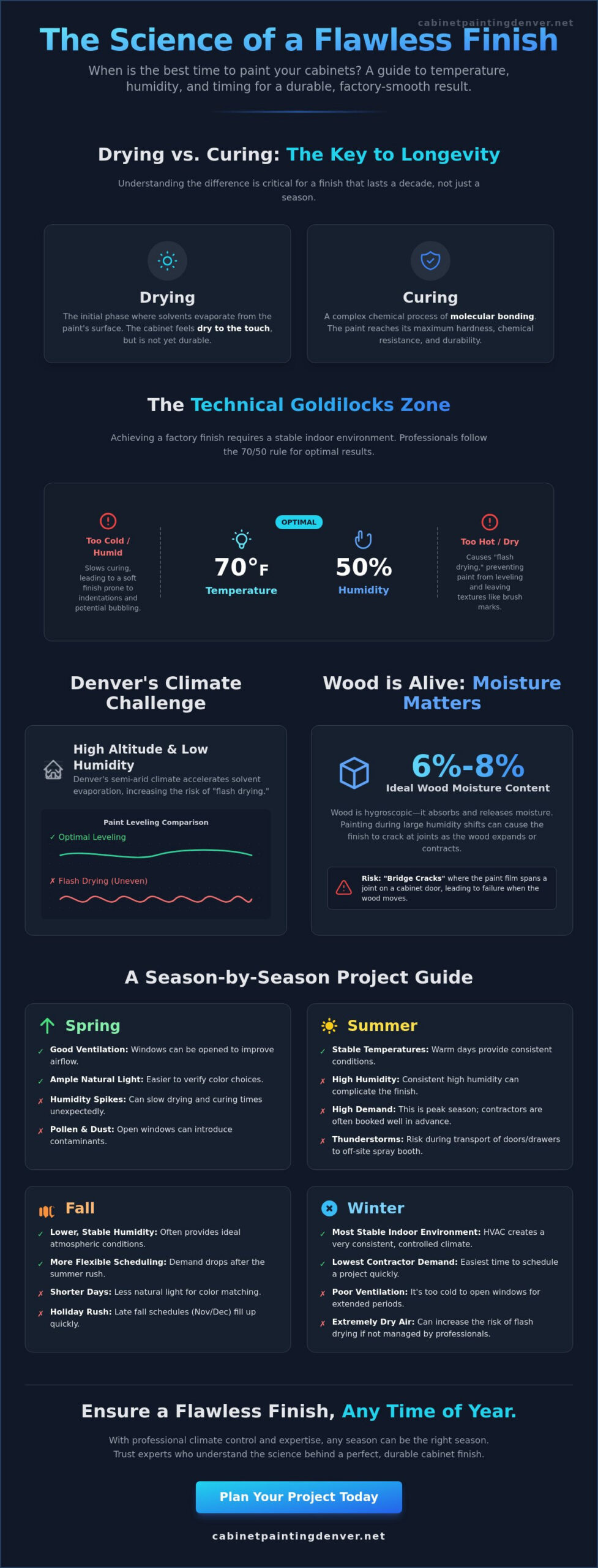
There is a critical distinction between paint drying and paint curing. Drying refers to the evaporation of solvents from the surface, making it dry to the touch. Curing is the subsequent process of molecular bonding where the paint reaches its maximum hardness and durability. Understanding how paint dries and cures helps explain why timing is vital. If the environment is too humid, the curing process slows down. If it is too dry or hot, the paint may “flash dry,” preventing it from leveling properly and leaving visible textures.
The Science of Adhesion and Curing
The longevity of a Kitchen Cabinet Painting project depends on initial adhesion. Moisture trapped within the wood grain acts as a barrier, preventing the primer from bonding securely. This often leads to future peeling or bubbling. Sluggish curing caused by cold temperatures can leave the surface soft and prone to indentations. Achieving a factory-smooth finish requires a controlled environment where the coating can harden uniformly. Professional cabinet refinishing standards prioritize these atmospheric variables to ensure the finish does not fail prematurely.
The Impact of External Humidity on Indoor Wood
Wood is a porous, hygroscopic material. It constantly absorbs and releases moisture to reach equilibrium with the surrounding air. During transition months, rapid changes in outdoor humidity cause cabinet doors to expand or contract. If you apply paint during these shifts, you may notice “bridge” cracks where the paint film spans the joint between a door frame and its center panel. Wood moisture content should ideally be between 6% and 8% for optimal painting. When scheduling Bathroom Cabinet Painting or work on bookshelves, maintaining this stability is essential for a seamless appearance. The best time of year to paint cabinets is when indoor conditions remain consistent enough to allow the wood and the coating to stabilize together.
The Pros and Cons of Painting Cabinets in Every Season
Selecting the best time of year to paint cabinets involves balancing technical requirements with logistical realities. While professional crews operate twelve months a year, each quarter presents unique challenges for project management and material behavior. Understanding these shifts helps you avoid delays and ensure a factory-smooth result. Project logistics often center on off-site work. Most high-quality transformations require transporting doors and drawer fronts to a controlled spray booth. Weather conditions during these transit windows can affect the final result. Additionally, contractor availability fluctuates significantly throughout the year.
The “holiday rush” in November and December often sees schedules fill weeks in advance as homeowners prepare for guests. Planning your Kitchen Cabinet Painting project outside of these peak windows typically results in more flexible scheduling and faster turnaround times. Ventilation also remains a primary concern. You must determine when you can safely open windows for airflow without introducing excessive dust, pollen, or freezing air into the workspace. The timing of your project dictates how easily you can manage these environmental factors while maintaining a functional home.
Spring and Summer: The High-Demand Window
The warmer months offer clear advantages for ventilation. Homeowners can safely open windows to facilitate airflow without dropping the indoor temperature below the required threshold for paint bonding. Natural light is also at its peak, which assists in verifying that the color for your Bookshelves cabinet painting project matches your interior lighting. However, this season brings high humidity spikes. Moisture in the air can extend drying times and complicate the leveling of the finish. In many regions, sudden afternoon thunderstorms pose a risk when moving components between your home and the spray facility. Demand is highest during these months. You may face longer wait times as contractors fill their calendars with multiple interior projects simultaneously.
Fall and Winter: The Technical Sweet Spot
Many professionals consider the colder months to be the superior choice for technical reasons. Humidity levels remain consistently low, which is ideal for the curing process. Because cabinet painting in Denver frequently occurs in a semi-arid climate, the winter air helps solvents evaporate at a predictable rate. This stability results in a harder, more durable surface. Contractor schedules are often more flexible during this period, except for the immediate pre-holiday weeks. The primary drawback involves temperature management during transport. Cold air can cause coatings to thicken or “shock” if not handled correctly. Professionals must use heated transport or ensure rapid transitions to maintain the integrity of the Bathroom Cabinet Painting finish. If you want to avoid the summer waitlist, you might request a quote during the off-season to secure a preferred date.
Navigating the Denver Climate: Altitude and Humidity Challenges
Denver’s geographic profile creates a distinct environment for architectural coatings. Its semi-arid classification means humidity levels often stay below 30%, while the altitude of 5,280 feet results in lower atmospheric pressure than sea-level locations. This combination significantly accelerates the evaporation rate of paint solvents. When solvents leave the paint film too quickly, the coating cannot flow and level into a factory-smooth surface. This technical reality influences the best time of year to paint cabinets in the Rocky Mountain region, as painters must account for rapid drying cycles that don’t exist in more humid climates.
Professional cabinet painters in Colorado adjust their formulas based on these specific daily conditions. They often utilize additives, such as retarders, to slow down the drying process. This adjustment allows the paint to remain “open” longer, ensuring it settles flat before hardening. Without these professional interventions, the finish may appear textured or “pebbled” rather than smooth. These adjustments are necessary for Kitchen Cabinet Painting projects to ensure the finish meets high-durability standards despite the aggressive climate.
The Challenge of Low Humidity
Low humidity is a primary cause of the “orange peel” texture frequently seen in DIY projects throughout the metro area. Leveling occurs when the paint has enough time to settle and eliminate application marks. If the air is too dry, the surface skins over before the body of the paint can flatten. While this sounds like a drawback, the best time of year to paint cabinets can often be the winter because the air is predictably stable. Once the paint is applied correctly with the right additives, the low moisture levels facilitate a deep, thorough cure of the paint film. This creates a harder and more resilient finish than what is typically achieved in high-humidity coastal regions.
Managing Rapid Temperature Shifts
Denver is known for extreme temperature swings where the thermometer can drop 40 degrees in a single afternoon. This poses a logistical challenge when transporting doors from your home to a professional spray booth. Morning frost followed by intense afternoon sun can cause wood to expand and contract rapidly, potentially stressing a fresh coating. We strictly monitor indoor temperatures during the 24-hour post-application window for Bathroom Cabinet Painting and Bookshelves cabinet painting. Maintaining a steady climate prevents the fresh coating from cracking as the wood substrate moves. Denver’s low humidity is actually an asset if the drying speed is managed by a pro.
Indoor Climate Control: How to Ensure a Flawless Finish Year-Round
While the best time of year to paint cabinets often falls during stable weather months, professional results are achievable in any season through strict indoor climate management. You don’t have to wait for a specific calendar date if you can maintain a “goldilocks zone” inside your home. This environment allows the coating to bond and level without interference from external temperature swings or humidity spikes. Controlling these variables is the most effective way to prevent surface defects during a Kitchen Cabinet Painting project. Homeowners must take an active role in preparing the workspace to meet these technical requirements.
Preparation begins with a clear checklist to stabilize the air quality and temperature. Before the crew arrives, complete these steps:
- Clear all countertops and remove items from the top of the cabinets.
- Set your thermostat to a consistent 70 degrees Fahrenheit.
- Deactivate all kitchen appliances, specifically stoves and dishwashers.
- Ensure all windows remain closed to prevent the entry of dust or pollen.
The “70/50 Rule” is the industry standard for optimal curing. This means maintaining 70 degrees Fahrenheit and 50% relative humidity. In Denver’s dry climate, you may need a humidifier to reach that 50% threshold, while more humid regions might require a dehumidifier. High heat from a stove or steam from a dishwasher can cause the paint to bubble or fail to bond. Keeping these appliances off is mandatory until the coating has reached its initial cure. If you need guidance on preparing your specific space, contact Cabinet Painting Denver to discuss your project requirements.
Setting Your Thermostat for Success
Consistency is more important than achieving a “perfect” temperature. If the temperature fluctuates significantly, the wood substrate will expand and contract, which can stress the fresh paint film. You shouldn’t turn the heat down at night during the curing phase. Maintain the 70-degree setting for at least 48 hours after the final coat is applied to your Bathroom Cabinet Painting or bookshelves project. This stability ensures the molecular bonding process remains uninterrupted.
Managing Airflow and Dust
Airflow must be controlled rather than aggressive. Ceiling fans are often the enemy of a factory-smooth finish because they circulate dust and pet dander into the wet zone. Professional crews typically use HEPA filtration systems to clean the air without creating high-velocity drafts. You must also keep pets and foot traffic away from the area to prevent airborne contaminants from settling on the surface. These steps are essential for Bookshelves cabinet painting where large flat surfaces are particularly vulnerable to dust settlement.
Planning Your Kitchen Transformation with Cabinet Painting Denver
While technical factors make Fall and Winter the optimal period for curing, professional expertise allows for successful transformations year-round. The best time of year to paint cabinets ultimately depends on your personal timeline and the availability of a qualified team. Seasonal demand often peaks in the Spring and early Summer. Homeowners should plan to book their projects 4 to 8 weeks in advance to secure a preferred slot during these high-demand windows. This lead time ensures all logistical requirements, including off-site transport and material procurement, are finalized before work begins.
The cost to paint kitchen cabinets can fluctuate based on several variables, including the time of year you choose for your project. Seasonal shifts in labor demand and material availability sometimes influence project quotes. Choosing a less busy season can occasionally offer more flexibility in scheduling and faster turnaround times. Regardless of the month, a professional approach mitigates the risks associated with external weather patterns. Using a climate-controlled spray shop ensures that the finish on your Kitchen Cabinet Painting project remains consistent and durable.
Why Our Process Defies the Seasons
Our methodology relies on a controlled environment to eliminate the variables of Colorado’s outdoor weather. We transport cabinet doors and drawer fronts to a dedicated facility where temperature and humidity are strictly regulated. This off-site spraying method ensures a factory-smooth finish that’s difficult to achieve with on-site brushing or rolling. We utilize specialized primers formulated to bond with wood at Denver’s specific moisture levels. Hiring a cabinet painter who understands the local climate is essential for long-term adhesion. Our process addresses the unique challenges of the Rocky Mountain region to deliver a finish that resists cracking and peeling.
Get Started on Your 2026 Remodel
Planning your 2026 kitchen or bathroom update starts with a technical assessment of your cabinetry. Different wood types, such as oak, maple, or cherry, respond differently to coatings and environmental changes. We provide a transparent, procedural approach to every Bathroom Cabinet Painting and Bookshelves cabinet painting project. This includes a detailed review of your current cabinet condition and a clear timeline for completion. Homeowners can view our gallery of Denver-area transformations to see the results of our specialized process. Contact us to schedule a consultation and determine the best time of year to paint cabinets based on your specific home environment and renovation goals.
Secure Your Durable Cabinet Transformation Today
Achieving a factory-smooth finish requires balancing environmental control with technical expertise. While the best time of year to paint cabinets is technically during the stable humidity of winter, our professional process ensures high-quality results in any season. We utilize a climate-controlled off-site spray facility to protect your cabinet doors from Denver’s unpredictable temperature swings. Since 2010, we’ve served the entire Denver Metro area with specialized high-altitude paint formulas designed to level perfectly in semi-arid conditions.
Whether you are planning a Kitchen Cabinet Painting project or a transformation for your bookshelves, prioritizing the curing environment is essential for long-term durability. Our team manages the technical requirements so you can focus on your home’s new aesthetic. Take the next step in your renovation by choosing a partner who understands Colorado’s unique atmospheric challenges. Request Your Free Professional Cabinet Painting Estimate in Denver and start your kitchen transformation with confidence.
Frequently Asked Questions
Is it better to paint cabinets in the summer or winter?
Winter is technically superior because indoor humidity levels are lower and more stable. This environment allows the coating to cure deeply and bond securely to the wood grain. Summer is also a viable option if you can maintain a consistent indoor temperature. High-quality results depend more on atmospheric stability than the specific month on the calendar.
Can you paint kitchen cabinets when it’s raining outside?
You can paint cabinets while it’s raining because the work occurs in a controlled indoor environment. However, rain increases outdoor humidity, which can seep into the home and slow the drying process. Professional teams monitor these levels closely. They may use dehumidifiers or air movers to ensure moisture doesn’t interfere with the paint’s adhesion or final finish quality.
How long does the paint take to cure in Denver’s dry climate?
In Denver’s semi-arid climate, the paint surface usually feels dry to the touch within 2 to 4 hours. However, a full chemical cure typically takes 14 to 30 days. The dry air helps solvents evaporate quickly, but you must still handle the cabinets with care. Avoid scrubbing or heavy impact during the first month to prevent chipping before the film reaches maximum hardness.
Does humidity affect the price of cabinet painting?
Humidity does not typically change the base price of a Kitchen Cabinet Painting project, but it can influence the project timeline. If humidity is excessively high, crews may need more time between coats for proper drying. While the best time of year to paint cabinets might be the dry winter months, professional contractors use technical additives to ensure consistent results and pricing during every season.
Should I run a humidifier while my cabinets are being painted?
You should only run a humidifier if the indoor relative humidity drops below 30%. While Denver is naturally dry, paint needs a small amount of moisture in the air to level properly into a smooth surface. If the air is too dry, the paint may “flash dry” and leave a textured finish. Aim for a stable humidity level around 40% to 50% for optimal curing.
What is the worst month to paint kitchen cabinets?
No single month is inherently the worst, but transition periods like April or October can be challenging due to rapid outdoor temperature swings. These shifts cause wood to expand and contract, which can stress a fresh coating. The best time of year to paint cabinets is whenever you can maintain a steady indoor thermostat setting. Professionals can deliver a flawless finish in any month with proper climate control.
How long should I wait to use my kitchen after the cabinets are painted?
You can typically begin light use of your kitchen 24 to 48 hours after the final coat is applied. Avoid cleaning the cabinets with chemicals or scrubbing the surface for at least 30 days. It’s also important to keep appliances like dishwashers and stoves off for the first 48 hours. This prevents steam and heat from softening the fresh finish during its initial cure.
Do professional painters use different paint for different seasons?
Professionals use the same high-quality industrial coatings year-round but adjust the formula with specific additives based on the daily weather. In dry seasons, they add retarders to slow drying and improve leveling. In colder or more humid months, they may use different solvents to ensure the paint cures within the expected timeframe for your Bathroom Cabinet Painting or Bookshelves cabinet painting project.