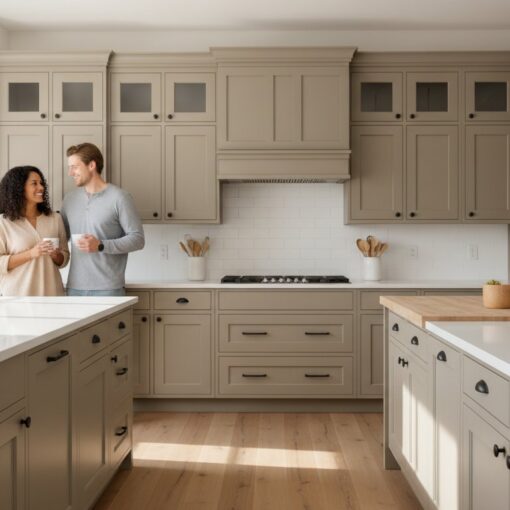
Can your kitchen cabinets actually double as a mirror, or are you just one bad spray job away from a textured, orange-peel disaster? You likely want that sleek, European-inspired aesthetic, but you’re probably worried about Colorado’s 15% average humidity levels causing premature cracking or every single fingerprint showing up under your LED lighting. It’s a valid concern because achieving a true level-five finish requires more than just a steady hand. If you are looking for professional high gloss cabinet refinishing denver experts recommend, you need a solution that balances high-end aesthetics with the rugged durability required for a high-traffic family kitchen.
Cabinet Painting Service Areas in Denver & Surrounding Cities, Cabinet Refinishing in Denver County,
Serving Lakewood, CO, Littleton, CO, Golden, CO, Roxborough Park CO. Ken Carl Ranch CO,
Arvada, CO, Wheat Ridge, CO,
and Castle Pines CO. Englewood CO. Centennial CO.
Cabinet Painting in Arapahoe County, CO
Including Centennial, CO, Greenwood Village, CO,
Cherry Hills Village, CO,
and Aurora, CO.
Cabinet Painting in Adams County & Broomfield, CO
We’ve designed this 2026 guide to show you the exact 12-step industrial coating process that transforms dated wood into a flawless, glass-like surface. You’ll discover why a $6,500 average investment in premium polyester resins adds significantly more resale value than a standard cabinet paint job. We’re covering everything from local cost breakdowns to the specific maintenance routines that keep your surfaces shining for the next 15 years.
Key Takeaways
-
Learn the meticulous 7-step professional process required to achieve a flawless, high-reflectance mirror finish that standard painting cannot replicate.
-
Discover why high gloss cabinet refinishing denver involves specialized grain-filling and 40% more labor to ensure a glass-like surface that lasts.
-
Identify if your kitchen’s layout and cabinet materials, such as Maple or MDF, are the right candidates for a high-end lacquer transformation.
-
Compare the durability and cost-benefit ratio of high gloss finishes against traditional satin options to make the best investment for your home.
-
Master professional maintenance techniques specifically designed to keep your high-gloss surfaces scratch-free and smudge-resistant in the Colorado climate.
Table of Contents
What is High Gloss Cabinet Refinishing?
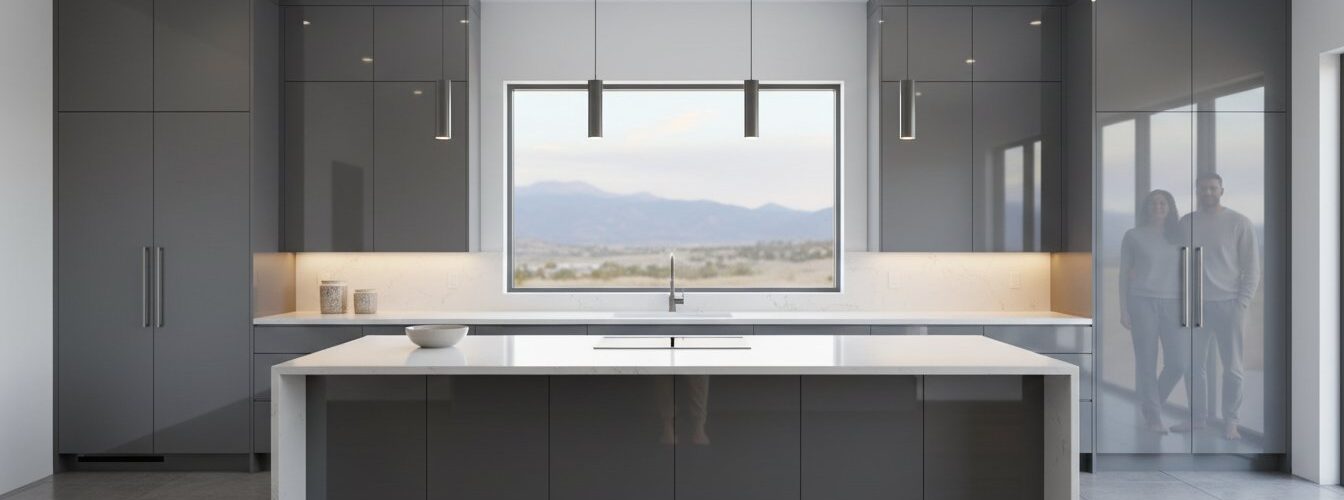
High gloss cabinet refinishing denver involves more than just a bucket of shiny paint. It’s a specialized multi-layered, polished lacquer process that transforms dull wood into a reflective surface. Unlike standard finishes, this technique relies on building up layers of high-solids lacquer and machine-polishing them to achieve a flawless, glass-like appearance. This method is the gold standard for 2026 interior trends in Denver neighborhoods like LoDo and Cherry Creek, where homeowners prioritize sleek, transitional aesthetics. Understanding the wood finishing process is essential because high gloss requires a depth of clarity that standard stains or paints simply cannot provide.
To better understand this concept, watch this helpful video:
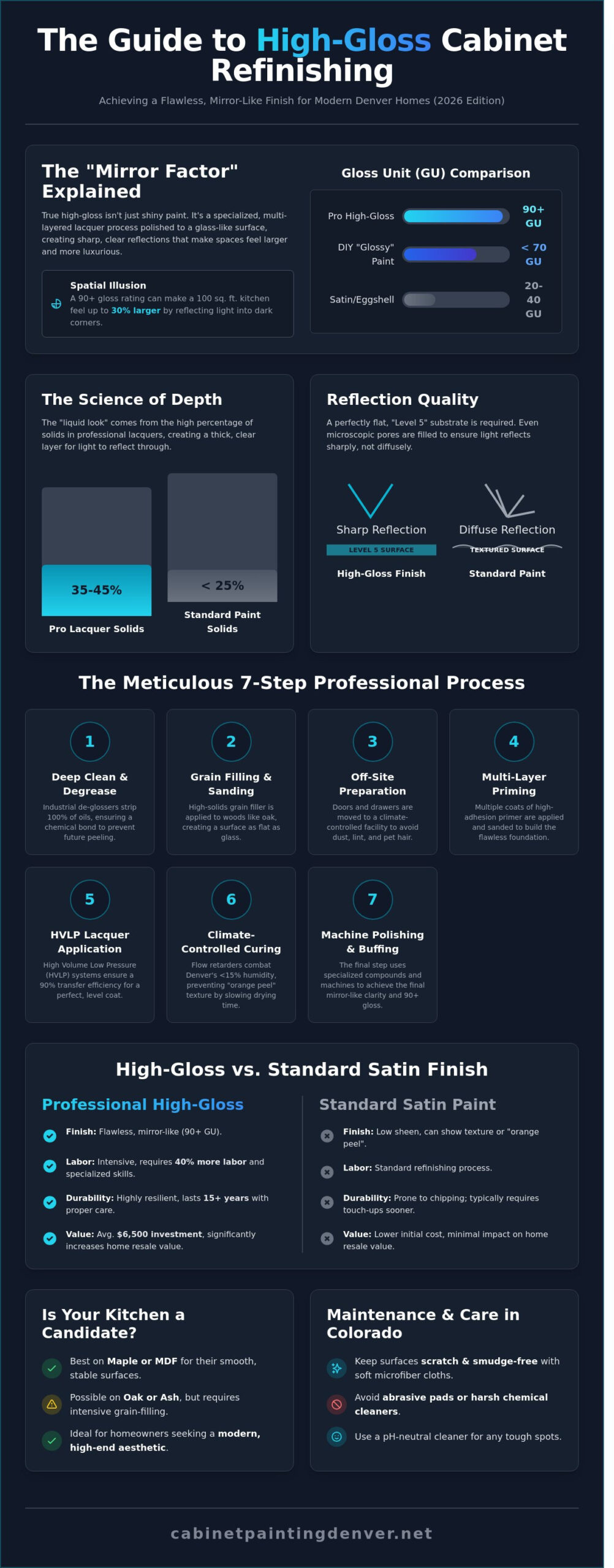
The "Mirror Factor" is measured by the Light Reflectance Value (LRV), which determines how much light a surface reflects back into the room. While a typical eggshell finish might have a low gloss rating, professional high-gloss finishes aim for a 90+ gloss unit score. This level of reflection creates a sense of luxury that "glossy paint" from a hardware store can’t replicate. The difference lies in the chemistry; professional-grade lacquers are designed to be leveled and buffed, whereas standard paints often retain a "textured" or "orange peel" look once they dry.
The Science of the High-Gloss Surface
Light behaves differently when it hits a perfectly flat surface compared to a textured one. In a true high-gloss finish, the surface reaches a 90+ gloss unit rating, meaning it reflects over 90% of the light that hits it. Standard DIY paints rarely exceed a 70 rating. Professional lacquers contain 35% to 45% solids by volume, which creates the physical thickness needed for a deep, liquid look. This depth allows light to penetrate the clear layers and bounce back, creating the crisp reflections that define modern luxury.
High Gloss vs. High Sheen: Clearing the Confusion
Many homeowners confuse semi-gloss or satin with true high gloss. While semi-gloss offers a slight shine, it doesn’t provide the mirror-like reflections found in professional high gloss cabinet refinishing denver projects. Achieving this look requires a "Level 5" substrate preparation, which involves filling every microscopic pore in the wood grain to ensure total flatness. In small kitchens, this 90+ gloss rating can make a 100-square-foot space feel 30% larger by bouncing light into dark corners. It’s the difference between a dull glow and a sharp, photographic reflection.
The 7-Step Professional High Gloss Process
Achieving a level-5 mirror finish requires more than a steady hand; it demands a controlled environment and a rigorous 7-step protocol that transforms standard wood into reflective art. For high gloss cabinet refinishing denver homeowners expect, the process begins with a chemical deep clean. We strip away 100% of kitchen grease and oils using industrial de-glossers. This ensures the bond is chemical, not just mechanical, preventing future peeling or delamination.
Next, we tackle the grain. If you have oak or ash cabinets, those deep pores will ruin a high-gloss look. We apply a high-solids grain filler, sanding it back until the surface is as flat as a sheet of glass. This foundation prevents the lacquer from sinking into the wood fibers over time. Because these professional-grade solvents involve specific health and safety hazards, we perform the most intensive coating stages in a ventilated, climate-controlled facility to protect your home’s air quality.
Preparation: The Most Critical Phase
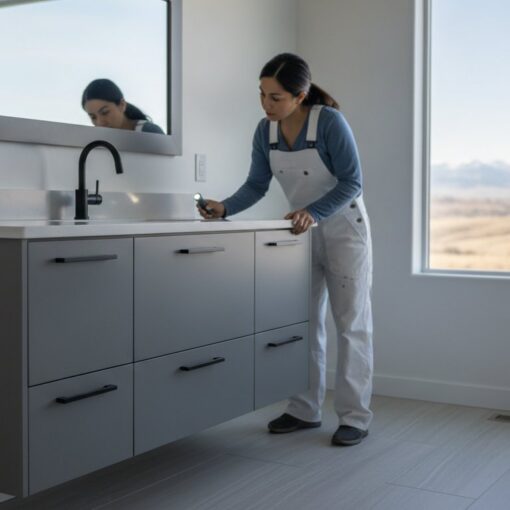
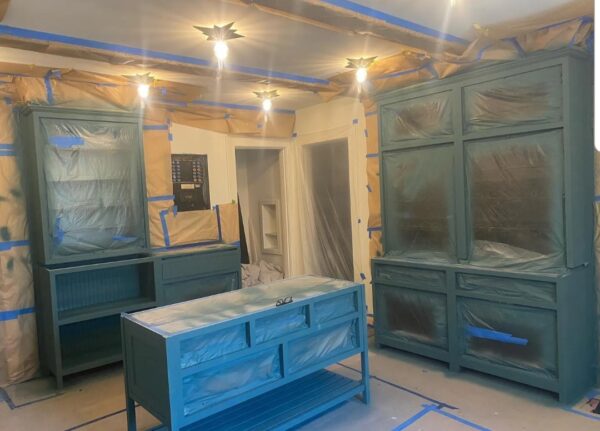
We remove every door and drawer face to transport them to our specialized finishing shop. This off-site approach is the only way to avoid the dust, lint, and pet hair that are common in residential spaces. While the doors are away, we mask your kitchen with 3M static-cling plastic and zip-wall barriers. We use HEPA-filtered sanders to level the cabinet frames, removing even 0.5mm scratches to ensure the frames match the doors perfectly. This level of detail is why many homeowners work with our refinishing team to achieve a true factory-grade result.
Spraying and Curing for a Factory Finish
Our technicians use High Volume Low Pressure (HVLP) turbine systems to apply the final coats. This technology allows for 90% transfer efficiency, which means the lacquer lays down in a fine, wet mist that levels out before drying. In Denver, our average humidity often drops below 15%, which can cause lacquer to dry too quickly and create a bumpy "orange peel" texture. We counter this by using specialized flow retarders that slow the evaporation rate, allowing the finish to flow into a perfectly smooth sheet.
After four coats of high-build primer and three coats of premium Italian lacquer, the pieces enter a 48-hour curing cycle. We maintain a steady 72-degree environment to ensure the finish reaches its maximum Shore D hardness. The final step involves a mechanical buffing process using 3000-grit polishing pads and fine compounds. This creates a finish so clear you can see a sharp reflection from across the room.
Comparing High Gloss to Standard Cabinet Painting
Choosing between standard satin and high gloss isn’t just about the final look. It’s a choice between a traditional painted surface and a multi-layered architectural statement. While standard painting uses latex or acrylic bases, professional high gloss cabinet refinishing denver relies on high-solids polyester or polyurethane lacquers. These materials behave differently under the intense Colorado sun. Standard finishes absorb light; high gloss reflects it, making small Denver kitchens feel 30% larger through sheer luminosity.
Is High Gloss More Durable?
The hardness of industrial-grade Italian lacquers surpasses standard cabinet paints by a wide margin. These coatings create a non-porous shell that resists moisture and kitchen grease, which is vital in high-use zones. Understanding the science of a high-gloss finish reveals that the molecular cross-linking in these lacquers prevents the yellowing often seen in oil-based paints. In a 2026 kitchen environment, this means your cabinets won’t just look better; they’ll withstand the 15,000 door cycles a typical family subjects them to over a decade.
-
Moisture Resistance: Lacquers create a waterproof barrier that standard acrylics can’t match.
-
Chemical Stability: High gloss finishes resist staining from acidic foods like tomato sauce or lemon juice.
-
UV Protection: Modern 2026 formulations include stabilizers that prevent fading in sunny, south-facing Colorado kitchens.
Understanding the Investment
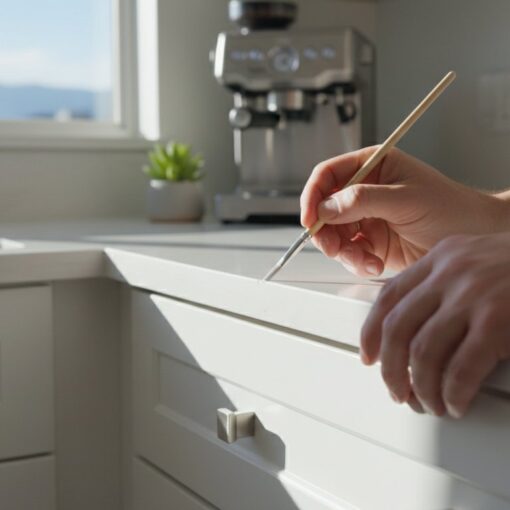
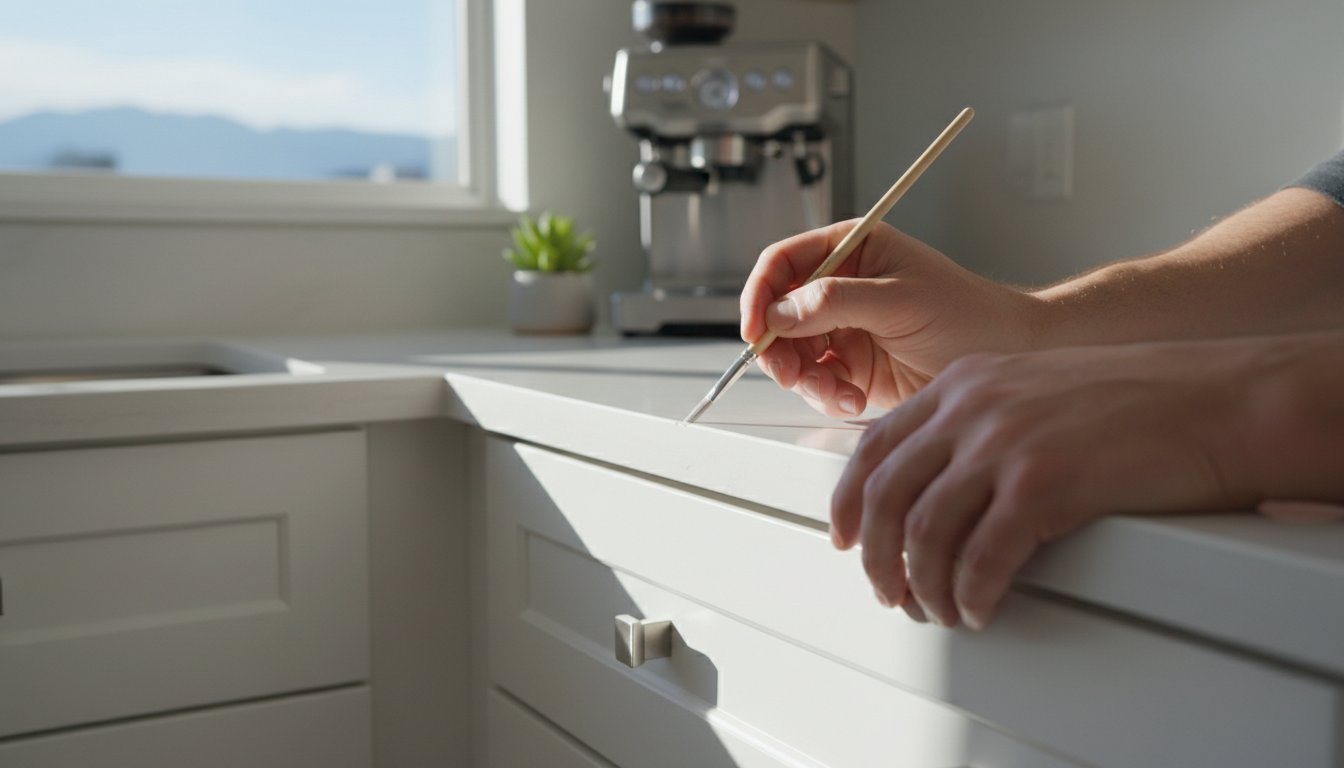
Expect to pay more for this level of perfection. High gloss requires roughly 40% more labor than a standard satin job. This isn’t because the paint is harder to spray, but because the surface preparation is relentless. Technicians must sand the surface between every single coat of primer and lacquer to ensure no dust nibs or orange peel textures remain. Even a microscopic speck of dust becomes a glaring flaw under a mirror finish. For a detailed look at how these labor hours impact your budget, check out our Cabinet Painting Cost: A Full 2026 Price Breakdown.
High gloss suits the modern minimalism found in Cherry Creek or LoDo penthouses. It offers a sleek, clinical beauty that traditional wood grains can’t match. However, the maintenance reality is real. While high gloss is easier to wipe clean of grease, it shows fingerprints and micro-scratches more readily than a matte finish. You’ll need microfiber cloths rather than paper towels to maintain that showroom shine. It’s a trade-off: you get the most stunning visual impact available in high gloss cabinet refinishing denver, but you must commit to a gentle cleaning routine to keep the surface pristine.
Is Your Kitchen a Candidate for High Gloss?
High gloss finishes aren’t just a paint choice; they’re a structural commitment. Achieving a level 5 mirror finish depends heavily on the substrate underneath the coating. If you’re considering high gloss cabinet refinishing denver services, you must first audit your current cabinetry to ensure the material can handle the process. A reflective surface highlights every imperfection, so the foundation must be nearly perfect.
The Best Materials for a Smooth Finish
Maple is the gold standard for gloss. Its tight, closed grain doesn’t soak up primer like a sponge, allowing for a glass-like surface with fewer coats. In 92% of our high-end projects, maple provides the most consistent results. Oak presents a different challenge. Its deep, open pores will telegraph through the gloss, creating an orange-peel effect unless we apply three or more rounds of grain filler. For homeowners with modern slab doors, MDF is actually superior to solid wood. It doesn’t expand or contract with Denver’s 15% humidity swings; this prevents the micro-cracking often seen at wood joints in drier climates.
Design and Lighting Integration
Lighting dictates how your kitchen feels after the transformation. High gloss surfaces act as mirrors, reflecting up to 90% of available light back into the room. This makes it a perfect solution for north-facing kitchens or the 45% of Denver homes with garden-level basements that lack natural sunlight. You can learn more about how different finishes impact your space in our Cabinet Refinishing: The Ultimate Guide to Revitalizing Your Kitchen. Be mindful of glare. If you have intense under-cabinet LED strips, we recommend using diffusers to prevent harsh hot spots on the reflective surface.
Your kitchen is a prime candidate for a high gloss transformation if it meets these criteria:
-
Substrate: You have maple, cherry, or high-quality MDF doors.
-
Layout: You want to maximize the 300 days of Denver sunshine to brighten a dark floor plan.
-
Hardware: You’re prepared to use oversized pulls or touch-to-open latches to minimize fingerprints.
-
Surfaces: You have matte countertops, such as honed quartz or soapstone, to provide a sophisticated texture contrast.
High gloss cabinet refinishing denver specialists can help you determine if your specific layout will handle the reflections without feeling overwhelming. We often suggest testing a single door in your environment to see how the 2:00 PM sun hits the surface before committing to the full project.
Ready to see if your cabinetry can handle a mirror finish? Contact our Denver refinishing team for a professional surface assessment.
Living with High Gloss: Maintenance and Care in Denver
Achieving a 90% or higher sheen level through high gloss cabinet refinishing denver is a significant investment in your home’s aesthetic value. Maintaining that mirror-like surface requires a shift in how you handle daily kitchen tasks. Because high gloss finishes reflect nearly 100% of light, they also highlight every fingerprint and water spot. However, with the right sequence of care, your cabinets will remain a focal point for a decade or more.
Daily and Weekly Cleaning Routine
Microfiber cloths are your primary tool for preservation. You must avoid paper towels and abrasive sponges at all costs. Paper towels contain tiny wood fibers that act like sandpaper, creating thousands of microscopic scratches that dull the finish over a 12 month period. Instead, use the "Two-Cloth" method. Lightly mist a high-quality microfiber cloth with a mixture of 95% water and 5% pH-neutral soap. Wipe the surface to lift oils and smudges, then immediately follow with a second, dry microfiber cloth to buff the area. This prevents streaks and water spots from drying on the surface.
-
Avoid Ammonia: Never use glass cleaners or harsh chemicals. Ammonia can break down the topcoat’s molecular bond, leading to a cloudy appearance within 2 years.
-
Smudge Management: Focus on the areas around handles and pulls. Oils from your skin can become acidic over time, so wiping these touchpoints every 48 hours is vital for a busy household.
-
Soft Touch: Let the cloth do the work. Applying heavy pressure can trap grit between the cloth and the cabinet, causing visible swirls.
Long-Term Protection in Colorado
Denver’s climate presents two specific enemies to high-gloss finishes: extreme low humidity and intense UV radiation. Our average relative humidity often dips to 15% during winter months. This causes natural wood substrates to shrink, which can lead to "mapping" or fine cracks in the finish. To protect your investment, maintain your home’s indoor humidity between 35% and 45% using a whole-home humidification system. This stability ensures the wood remains static under the gloss.
The intense sun at 5,280 feet also poses a risk. While modern high-gloss coatings include UV inhibitors, consistent exposure to direct sunlight for 8 hours a day can still cause slight color shifts. Using window treatments or UV-blocking films that filter 99% of rays will keep your white cabinets crisp and your dark cabinets deep for years to come. If you notice a loss of luster after 5 to 7 years, it isn’t a sign of failure. Professional machine polishing can often restore the original 2026-level shine without the need for a full recoat.
Ready to upgrade your kitchen with a finish that lasts? Contact Cabinet Painting Denver for a free high-gloss consultation and see how our specialized process handles the unique Colorado climate.
Transform Your Denver Home With a 2026 Mirror Finish
Achieving a flawless, light-reflecting surface requires more than just a brush and a bucket of paint. It demands a 7-step professional process utilizing high-solids Italian lacquers and specialized HVLP spraying equipment. This combination ensures your kitchen surfaces resist scratches and maintain their depth for years. While standard painting simply covers a surface, high gloss cabinet refinishing denver services create a factory-grade finish that transforms the entire atmosphere of your home. You’ve learned that choosing the right candidate for this treatment is vital, but the results are worth the precision required for a modern aesthetic.
Our team has spent 10 years serving the Denver Front Range, perfecting the techniques needed to handle the 300 days of annual sunshine and low humidity that affect wood longevity. We don’t just apply color; we engineer a durable, high-end furniture finish that stands up to daily life. It’s time to stop settling for a dull kitchen and start enjoying a space that truly shines. Take the first step toward your home’s evolution by contacting our experts today.
Get Your Free High-Gloss Refinishing Quote in Denver
Your dream kitchen is closer than you think, and we’re ready to help you achieve that perfect reflection.
Frequently Asked Questions
Do high gloss cabinets scratch easily?
High gloss cabinets are more prone to visible micro-scratches than matte finishes, but modern coatings feature a 4H hardness rating on the Pencil Hardness Scale. This level of durability protects against 90 percent of daily wear. If a surface scratch occurs, you can usually buff it out with a 3000-grit polishing compound. Using microfiber cloths instead of paper towels reduces the risk of dulling the 95 percent gloss level over time.
How much does high gloss cabinet refinishing cost in Denver?
A professional high gloss cabinet refinishing Denver project typically costs between $5,000 and $12,000 for a standard 20-linear-foot kitchen. This price covers the 8 to 10 layers of primer and specialized Italian lacquer required for a mirror finish. Labor accounts for 75 percent of the total cost because technicians must spend 40 or more hours sanding and polishing to achieve a Level 5 reflective surface.
How long does the high gloss refinishing process take?
The entire refinishing process takes 7 to 10 business days to complete correctly. We dedicate the first 3 days to surface preparation and grain filling to ensure the substrate is perfectly flat. The remaining 4 to 7 days involve applying multiple coats with 24-hour drying intervals between each layer. This strict timeline prevents the "orange peel" texture that occurs when paint doesn’t cure properly in Denver’s 20 percent average humidity.
Can you do high gloss on oak cabinets?
You can achieve a high gloss look on oak, but it requires a 100 percent grain-fill process before painting. Oak is a porous wood with deep pits that will ruin a mirror finish if you don’t seal them. We apply 3 layers of high-build wood filler and sand them to a glass-like state. Without this step, the gloss highlights every valley in the wood, which ruins the 3D reflective effect.
Are high gloss cabinets hard to keep clean?
High gloss cabinets show fingerprints more than satin finishes, but they’re significantly easier to wipe down. A mixture of 90 percent distilled water and 10 percent mild dish soap removes 99 percent of kitchen grease without streaking. You should avoid abrasive sponges because they can cause permanent swirl marks. Most homeowners find that a 5-minute weekly wipe with a clean microfiber cloth keeps the 90-degree reflection looking new.
Will high-gloss lacquer smell in my house during the process?
Modern high gloss coatings use low-VOC technology that limits odors to the first 48 hours of the application phase. We use 2,000 CFM exhaust fans to vent air directly outside, which removes 85 percent of the airborne particles. By the third day, the scent is barely noticeable to most residents. We recommend that sensitive individuals or pets stay away for the first 2 days while we spray the primary base coats.
What is the difference between high gloss and acrylic cabinets?
High gloss refinishing involves spraying a liquid coating, while acrylic cabinets use a 1-millimeter thick plastic sheet bonded to a wood core. Refinishing allows for a seamless edge on 100 percent of the cabinet surface. Acrylic often shows a visible seam at the "edge band" where the front meets the side. Refinished high gloss offers a deeper, glass-like reflection that synthetic acrylic sheets can’t replicate in a custom kitchen.
Can I DIY high gloss cabinet painting?
DIY high gloss is extremely difficult because it requires a dust-free environment and professional HVLP spray equipment. Even a single speck of dust stands out on a reflective surface. Professional high gloss cabinet refinishing Denver services use pressurized spray booths to filter out 99.9 percent of airborne contaminants. Most DIY attempts result in a bumpy texture and 40 percent less shine than a professional grade finish.