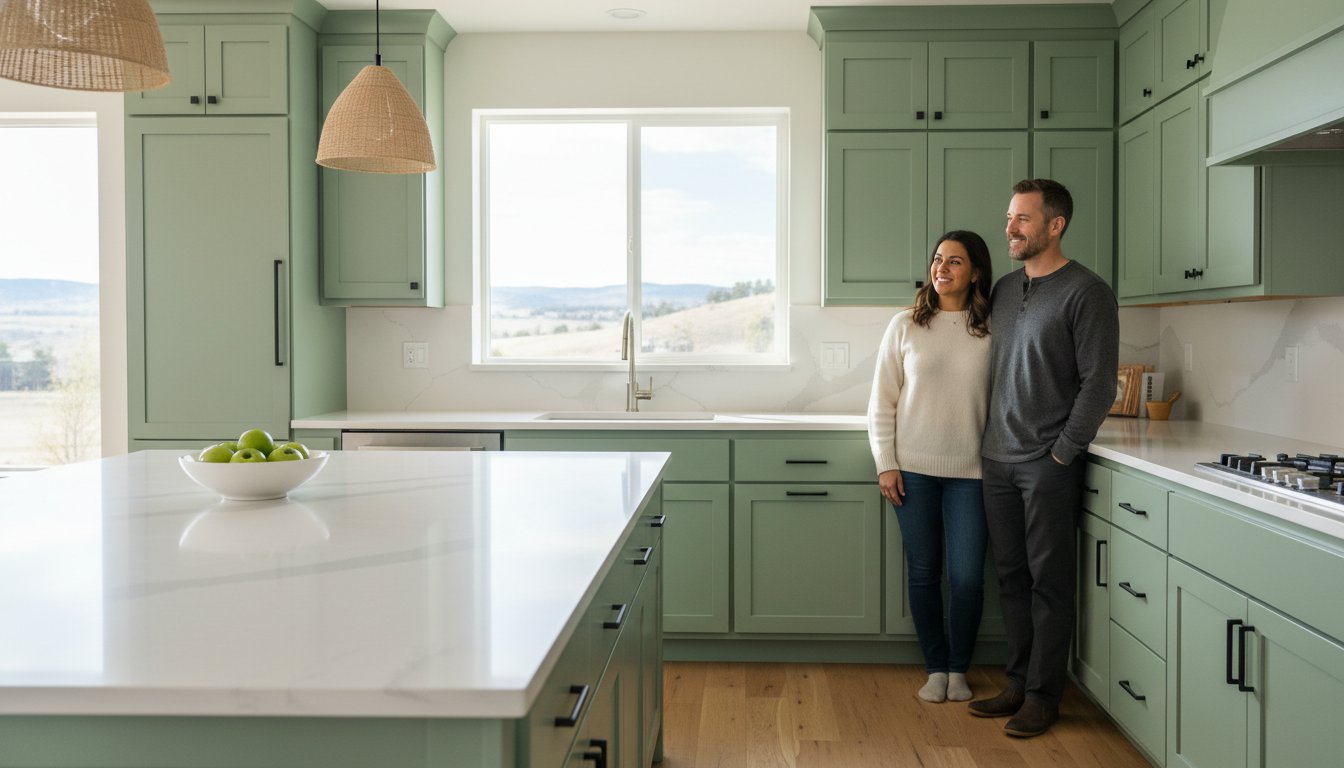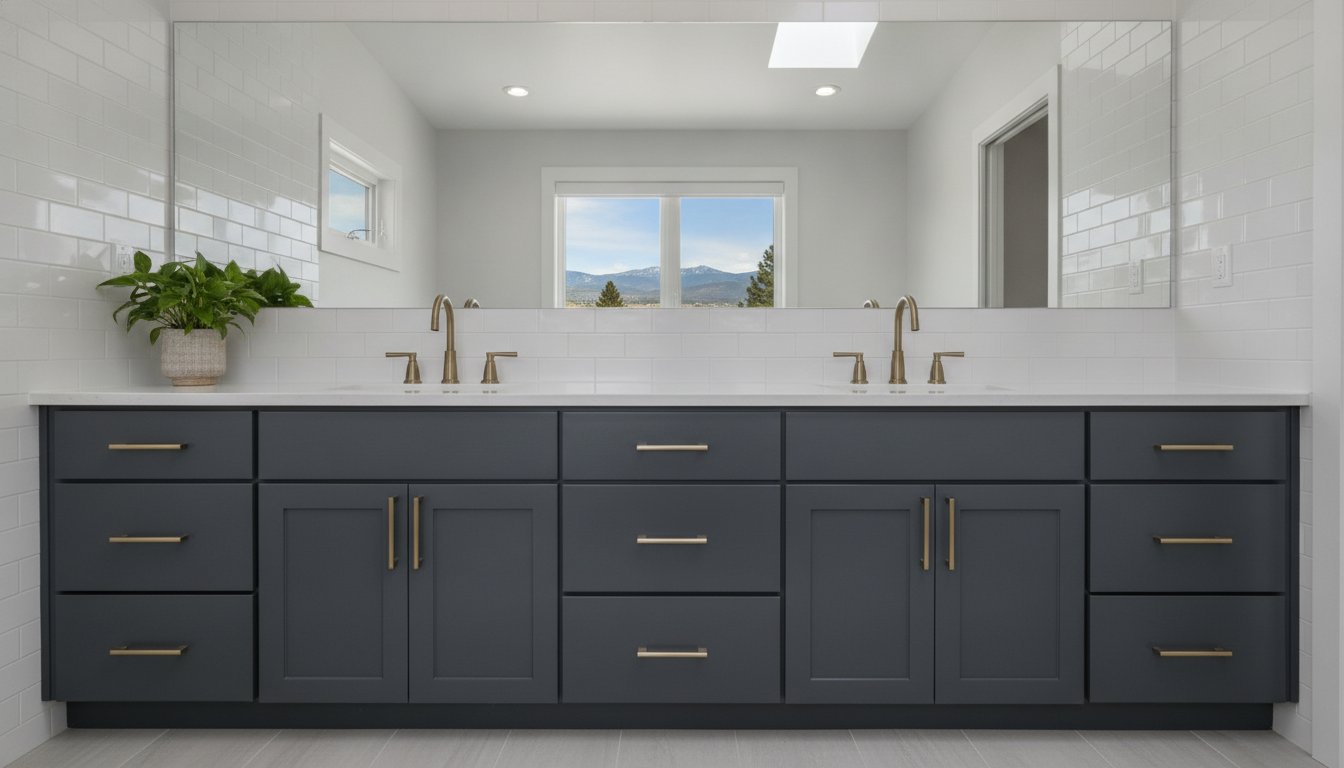
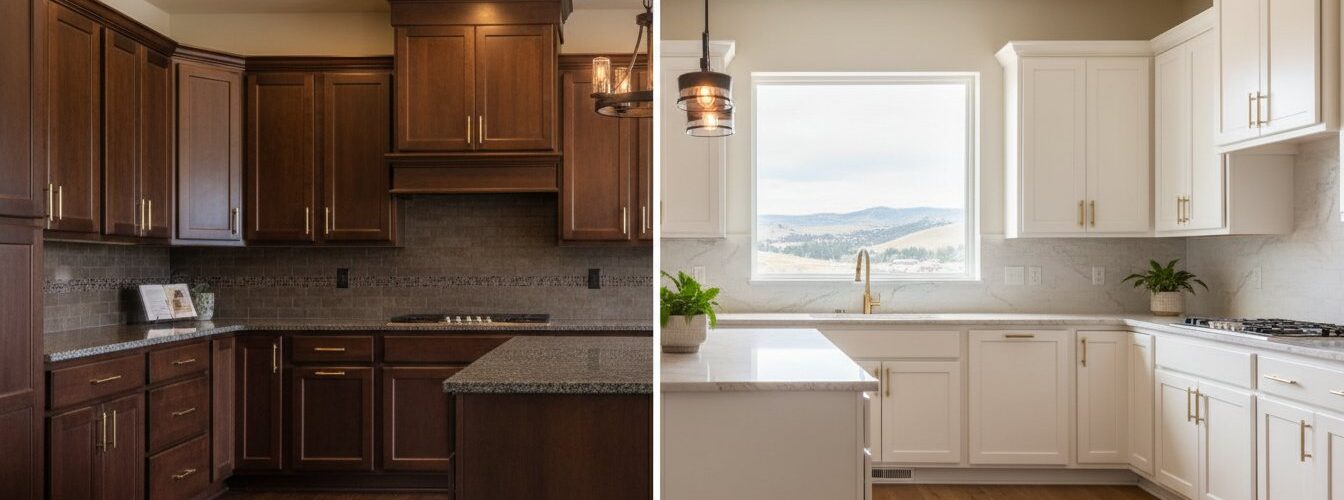
Last Tuesday, Sarah stood in her kitchen at 2:00 PM with every overhead light blazing, yet she still felt like she was cooking in a subterranean cave. It’s a common frustration for the 42% of homeowners who report that poor lighting is their primary kitchen grievance according to recent interior design surveys. If you are tired of seeing every stray fingerprint on espresso-toned wood or feeling claustrophobic in a room that should be the heart of your home, you aren’t alone. You can effectively brighten a dark kitchen with painted cabinets to reclaim your space without a full-scale demolition.
You likely already know that your current dark surfaces are absorbing the majority of available light, making your square footage feel halved. It’s exhausting to scrub dark doors that never look clean or feel a sense of dread when stepping into a shadowy workspace. We promise to show you how to use light-reflecting color science and professional application techniques to make your kitchen look twice as large while boosting your home’s resale value. This 2026 guide provides a deep dive into the high-LRV palettes and durable coating secrets that ensure your new, airy sanctuary remains pristine for the next decade.
Key Takeaways
- Learn how to use Light Reflectance Value (LRV) to select paint colors that amplify ambient light instead of absorbing it.
- Discover the specific design strategies used to brighten a dark kitchen with painted cabinets while eliminating heavy visual weight.
- Understand why the texture of your cabinet finish is just as important as the color for controlling how light moves through the room.
- Follow a professional 5-step audit to identify “light traps” in your current kitchen that make the space feel smaller than it is.
- Find out how industrial-grade coatings prevent finish yellowing to maintain a crisp, bright sanctuary for years to come.
The Visual Weight of Dark Cabinets: Why Your Kitchen Feels Small
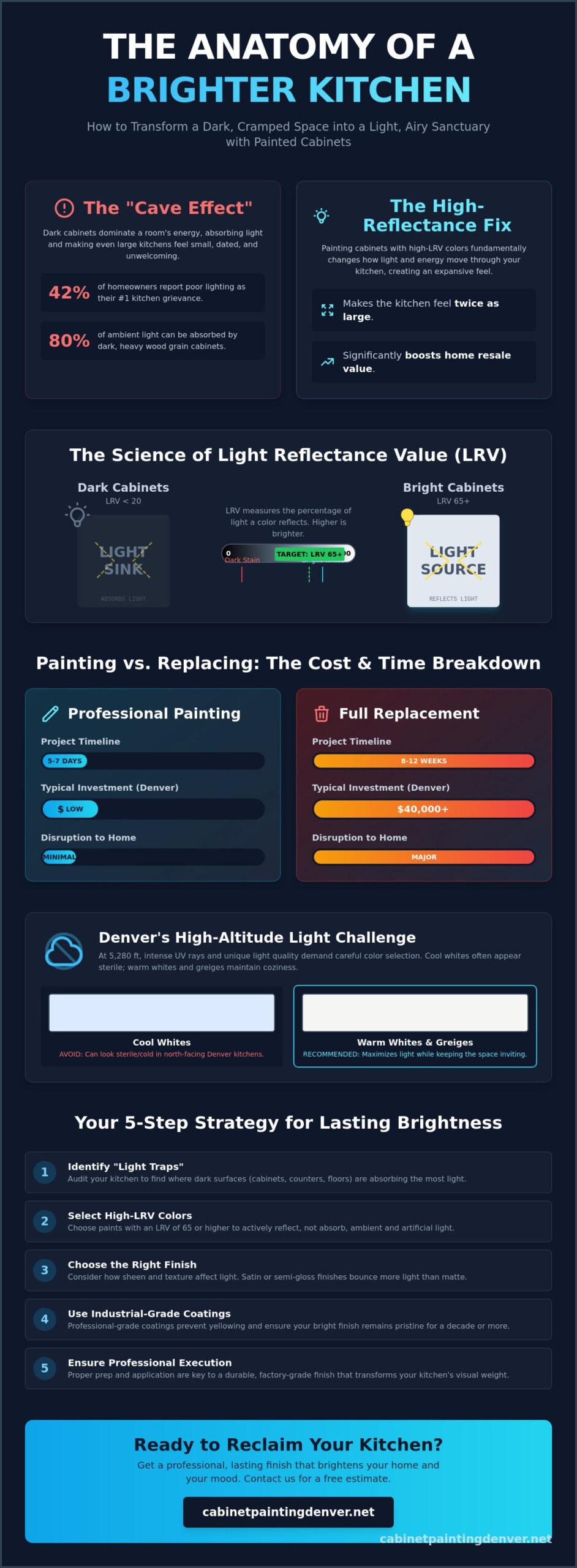
Dark cabinets don’t just occupy physical space; they dominate the room’s energy. In professional design, this is known as visual weight. Heavy wood grains like 1990s oak or deep cherry finishes act as light sinks, often absorbing up to 80% of the ambient light that enters the room. This creates a “cave effect” that can make even a large floor plan feel cramped and uninviting. When you decide to brighten a dark kitchen with painted cabinets, you’re doing more than updating a color. You’re fundamentally changing how the room reflects energy. Wood surfaces feel closed-in because they pull the eye toward the floor. Painted surfaces, particularly in soft whites or light greys, create an expansive feel that makes the walls seem further apart.
The psychological impact of a dark kitchen is measurable. Homeowners in the Denver metro area report that dim, muddy kitchens lead to lower home enjoyment and a reluctance to host guests. In 2026, painting remains the top ROI project for local homeowners because it provides an immediate aesthetic lift without the structural chaos of a remodel. It’s a strategic move that turns a heavy, dated environment into a crisp, modern workspace that boosts both mood and property value.
To better understand how a color shift changes the feel of a room, watch this helpful video:
The Problem with Natural Light in Denver Kitchens
Denver’s 300 days of sunshine don’t always solve the problem of a dark kitchen. North-facing kitchens in Colorado often struggle with weak, blue-toned light that makes dark wood look cold and flat. Conversely, south-facing kitchens deal with intense glare. At an altitude of 5,280 feet, high-altitude UV rays are significantly stronger. These rays can cause dark stains to fade unevenly or look “muddy” over time. Simply adding more recessed lighting often fails because the cabinetry continues to swallow the light. The solution lies in the Light Reflectance Value (LRV) of your surfaces. By choosing a paint with a high LRV, you ensure that light bounces off the cabinets rather than dying on the surface.
Painting vs. Replacing: The Cost-Effectiveness of Brightening
Replacing high-quality wood cabinets in 2026 is a massive investment, with full kitchen gut-jobs often exceeding $40,000 in the Denver market. Professional refinishing offers a smarter path. You can review a current cost to paint kitchen cabinets to see how the savings stack up against replacement. Professional painting preserves the structural integrity of your original wood while providing a factory-grade finish. The speed of the transformation is the biggest advantage. A full replacement can leave your home a construction zone for 8 to 12 weeks. A professional paint project typically takes 5 to 7 days, allowing you to brighten a dark kitchen with painted cabinets with minimal disruption to your daily life.
Choosing Light-Reflecting Paint Colors: The Science of LRV
Light Reflectance Value (LRV) is the most critical metric for any kitchen renovation. It measures the percentage of light a paint color reflects on a scale from 0, which is absolute black, to 100, which represents pure white. To effectively brighten a dark kitchen with painted cabinets, you should aim for an LRV of 65 or higher. In spaces with small windows or north-facing light, colors with an LRV in the 80s make a massive difference. These high-reflectance shades bounce light back into the room rather than absorbing it into the wood grain.
Denver homeowners face a specific challenge due to our high-altitude sunlight. While “Cool Whites” with blue or green undertones might look crisp in coastal regions, they often appear sterile or hospital-like in Colorado homes. This blue shift is especially noticeable under 3000K LED lighting. To avoid a cold atmosphere, lean toward “Warm Whites” and “Greiges.” These colors maximize light while maintaining the coziness required for a family kitchen. They provide the brightness you need without the clinical feel of a laboratory.
Top 2026 Brightening Colors for Colorado Homes
In 2026, the Denver market is shifting away from clinical whites toward organic, reflective tones. Shades like Alabaster, with an LRV of 82, and Simply White, with an LRV of 89, remain top choices because they offer high brightness without looking flat. For those who want more character, “Mushroom” tones and soft grays provide a sophisticated middle ground. These colors offer enough pigment to hide daily wear while still maintaining an LRV high enough to lift the room’s mood.
Two-tone strategies are also gaining traction. Roughly 40% of recent high-end kitchen refreshes in the metro area utilize dark lower cabinets paired with bright uppers. This approach grounds the kitchen and adds visual interest. It keeps the upper half of the room light and airy, which is where the eye naturally travels when you enter the space.
Testing Colors Against Your Specific Lighting
Don’t pick a color based on a small swatch in a showroom. You need a 24-hour test. Paint shifts dramatically as the sun moves across the Rocky Mountains. A color that looks creamy at 10:00 AM might look muddy by sunset. Observe your samples under your specific kitchen lighting, including under-cabinet LEDs and pendant lights, to see the true character of the pigment.
You must also match undertones with your existing surfaces. If your quartz countertops have gold veining, a cool-toned gray will look mismatched. Professional paint for cabinets is designed with a tighter molecular structure than wall paint. This creates a harder, smoother surface that reflects light more predictably than standard latex. If you want to ensure your chosen shade works in your specific environment, speak with a color consultant to see how these finishes interact with your home’s unique layout.
Beyond Color: How Sheen and Texture Control Kitchen Brightness
When you aim to brighten a dark kitchen with painted cabinets, the science of Light Reflectance Value (LRV) is only half the story. The physical texture of the paint film dictates how that light moves across the room. Smooth surfaces allow light to travel in a straight path, while rough surfaces cause diffuse reflection, where light scatters and loses its intensity. A 2024 study on interior optics suggests that smooth, high-sheen surfaces can increase perceived brightness by up to 30% compared to matte, textured finishes. Textured surfaces create microscopic shadows that trap light, whereas smooth finishes act like a series of small mirrors, bouncing photons into the darkest corners of the workspace.
Achieving the “Mirror Effect” requires a delicate balance. If a surface is too reflective, it creates “flash” or glare, which can be tiring for the eyes under heavy LED task lighting. The goal is a controlled glow that moves light without creating hotspots. Professional spray applications achieve this by laying down a level film that’s impossible to replicate with a brush or roller. Hand-applied paint leaves microscopic ridges that disrupt light paths, making the cabinets look duller even if you use the brightest white paint available.
The Best Sheens for a Bright Kitchen
Satin is the industry standard for a reason. It provides a soft, sophisticated glow that diffuses light effectively while hiding minor surface imperfections. For very small, windowless kitchens, semi-gloss is a powerful tool. It offers maximum light reflection, though it requires a perfectly prepped surface. You should avoid matte and eggshell finishes in these environments. These “brightness killers” absorb light rather than reflecting it. Additionally, matte surfaces are harder to clean; accumulated grease and dust on these finishes can reduce light reflection by an additional 12% over time.
The Importance of a Smooth Surface
Texture is the enemy of illumination. Open-grain woods like oak have deep pores that create thousands of tiny shadows across your cabinetry. To truly brighten a dark kitchen with painted cabinets, a professional grain-filling process is essential. This creates a seamless, level canvas that reflects light uniformly. A “factory finish” isn’t just a marketing term, it’s a technical necessity for brightness. A 2025 industry report found that sprayed factory-grade finishes provide a 15% more consistent light return than hand-applied methods. By eliminating the peaks and valleys of wood grain and brush strokes, you ensure that every lumen of light is utilized to open up the space.
The 5-Step Strategy to Brighten Your Kitchen Layout
Transforming a gloomy cooking space requires more than just a bucket of white paint. It demands a systematic approach to light management. This 5-step strategy is the most reliable way to brighten a dark kitchen with painted cabinets without a full tear-out.
- Step 1: Audit your current “Light Traps.” Identify elements that swallow light. Traditional 1990s kitchens often feature heavy, dark-stained oak that absorbs up to 80% of available light. Deep crown molding also creates unnecessary shadows along the ceiling line.
- Step 2: Select a high-LRV color palette. Light Reflectance Value (LRV) measures how much light a color reflects. To effectively brighten a dark kitchen with painted cabinets, select colors with an LRV of 75 or higher. A 2024 NKBA report indicates that off-whites and soft greys remain the top choice for 72% of designers because they maximize this bounce effect.
- Step 3: Upgrade to light-reflecting hardware. Replace dull, matte black or oil-rubbed bronze pulls with polished nickel or brushed gold. These metallic finishes act like small mirrors, catching stray light beams and tossing them back into the room.
- Step 4: Coordinate the backsplash. Your backsplash is a secondary light source. A glossy ceramic or glass tile reflects light much better than a matte tumbled stone. This vertical surface sits directly under your task lighting, making it a critical player in your kitchen’s brightness.
- Step 5: Hire a professional for a flawless finish. DIY brush marks and rollers create micro-textures that cast tiny shadows, which can make a cabinet look muddy. Hiring a cabinet painting denver specialist ensures a factory-smooth surface that reflects light uniformly.
Hardware and Backsplash Synergy
Metallic hardware functions like jewelry for your cabinetry. While a matte stone backsplash absorbs light, a glossy subway tile reflects it. Interestingly, using dark bronze hardware on bright white cabinets creates a high-contrast “pop.” This visual tension actually makes the white appear more vivid to the human eye. For the best results, pair polished finishes with under-cabinet lighting to create a continuous glow across your work surfaces.
Lighting Upgrades to Support Your New Paint
Under-cabinet LED strips are the essential partner to light-colored cabinets. They eliminate the “cave effect” often found under upper storage units. Set your bulbs to a color temperature between 3000K and 3500K. This range provides a clean, neutral white that doesn’t look too blue or artificially yellow. Glass or open-cage pendants keep sightlines open, ensuring your newly painted cabinets remain the focal point of the room.
Why Professional Execution is the Key to a Lasting Brightness
Choosing to brighten a dark kitchen with painted cabinets is a strategic investment in your home’s aesthetic and market value. While a DIY project might seem like a weekend task, the technical difference between “painted” and “refinished” cabinets determines whether your kitchen looks fresh for two years or fifteen. Professional refinishing utilizes industrial-grade coatings that bond to the wood at a molecular level. These aren’t the standard water-based paints found at local hardware stores. Cabinet Painting Denver uses specialized 2K polyurethane finishes that are chemically engineered to resist yellowing. This is vital for light colors, as standard paints often turn amber when exposed to UV light or cooking grease over time.
Meticulous prep work serves as the foundation for a surface that won’t peel or flake. Our process involves a rigorous three-stage degreasing and mechanical sanding phase to ensure the bonding primers have a perfect surface to grip. In the Denver area, where humidity levels fluctuate, wood expansion and contraction can cause amateur paint jobs to crack at the joints. Professional execution accounts for these environmental factors, protecting your investment. According to industry data, a high-quality kitchen cabinet refresh can offer a return on investment of 60% to 80% when it’s time to sell, making the quality of the finish a direct contributor to your home equity.
The Professional Spray Process
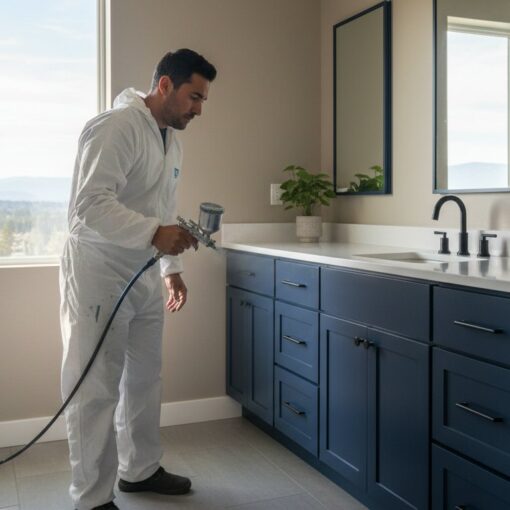
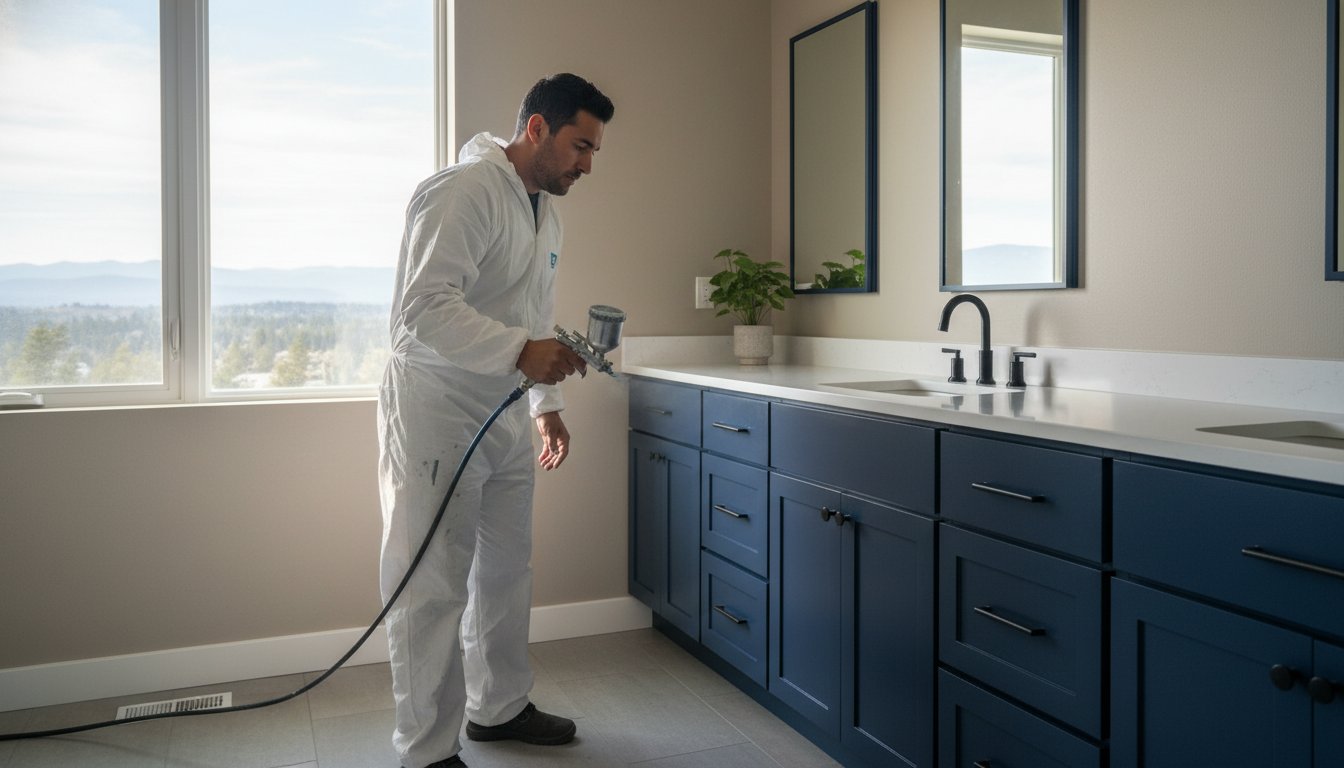
We achieve a “straight from the showroom” look by taking all doors and drawer fronts to our specialized facility for off-site spraying. Our spray booths use HEPA-filtered environments that eliminate 99.97% of airborne dust particles. This level of cleanliness is impossible to achieve in a standard home kitchen. We apply a multi-coat system that includes two layers of high-build primer and two layers of pigmented topcoat. This creates a hard, durable shell that reflects light evenly across the entire surface without the texture of brush marks or roller stippling.
Maintaining Your Bright Kitchen
Keeping your light-colored cabinets glowing is simple when the finish is high-quality. You don’t need harsh chemicals; a soft microfiber cloth and a mild soap solution are sufficient to remove daily grime. Because we use industrial coatings, the surface is non-porous and resists staining from coffee or wine. We also understand that life happens in a busy kitchen. That’s why we provide every homeowner with a custom touch-up kit containing the exact color match and coating used during the project. If you are ready to eliminate the shadows in your home, schedule your kitchen transformation today to ensure a professional, lasting result.
Step Into a Lighter, Modern Kitchen Today
Your journey to a more vibrant home begins with understanding how light interacts with your surfaces. By prioritizing colors with a Light Reflectance Value (LRV) of 70 or higher, you can reclaim your space from oppressive shadows. Research from the Paint Quality Institute shows that high-quality finishes not only protect wood but also enhance ambient brightness through superior light scattering. When you decide to brighten a dark kitchen with painted cabinets, the execution is just as vital as the color choice.
Our team of 5-star rated Denver cabinet painters utilizes specialized industrial-grade spray finishes to ensure a factory-smooth look that lasts for years. We’re a locally owned and operated Colorado company dedicated to helping homeowners achieve professional results without the cost of a full remodel. You don’t have to live with a kitchen that feels small or outdated. It’s time to embrace the 2026 design standards and give your home the facelift it deserves.
Get a Free Quote to Brighten Your Denver Kitchen
We look forward to helping you create a bright, inviting space that you’ll be proud to show off for years to come.
Frequently Asked Questions
Will white painted cabinets make my kitchen look too cold or sterile?
No, white cabinets only look sterile if you choose a cool undertone with blue or gray bases. To brighten a dark kitchen with painted cabinets without the hospital feel, use warm whites like Benjamin Moore’s Simply White (OC-117). Adding brass hardware or wood accents provides necessary contrast. In a 2023 survey by Houzz, 40 percent of homeowners chose white cabinets specifically to create a timeless, welcoming atmosphere that feels open rather than cold.
How do I choose between white and light gray to brighten my kitchen?
You should choose based on your floor color and existing natural light levels. White reflects the most light, making it the top choice for windowless spaces. Light gray offers a softer transition and hides fingerprints better. According to the NKBA 2024 Trends Report, gray remains a top three neutral because it pairs well with stainless steel appliances. If your kitchen gets southern sun, a soft gray prevents the room from feeling washed out by midday glare.
Does the type of wood I have (like oak) affect how bright the paint will look?
The wood species doesn’t change the paint’s color, but the texture impacts light reflection. Open-grain woods like oak have deep valleys that create tiny shadows across the surface. If you don’t use a grain filler, these shadows reduce the overall brightness of the finish. Smooth woods like maple reflect light more evenly. A 2025 industry study showed that grain-filled oak reflects 15 percent more light than unfilled oak painted with the same color.
What is the best sheen to make a small kitchen feel larger?
Semi-gloss or satin sheens are the best choices for maximizing light bounce in small spaces. These finishes act like subtle mirrors, reflecting light back into the room. High-gloss finishes reflect even more but show every fingerprint and scratch. Satin is the most popular choice for 2026 because it balances durability with a 25 to 35 percent gloss level. This reflection helps you brighten a dark kitchen with painted cabinets by illuminating the shadows in the corners.
How long does it take to paint cabinets and brighten the kitchen?
A professional cabinet painting project typically takes 5 to 7 business days from start to finish. This timeline includes 2 days for cleaning and prep, 2 days for priming and painting, and 1 day for reinstallation. If you’re doing it yourself, expect the process to take 14 days or more. Proper curing takes another 30 days before the surface reaches full hardness. These timelines ensure the finish is durable enough to resist daily kitchen wear and moisture.
Do light-colored cabinets get dirty faster than dark wood cabinets?
Light cabinets don’t get dirty faster, but they show dirt more clearly than dark wood. You’ll notice coffee splatters or grease immediately, which often leads to a cleaner kitchen because you wipe them away sooner. Dark cabinets hide a buildup of grime that can eventually damage the finish. A 2022 cleaning study found that homeowners with white cabinets wipe their surfaces 3 times more often than those with dark finishes, leading to better long-term hygiene.
Can I brighten my kitchen if I have dark granite countertops?
Yes, you can successfully brighten your space by creating a high-contrast look with light cabinets. Painting your boxes a creamy white or pale greige makes dark Uba Tuba or Black Galaxy granite look like an intentional design choice. This contrast draws the eye upward toward the lighter surfaces. Designers often suggest using a 70/30 ratio, where 70 percent of the visible surfaces are light to offset the heavy, light-absorbing weight of the dark stone.
What is LRV and why should I care when picking cabinet colors?
LRV stands for Light Reflectance Value, and it measures the percentage of light a color reflects on a scale of 0 to 100. For a dark kitchen, you should look for colors with an LRV of 65 or higher. Pure black has an LRV of 0, while pure white is 100. Choosing a paint like Sherwin-Williams Alabaster (LRV 82) ensures the majority of light stays in the room rather than being absorbed by the cabinet surfaces.