
What if the money you save on DIY supplies actually costs you thousands in lost home equity? Many Denver homeowners feel overwhelmed by the technical steps required to achieve a durable finish. It’s common to fear that a simple weekend project might turn into a month-long ordeal that leaves your kitchen cabinets looking streaky or unfinished. Deciding between diy vs professional cabinet painting requires a clear understanding of the labor involved and the long-term impact on your property value.
You deserve a kitchen that looks brand new without the stress of a failed experiment. This guide offers a transparent breakdown of the risks and quality differences between tackling the job yourself and hiring a local specialist. We’ll explore why professional spraying is the standard for a factory-smooth finish and how it minimizes daily disruption to your home. By the end of this comparison, you’ll know exactly which path leads to the lasting results your 2026 home renovation requires.
Key Takeaways
- Understand the technical distinction between basic painting and professional refinishing to avoid common adhesion failures on high-use surfaces.
- Compare the results of manual brushing against professional spraying techniques to ensure a factory-smooth finish for your kitchen or bathroom cabinets.
- Evaluate the total investment required for diy vs professional cabinet painting, including the hidden costs of specialized tools and the 40-plus hour time commitment.
- Identify the primary risks of DIY projects, such as peeling or “orange peel” textures, which can negatively impact your home’s resale value in the Denver market.
- Learn how professional off-site door processing and climate-controlled curing protect your investment against Colorado’s specific environmental conditions.
The Reality of Cabinet Painting: Scope and Expectations
Homeowners often view cabinet updates as a simple weekend task. However, there is a massive technical gap between basic painting and true refinishing. In the 2026 market, painting usually refers to a decorative surface application, while refinishing implies a restoration of the surface’s structural integrity. A successful project must meet specific benchmarks to be considered a value-add for your home:
- Durability: The ability to withstand daily impacts without chipping or cracking.
- Washability: Resistance to household degreasers and frequent scrubbing.
- Aesthetics: A smooth, non-porous surface completely free of brush marks or roller texture.
Achieving this standard is why the debate over diy vs professional cabinet painting is so critical for modern kitchen renovations. To better understand the scale of this work, watch this helpful video:
Why Kitchen Cabinets Are Not Just “Vertical Furniture”
Kitchen cabinets face harsher conditions than almost any other surface in your home. They endure constant heat from ranges, steam from dishwashers, and corrosive oils from skin. Most modern cabinets come with a factory seal designed to repel liquids. This makes the wood finishing process exceptionally complex for an amateur. You can’t just apply standard wall paint and expect it to stick. Professional standards require architectural coatings that create a chemical bond with the substrate. Without this bond, the finish will likely peel or chip within the first year of heavy use. This is a common failure point for those who underestimate the technical requirements of the job.
The 2026 Denver Home Aesthetic Standards
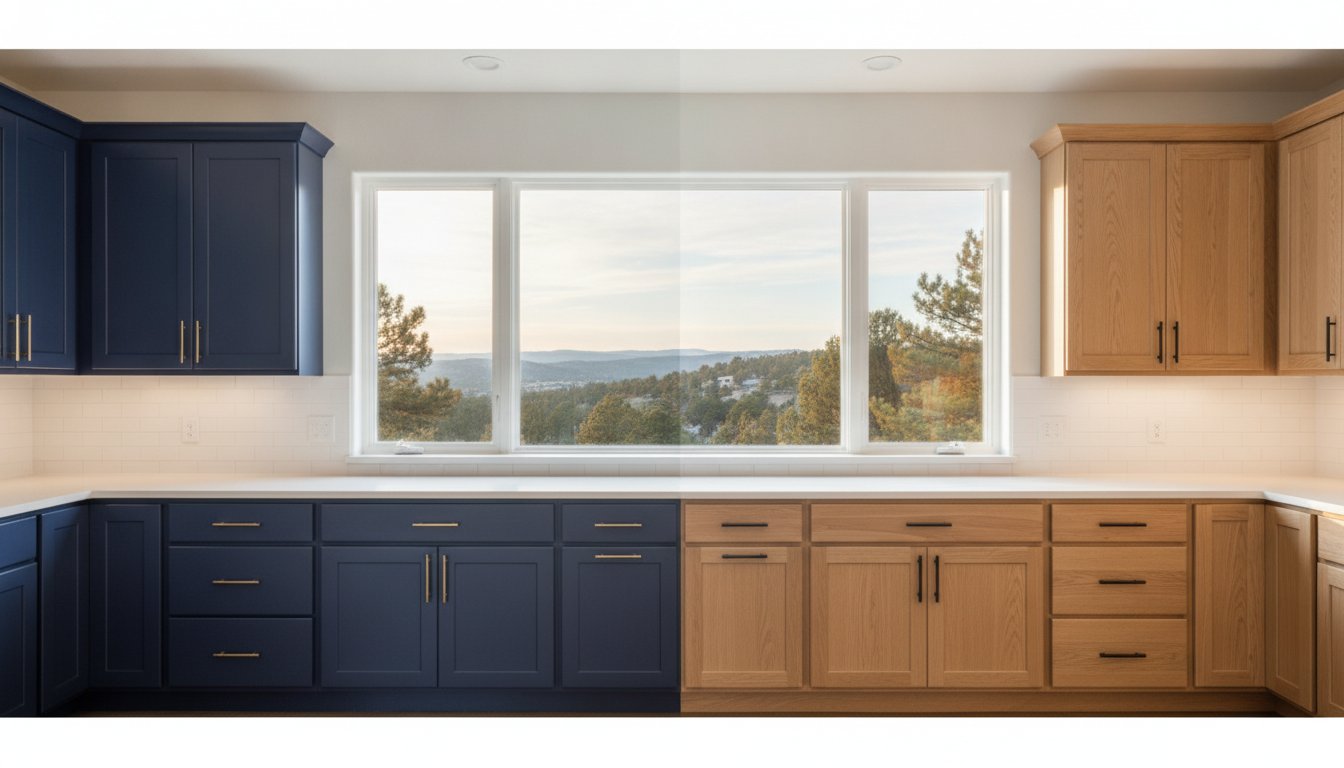
Denver real estate in 2026 prioritizes clean, minimalist lines and flawless surfaces. Homeowners are moving away from heavy oak grains toward solid, smooth colors that reflect light evenly. A DIY job often leaves behind visible brush strokes or “orange peel” textures from rollers. These imperfections are more than just an eyesore; they can actually decrease a home’s appraisal value during a sale. Buyers view poorly painted cabinets as a future expense they’ll have to fix. Utilizing professional cabinet refinishing ensures the kitchen remains a high-ROI asset. When comparing diy vs professional cabinet painting, the long-term equity of the home usually favors the professional spray finish. Professional crews also account for Denver’s low humidity, which can cause paint to dry too quickly and leave uneven marks if not managed correctly.
Technical Comparison: DIY Methods vs. Professional Standards
The technical gap in diy vs professional cabinet painting starts with the application tools. Most DIY enthusiasts rely on synthetic brushes or high-density foam rollers. These tools are accessible, but they inevitably leave behind physical textures. Even a steady hand cannot prevent the ridges and “stipple” patterns that occur as the paint levels. Professionals avoid these issues by using industrial coatings like pigmented lacquers or high-solids urethanes. These products aren’t found at local hardware stores. They require precise mixing and environmental controls to cure into a hard, durable shell.
The Professional Spraying Advantage
High Volume Low Pressure (HVLP) spraying is the gold standard for a modern kitchen. This technology atomizes the coating into a fine mist, which settles onto the surface in a perfectly uniform layer. It eliminates the friction of a brush, ensuring there are no visible marks. Professionals typically utilize off-site spray booths to process doors and drawer fronts. These booths provide a controlled, dust-free environment. When you choose professional kitchen cabinet painting, you’re investing in a method that replicates a brand-new factory appearance. This level of precision is nearly impossible to achieve in a standard home garage or kitchen.
Surface Preparation: The Invisible Difference
Preparation is the most labor-intensive part of the process. It’s also where most DIY projects fail. A professional “triple-clean” involves aggressive degreasing, mechanical sanding, and tack-cloth dusting to remove microscopic particles. DIYers often under-sand, leaving the surface too slick for the paint to grab. Conversely, over-sanding can distort the wood’s profile. Professionals also employ grain fillers to smooth out deep pores in woods like oak, creating the flat, sleek look popular in 2026 designs. Primers are equally specialized. While an amateur might use a general-purpose product, a specialist uses specific bonding primers for adhesion or shellac-based primers to block wood tannins from bleeding through the finish.
Before you begin your project, it’s wise to research avoiding home improvement scams to ensure any contractor you hire follows these rigorous technical steps. You can explore professional finishing options to see how these industrial standards contribute to a long-lasting kitchen. Choosing the right method determines whether your cabinets will look great for a few months or for many years.
Analyzing the Total Investment: Time, Tools, and Materials
The financial calculation for diy vs professional cabinet painting involves more than just labor rates. Many homeowners assume that purchasing a few gallons of paint and a set of brushes constitutes the total expense. In reality, achieving a durable result requires a significant investment in specialized equipment. If you don’t already own a high-quality orbital sander or a professional-grade respirator, these costs quickly accumulate. You’ll also need to account for the price of premium cleaners, tack cloths, and high-density masking materials that protect your appliances and flooring.
Longevity is another critical factor in your investment. A standard DIY application typically begins to show signs of wear, such as chipping around handles or peeling near the dishwasher, within 2 to 3 years. A professional application utilizes industrial-grade coatings that are rated for 10 or more years of daily use. This durability gap means a DIY project may need to be redone three times within the lifespan of a single professional job.
The DIY Tool Checklist and Estimated Costs
To execute a project that lasts, you’ll need professional supplies. This includes a random orbital sander, sandpaper in varying grits, a NIOSH-approved respirator, high-quality synthetic brushes, and heavy-duty drop cloths. The choice of coating is equally important. Using a standard hardware store latex will not yield the same results as the paint for cabinets used by specialists. For a medium-sized kitchen, the total material spend for premium supplies often falls between $500 and $800. If you decide to rent or buy a consumer-grade sprayer to mimic a professional look, that cost increases further.
The Value of Your Time: A Weekend vs. a Month
The most significant hidden cost is the time commitment. A realistic DIY timeline for a standard kitchen often spans 40 to 60 hours of active labor. This includes the meticulous removal of all hardware, deep cleaning, sanding every surface, priming, and applying multiple coats with proper drying times between each step. Following a step-by-step guide to painting cabinets shows just how labor-intensive the process is for an individual.
Contrast this with the workflow of professional cabinet painters, who typically complete a project in 3 to 5 days. Professionals often process doors off-site, which keeps your kitchen functional and minimizes the disruption to your family life. Kitchen downtime is a major logistical hurdle; when you tackle the project yourself, your kitchen remains a construction zone for weeks. When evaluating diy vs professional cabinet painting, you must ask: “What is my hourly rate worth over 50 hours of physical labor?” If you value your time at a professional rate, the labor alone represents a substantial hidden expense.

Risk Assessment: When DIY Becomes an Expensive Mistake
The financial risk of a botched project is the most overlooked factor in the diy vs professional cabinet painting debate. A failed DIY attempt isn’t a neutral starting point; it’s a liability. When an amateur application fails, a professional crew cannot simply paint over the mess. They must strip the surface back to bare wood or the original factory finish. This chemical stripping and intensive sanding process often doubles the labor requirements, making the eventual professional correction far more expensive than if the specialist had started with a clean slate. Beyond the paint itself, improper handling can lead to permanent structural damage. For example, using excessive water during cleaning can cause MDF doors to swell and warp, a condition that cannot be reversed.
The Peeling Nightmare: Why Adhesion Fails
Poor adhesion is the primary cause of project failure. Kitchens are high-grease environments. Even microscopic layers of cooking oil will prevent paint from bonding. If the wrong primer is used, a chemical rejection occurs. You can test your durability with the “fingernail test” after the paint has dried for a few days. If you can scrape the coating away with light pressure, the bond has failed. Fixing this requires a total reset. You’ll have to remove every door, strip the failing layers, and start the degreasing process from scratch. This “peeling nightmare” typically manifests around high-touch areas like handles and near the heat of the stove within the first six months.
A Checklist: Is Your Kitchen a Candidate for DIY?
Before committing to a manual approach, evaluate your specific situation using these criteria:
- Cabinet Material: Solid wood is more forgiving for DIYers. If your cabinets are Laminate or Thermofoil, professional-grade bonding agents and sprayers are required for any hope of longevity.
- Current Condition: If your cabinets have deep grain, significant chips, or structural cracks, the preparation required exceeds the capabilities of standard hardware store fillers.
- Long-Term Goals: A “rental refresh” might tolerate a few brush marks. However, if this is your “forever home” or you’re preparing for a high-value sale in Denver, a factory finish is the only way to protect your equity.
Botched finishes also suffer from “orange peel” textures or “sags” where the paint was applied too heavily. Once these dry, they are incredibly difficult to sand smooth without specialized equipment. To avoid these costly technical errors, you can request a professional quote for your kitchen cabinets to ensure the job is done correctly the first time.
Professional Cabinet Painting in Denver: Securing Your Home’s Value
The Denver real estate market in 2026 continues to reward homeowners who prioritize high-quality renovations over quick fixes. While previous sections detailed the technical and logistical hurdles of the project, the final consideration is the financial outcome. When weighing the merits of diy vs professional cabinet painting, the deciding factor for many is the impact on resale value. A professional finish is not merely an aesthetic choice; it is a strategic asset that secures your home’s equity in a competitive local market.
Colorado’s semi-arid climate presents unique challenges for architectural coatings. The low humidity levels can cause standard consumer paints to dry prematurely, leading to uneven “lap marks” when using a brush or roller. Professional crews manage this by using specialized retarders and applying coatings in climate-controlled environments. This technical oversight ensures the finish cures properly without cracking or losing its sheen, a common issue for DIY projects in the Denver metro area. Proper curing is essential for long-term durability against the dry air and temperature fluctuations typical of the region.
The Denver Real Estate ROI Factor
Professional cabinet painting denver projects are highly efficient investments. Industry data from 2026 indicates that a professionally executed kitchen update can return 100% or more of its cost at the time of sale. Conversely, “DIY-looking” kitchens are often a red flag for Denver home buyers. Visible brush marks, poorly aligned doors, or peeling edges suggest a lack of maintenance that can lead to lower offers. In high-end Denver neighborhoods like Cherry Creek or the Highlands, a factory-quality finish is the baseline expectation for any property listed above the median price point. Buyers in these markets often view amateur paint jobs as a future renovation cost, which they subtract from their initial offer.
Why Cabinet Painting Denver is the Logical Choice
Cabinet Painting Denver serves as the local authority for homeowners seeking a factory-smooth finish. The process utilizes industrial-grade spraying equipment and a dedicated off-site facility for processing doors and drawer fronts. This method eliminates the dust and debris issues common with on-site DIY work. It also ensures that the most visible parts of your cabinetry receive a uniform, durable coating that mimics original manufacturer standards. By removing the doors for off-site processing, the business minimizes the time your kitchen remains a construction zone.
Transparency is a core component of the service. Homeowners receive a detailed cost to paint kitchen cabinets that accounts for the specific size and condition of their kitchen or bathroom. This eliminates the “hidden costs” associated with DIY equipment rentals and material waste. To secure your home’s value and ensure a finish that lasts for years, the final step is a professional assessment. You can contact Cabinet Painting Denver to schedule a consultation and receive a precise roadmap for your kitchen renovation.
Finalizing Your 2026 Kitchen Strategy
Choosing between diy vs professional cabinet painting is a decision that impacts your home’s aesthetic and its long-term market value. While the DIY route offers lower upfront material costs, it requires over 40 hours of meticulous labor and carries a high risk of adhesion failure. Professionals eliminate these technical burdens by using industrial spraying equipment and off-site processing. This specialized approach ensures a factory-smooth finish that withstands the unique demands of Denver’s dry climate while maximizing your renovation’s ROI. You don’t have to sacrifice your weekends or risk a botched finish to achieve the look you want.
Protect your investment by partnering with 5-star rated Denver local experts who specialize in durability. Our process includes full-service preparation and professional re-installation to minimize disruption to your daily life. You can Get Your Free Professional Cabinet Painting Quote in Denver today to secure a factory-quality spray finish for your kitchen or bathroom. Transform your home with the certainty of professional results that will look brand new for years to come.
Frequently Asked Questions
Is it cheaper to paint cabinets yourself or hire a pro?
Upfront costs are lower for DIY, but long-term value favors hiring a professional. DIY materials typically range from $200 to $600 for a standard kitchen. However, if you value your time at a professional rate, the 40 to 60 hours of labor often exceeds the cost of hiring a specialist. Professionals provide a finish that lasts over a decade, preventing the need for frequent repainting.
Can I paint my cabinets without sanding?
No, successful adhesion requires mechanical sanding to break the existing factory seal. While “no-sand” primers exist, they rarely provide the durability needed for high-traffic kitchen surfaces. Sanding creates a profile for the primer to bond with, preventing the paint from peeling when exposed to heat or cleaning chemicals. Skipping this step is the leading cause of project failure.
How long does professional cabinet painting take compared to DIY?
Professionals typically complete a kitchen in 3 to 5 days, whereas DIY projects often take two weeks or more. Specialists use off-site spraying for doors, which keeps your kitchen functional. A DIYer must manage cleaning, sanding, and multiple coats of paint across several weekends. This extended timeline often leaves the kitchen in a state of disruption for a month or longer.
What kind of paint do professionals use for cabinets?
Specialists use industrial coatings such as pigmented lacquers or high-solids urethanes rather than standard wall paint. These professional products are designed specifically for the high-traffic demands of a kitchen. Unlike consumer-grade latex, these coatings cure to a hard shell that resists grease and frequent scrubbing. They require specialized HVLP spraying equipment for proper application to ensure a smooth, factory-level appearance.
Will painting my cabinets myself lower my home value?
An amateur paint job can lower your home’s appraisal value if it shows visible brush marks or peeling. In the competitive Denver market, buyers expect a factory-quality finish. If the diy vs professional cabinet painting results look unpolished, buyers may view the cabinets as a future replacement expense. A professional finish is considered a high-ROI improvement that secures equity.
Do I need to take the cabinet doors off to paint them?
Yes, doors must be removed to ensure every surface is cleaned, sanded, and coated evenly. Painting doors while they are hanging leads to drips, missed edges, and painted-over hinges. Professionals remove all hardware and spray the doors in a controlled off-site booth. This ensures a uniform finish on both the front and back of the panels without affecting the hinges.
What is the most common mistake in DIY cabinet painting?
Inadequate surface preparation, specifically failing to remove all grease and oils, is the most common error. Even microscopic grease layers prevent paint from bonding. Many DIYers also underestimate the importance of using a specialized bonding primer. Without thorough degreasing and the correct primer, the finish will likely chip or bubble within months of completion.
How much does it cost to fix a botched DIY cabinet paint job?
Fixing a failed DIY project often costs significantly more than the initial professional quote. A specialist must use chemical strippers and aggressive sanding to remove the failing DIY layers before they can begin the refinishing process. This double-labor requirement makes the correction an expensive technical challenge. It’s always more cost-effective to invest in professional spraying from the start.