Selecting the appropriate finish involves evaluating both aesthetic preferences and long-term value. This guide defines the differences between professional painting, staining, and glazing to ensure your project achieves a factory-grade result. We’ll examine how these choices affect home resale value and determine which styles align with current Front Range design trends. You’ll understand why industrial-grade coatings are necessary to withstand the specific environmental conditions of the Mountain region.
Key Takeaways
- Identify the technical distinctions when comparing cabinet painting vs staining denver to determine if an opaque factory finish or an artisan glaze suits your home’s architecture.
- Understand why industrial-grade sprayed lacquers are the professional standard for preventing cracks and peeling in Colorado’s high-altitude, dry environment.
- Discover how professional cabinet painting provides a $15,000 to $30,000 savings over full cabinet replacement while maximizing your property’s resale value.
- Recognize the importance of a “no brushes, no rollers” spray method to achieve a seamless, dust-free factory look that remains durable for a decade.
- Evaluate 2026 design trends to choose between modern solid tones or traditional textures based on your existing cabinet door profiles.
Cabinet Painting vs. Staining and Glazing for Denver Kitchens
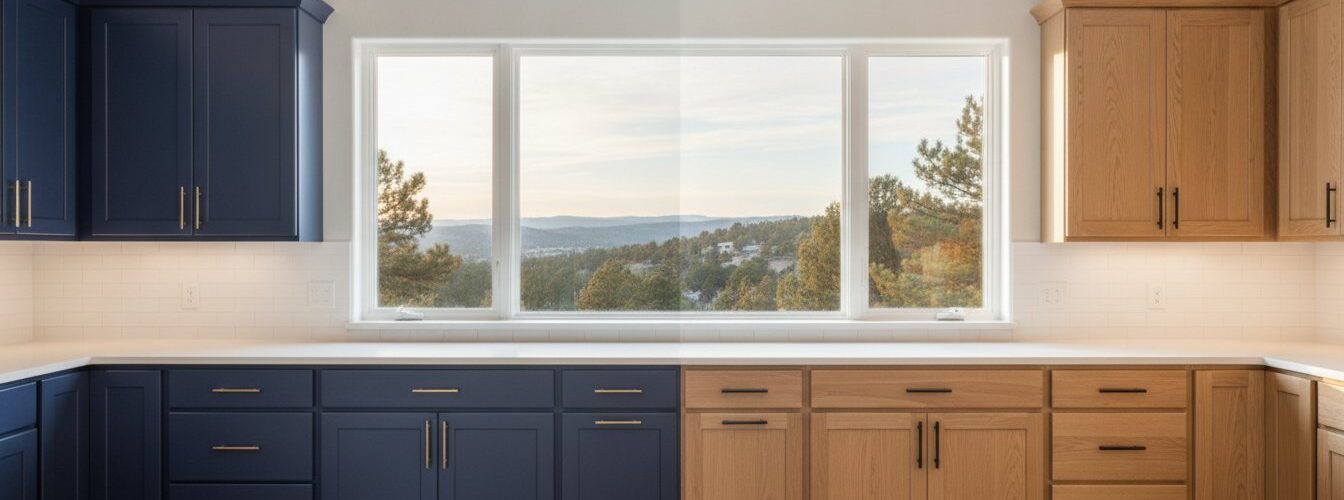
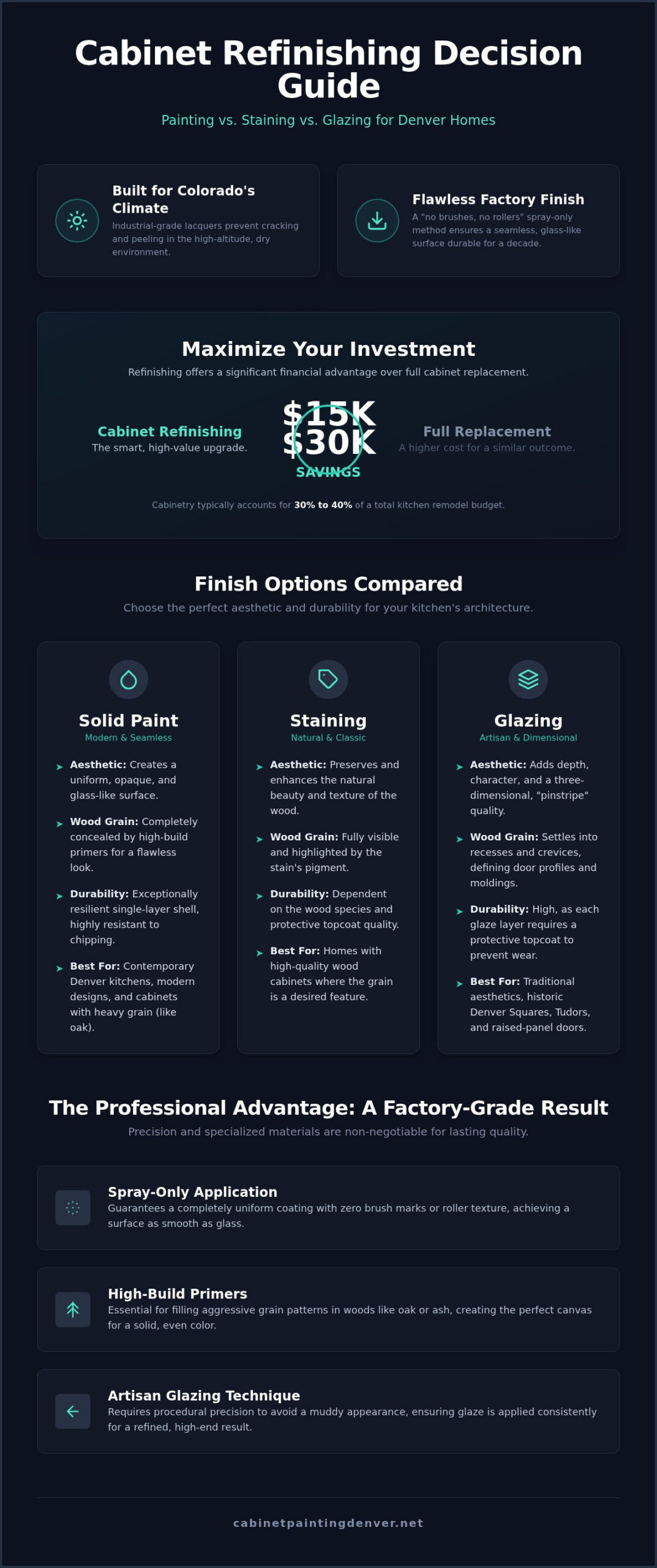
Choosing between cabinet painting vs staining denver often depends on your home’s existing architecture and your desired aesthetic. Standard painting uses opaque industrial lacquers to create a uniform surface, effectively concealing the wood grain. In contrast, staining and glazing are techniques that either preserve wood texture or add artistic depth through layered applications. Both professional refinishing options provide a $15,000 to $30,000 savings over full cabinet replacement in the Front Range.
Professional glazing requires an artisan’s touch to ensure consistency across every door and drawer front. While solid colors provide a clean, modern look, glazing involves hand-applying pigments that settle into the recesses of the wood. This process demands procedural precision to avoid a muddy appearance. For more technical background on these materials, you can consult this comprehensive guide to wood finishing.
To better understand this concept, watch this helpful video:
The Anatomy of a Solid Paint Finish
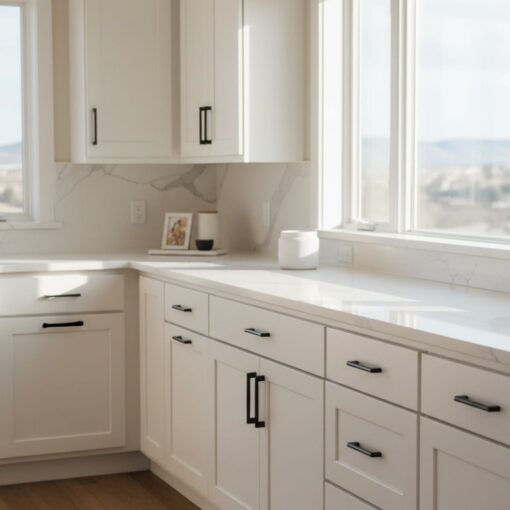
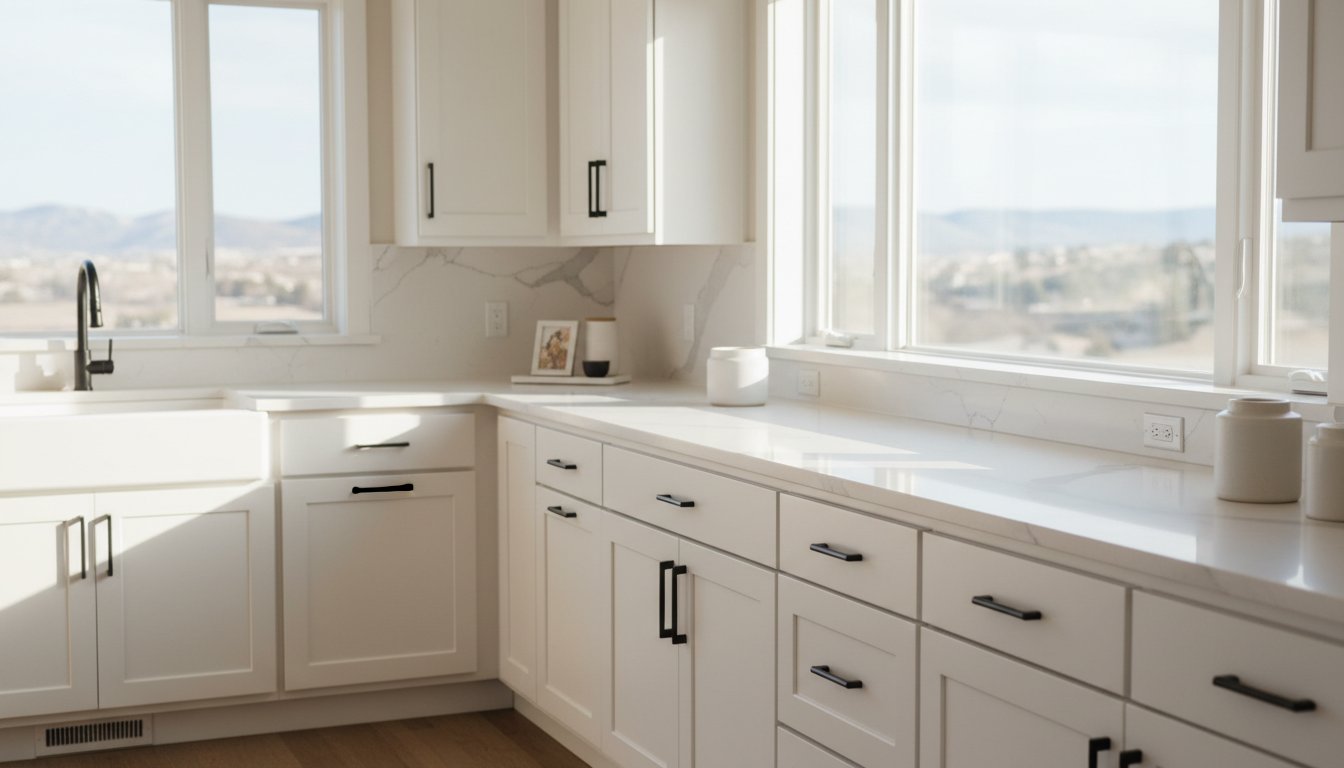
A professional solid finish results in a glass-like surface that is free of brush marks or roller textures. This look is the foundation of contemporary Denver kitchen design, where homeowners often favor warm whites or deep charcoals. To achieve this, technicians use high-build primers to fill the aggressive grain patterns found in oak or ash cabinets. This preparation is essential for a factory-grade result. You can find more details on our specific wood preparation steps in our cabinet refinishing guide.
The Dimension of a Glazed or Stained Finish
Glazing adds a three-dimensional quality to cabinetry that solid painting cannot replicate. Highlighting involves applying glaze only to specific architectural details, while all-over glazing covers the entire surface before being wiped away to leave a subtle tint. This technique is particularly effective on raised-panel doors where the glaze settles into crevices. The resulting “pinstripe” effect defines door profiles and custom moldings, providing a traditional aesthetic that complements historic Denver Squares and Tudors. When deciding on cabinet painting vs staining denver, consider whether your kitchen’s “bones” support these intricate details.
Technical Comparison: Durability and Aesthetics in Colorado
The aesthetic impact of your kitchen remodel depends heavily on the tactile and visual quality of the finish you select. When evaluating cabinet painting vs staining denver, you’re choosing between two distinct design philosophies. Solid paint finishes provide a minimalist, modern appearance that creates a seamless look across the room. Artisan glazes offer a traditional, old-world feel by adding depth and character to the cabinet’s profile. While a factory-grade spray finish results in a surface as smooth as glass, a glazed finish introduces a subtle texture that many homeowners find more visually complex.
Durability varies between these options because of the layering involved in the glazing process. Every additional layer of glaze requires a protective topcoat to ensure the pigments don’t wear away. Understanding wood durability facts is essential for choosing a coating that can handle the physical demands of a busy kitchen. Solid lacquer finishes are exceptionally resilient against chipping. However, multi-layered artisan finishes provide a different type of protection by masking small imperfections that might be more visible on a flat, solid color.
Durability in Colorado’s Dry Climate
Denver’s environmental conditions present unique challenges for cabinet finishes. The average relative humidity in the Front Range often hovers around 20%, which significantly accelerates the “open time” or drying period of coatings. This rapid evaporation can cause glazes to set too quickly if not handled by a professional. To combat this, we utilize precatalyzed lacquers that are specifically formulated for high-altitude environments. These industrial-grade coatings cure into a hard, durable shell that resists the cracking often seen with standard retail paints. This specialized spray process ensures your cabinets remain stable despite the extreme dry air of the Mountain region.
Maintenance and Long-term Wear
Daily kitchen use introduces oils, heat, and physical contact that test any finish. Solid colors, particularly lighter shades like warm white, show fingerprints and food splatters more readily than darker, glazed surfaces. Custom-wiped glazing is excellent at hiding the “fingerprint factor” due to its varied tones and shadows. However, solid paint is significantly easier to repair if a deep scratch occurs. Matching a solid color for a touch-up is a straightforward procedural task. In contrast, repairing a glazed edge requires an artist to replicate the original hand-wiped pattern. Cleaning protocols also differ. You should avoid abrasive chemicals on glazed corners, as aggressive scrubbing can eventually wear down the delicate artisan layers. If you are unsure which finish will best withstand your household’s daily traffic, our team can provide a professional assessment of your cabinetry.
Matching Your Finish to Denver’s Architectural Styles
The architectural “bones” of your kitchen dictate whether your cabinetry supports a specific finish. When evaluating cabinet painting vs staining denver, you must first assess your door profile. Raised-panel doors provide the recesses and profiles necessary for glaze to settle into, which creates visual depth. Conversely, slab or flat-panel doors lack these features. This makes solid opaque paint the logical choice for a professional result. In the 2026 Denver market, cabinetry accounts for up to 40% of a remodel budget; therefore, aligning your finish with your home’s architecture is essential for protecting this investment.
Resale value remains a primary concern for homeowners in the Front Range. Current data indicates that a minor kitchen remodel in Denver recoups approximately 78% to 82% of its cost. To maximize this return, your finish must appeal to current buyer preferences. While stark whites were once dominant, the 2026 trend has shifted toward warmer, earthy tones like tans and sage greens. These colors work effectively as solid finishes. They can also be enhanced with subtle glazing to suit more traditional Denver Square or Tudor-style homes.
Traditional Estates and Mountain Homes
Glazing is a preferred choice for the expansive kitchens found in Cherry Creek estates. The technique highlights the intricate moldings and raised panels common in these high-end properties. For homeowners seeking a rustic aesthetic for mountain retreats, an “antique” glaze adds a weathered character that complements natural wood elements. It’s important to distinguish between the heavy, dark “Tuscan” glazes of the 2010s and the refined “Modern Farmhouse” glazes popular today. Modern glazing is more selective. It focuses on pinstriping specific details rather than darkening the entire surface. This procedural precision ensures the kitchen feels timeless rather than dated.
Contemporary Remodels and Minimalist Design
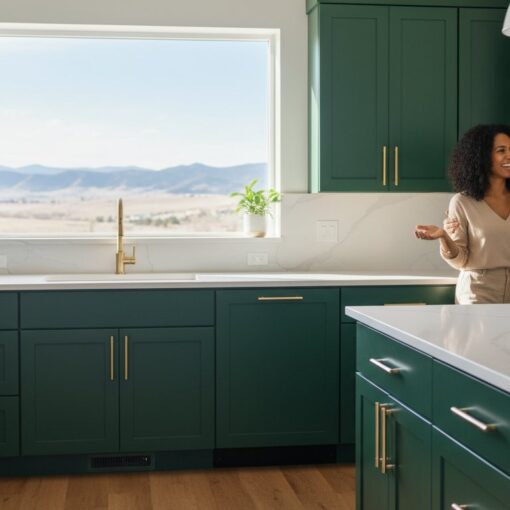
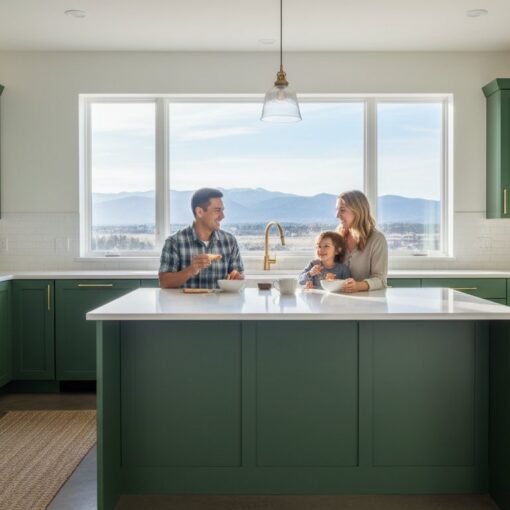
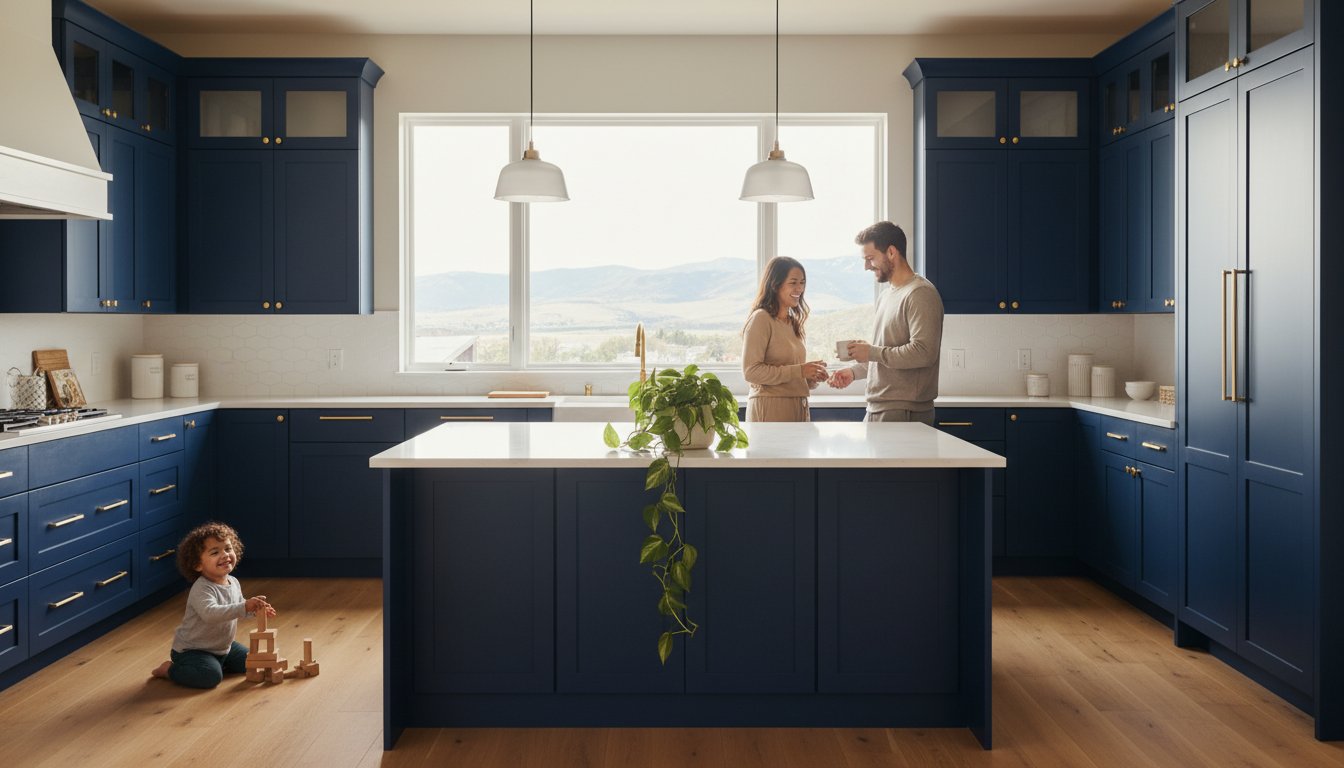
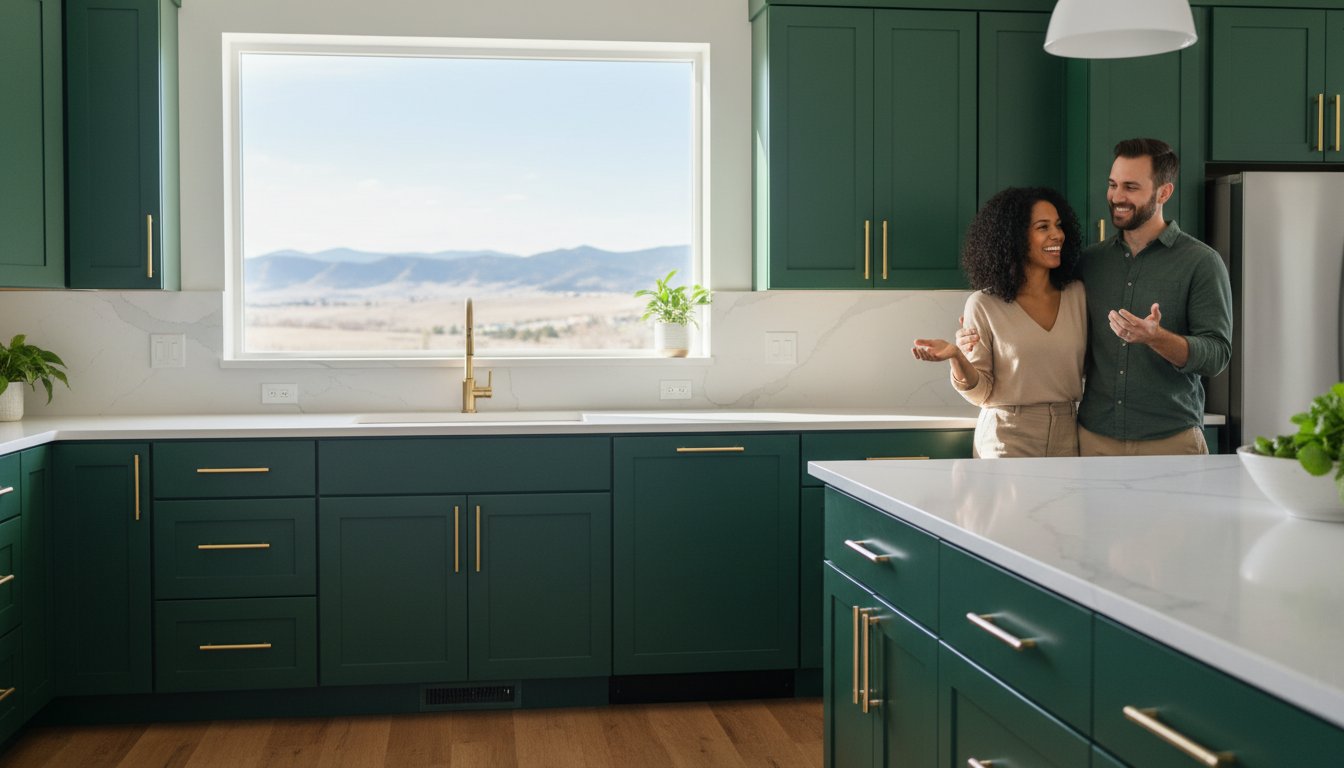
The “Highlands Modern” look relies on clean lines and high-contrast palettes. In neighborhoods like RiNo and the Highlands, solid paint finishes dominate new builds and lofts. Flat-panel slab doors require a smooth, factory-grade spray finish to maintain their minimalist appeal. Glazing on these surfaces often appears forced because there are no architectural crevices to hold the pigment. The “Scandi-Denver” trend emphasizes matte solid finishes in neutral tones to create a cohesive, open-concept flow. Additionally, bold statement colors like Navy or Forest Green are increasingly popular. These colors provide enough visual interest on their own. They eliminate the need for additional glazing layers to create a high-end appearance.
Investment and ROI: Is Glazing Worth the Upcharge?
The financial decision between cabinet painting vs staining denver often rests on the labor requirements of each finish. Standard painting follows a streamlined industrial spray process. Glazing involves a significantly more complex procedural workflow. This artisan finish requires a three-step application: the base coat, the manual glaze wiping, and the final protective topcoat. Because of this manual involvement, glazing often adds 20-30% to the labor cost due to hand-finishing. This “Artisan Premium” reflects the specialized skill needed to maintain consistency across all cabinet surfaces.
Return on investment is a critical metric for Denver homeowners. Current 2026 data shows that a minor kitchen remodel in the Denver Metro area recoups between 78% and 82% of its cost at resale. While a solid paint finish appeals to the broadest range of buyers, a professional glaze can differentiate a high-end property in competitive neighborhoods like Cherry Creek or Washington Park. To balance the budget, you might consider glazing only the kitchen island or specific focal points while using a solid paint on perimeter cabinets. This strategy provides the luxury look of custom work without the cost of an all-over artisan finish.
Why Glazing and Custom Staining Cost More Than Paint
Labor accounts for 70% to 80% of a professional refinishing project’s total cost. The manual nature of wiping glaze is time-consuming and carries a high risk of inconsistency if performed by inexperienced contractors. Local professionals must ensure that the “pinstripe” or “all-over” effect remains uniform across every door. If the glaze is applied unevenly, it can result in a muddy appearance that detracts from the home’s value. Choosing a team with 40 years of experience in the Front Range ensures that these technical risks are mitigated through proven application standards.
Maximizing Your 2026 Remodel Budget
Refinishing cabinets remains the most cost-effective way to transform a kitchen. Homeowners in Denver typically save between $15,000 and $30,000 by choosing professional painting or glazing over full cabinet replacement. This represents a 60% to 80% savings while achieving a factory-grade result. To help you plan your finances, you can review our Cabinet Painting Cost: A Full 2026 Price Breakdown. This guide provides specific details on how different finishes impact your final invoice. If you are ready to update your kitchen with a durable, high-end finish, you can request a professional quote for your cabinetry today.
The Professional Advantage: Achieving a Factory Finish
Achieving a factory-grade result requires a strict “no brushes, no rollers” policy. When homeowners evaluate cabinet painting vs staining denver, they must recognize that DIY kits often fail due to Colorado’s specific environmental conditions. The average 20% relative humidity in the Front Range causes standard retail paints to dry too quickly. This leads to visible brush marks and an uneven, “orange peel” texture. Our specialized spray process eliminates these imperfections by applying industrial coatings in a highly controlled environment. We transport all removable doors and drawer fronts to our shop to ensure total containment. This prevents household dust from settling into the wet finish, resulting in a surface that looks and feels like new cabinetry.
We utilize low-VOC industrial lacquers that offer a “hard-as-nails” cure. These coatings are specifically engineered to resist the intense UV radiation present at Denver’s high altitude. Standard latex paints often soften or become sticky when exposed to direct sunlight through kitchen windows; however, our lacquers remain stable for a decade. This durability is why we provide a 3-year warranty on all professional refinishing projects. It offers long-term peace of mind that your investment is protected against the cracking and peeling common in dry, high-altitude climates. We treat the on-site frames with the same precision, using professional masking and ventilation to maintain a clean environment in your home.
The Spray Process for Glazing and Painting
Spraying is the only reliable method for creating a glass-like solid base. This is essential regardless of whether you choose a modern solid color or an artisan glaze. Precision is mandatory when applying glaze over industrial lacquer. If the base coat isn’t perfectly smooth, the glaze will settle into unwanted micro-textures rather than the intentional architectural crevices. A professional spray application prevents “brush drag” and ensures your kitchen transformation looks intentional. By processing doors in a shop environment, we can apply the glaze under optimal lighting and temperature conditions to ensure consistency across every piece of your cabinetry.
Choosing Your Denver Cabinet Partner
Local experience is the most important factor for coating adhesion in low-humidity environments. With 40 years of service in the Denver Metro area, we’ve refined our procedural standards to account for rapid curing times. When reviewing a professional estimate, ensure it includes a detailed door count, specific prep requirements, and clear warranty terms. Transparency in these areas prevents unexpected costs during the project. You can find more information on selecting a contractor in our Hiring a Professional Cabinet Painter: The Ultimate 2026 Guide. Selecting the right partner ensures that your choice between cabinet painting vs staining denver results in a finish that lasts for years.
Modernizing Your Denver Kitchen with Professional Finishes
Deciding on cabinet painting vs staining denver involves more than just a color choice. It’s a strategic investment in your home’s value and daily functionality. Solid paint delivers a sleek, modern foundation for contemporary lofts, while artisan glazing highlights the architectural character of historic Denver Squares. Both finishes require the precision of industrial spray applications to survive the 20% average humidity of the Front Range. You’ll avoid the common pitfalls of DIY kits by choosing a process that prioritizes procedural clarity and factory-grade durability.
Cabinet Painting Denver has served the Front Range since 1984. We maintain a strict “no brushes, no rollers” standard to ensure every surface meets our factory finish guarantee. Your project is protected by a 3-year warranty, providing confidence in a finish that resists cracking and UV damage. You can achieve a luxury kitchen aesthetic while saving $15,000 to $30,000 compared to the cost of full cabinet replacement. Take the next step toward your dream kitchen today.
Get Your Free Cabinet Painting or Glazing Quote in Denver Today
Frequently Asked Questions
Does cabinet glazing cost more than standard painting?
Yes, glazing typically involves an “Artisan Premium” that increases labor costs by 20% to 30%. This upcharge covers the additional steps of hand-wiping the glaze and applying a secondary protective topcoat. While standard painting is a streamlined spray process, glazing requires manual precision to ensure consistent depth across all surfaces. This makes it a more time-intensive investment compared to solid color applications.
Can you glaze over existing paint, or do you have to start fresh?
Professional results require starting with a fresh, factory-grade base coat. Applying glaze over old, existing paint often leads to poor adhesion and an uneven appearance. For the finish to bond correctly in Colorado’s dry air, the surface must be cleaned, sanded, and primed with industrial-grade materials. This procedural clarity ensures the glaze settles into architectural details without peeling or bubbling over time.
How long does a glazed cabinet finish last in Denver’s climate?
A professionally applied glaze finish using industrial lacquers can last a decade or more. Our specialization in “no brushes, no rollers” spray techniques ensures the coating remains flexible despite Colorado’s low humidity. We provide a 3-year warranty on all professional work to protect your investment. This durability is superior to standard retail paints, which often crack under the intense UV radiation found at high altitudes.
Is cabinet glazing outdated for 2026 kitchen designs?
Glazing remains a relevant choice when applied with a modern approach. While the heavy, dark glazes of the 2010s are less popular, the 2026 trend focuses on subtle pinstriping to define door profiles. This technique complements the “Old Denver” aesthetic found in historic bungalows and traditional estates. When evaluating cabinet painting vs staining denver, glazing offers a sophisticated way to add depth without overwhelming the kitchen’s design.
What is the best color combination for a glazed cabinet look?
The most effective combinations for 2026 involve warm, earthy tones. Pairing a warm white base with a soft grey or light brown glaze creates a classic, high-end look. For a bolder statement, sage green cabinets with a dark charcoal glaze provide a “Modern Farmhouse” feel. These combinations work well because the glaze highlights the cabinet’s architecture without creating the high-contrast, dated appearance of past decades.
How do I clean glazed cabinets without damaging the finish?
Clean your glazed surfaces using a soft microfiber cloth and a solution of mild dish soap and warm water. It’s important to avoid abrasive chemicals or scrubbing pads, especially on the edges and corners where glaze layers are most delicate. Drying the surface immediately prevents moisture from sitting in the crevices where glaze is concentrated. This simple maintenance routine preserves the factory-grade finish for years.
Can I DIY cabinet glazing, or should I hire a pro in Denver?
Hiring a professional is highly recommended due to the technical challenges of Colorado’s climate. The 20% average humidity in the Front Range causes glazes to dry rapidly, which often leads to “lap marks” or an inconsistent, muddy look when done by hand. Professional contractors use specialized spray equipment and controlled shop environments to achieve a seamless result. This expertise is necessary to secure a finish that doesn’t look like a DIY project.
Does glazing hide wood grain better than solid painting?
No, solid painting with a high-build primer is the most effective way to conceal aggressive wood grain. Glazing is an artisan technique designed to settle into textures and crevices, which can actually accentuate the grain of woods like oak or ash. If your goal is a smooth, glass-like surface, a solid opaque finish is the superior choice. When comparing cabinet painting vs staining denver, consider whether you want to hide or highlight the natural wood texture.