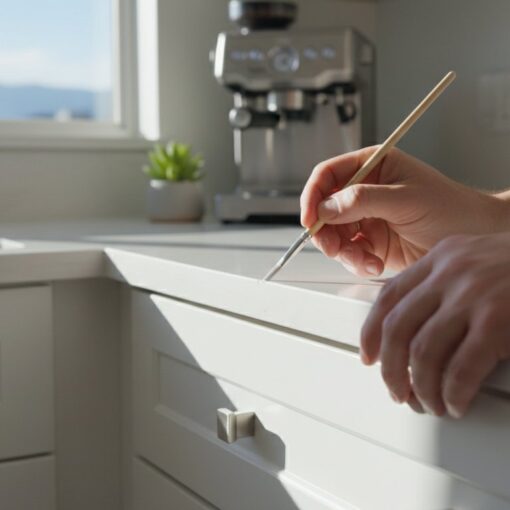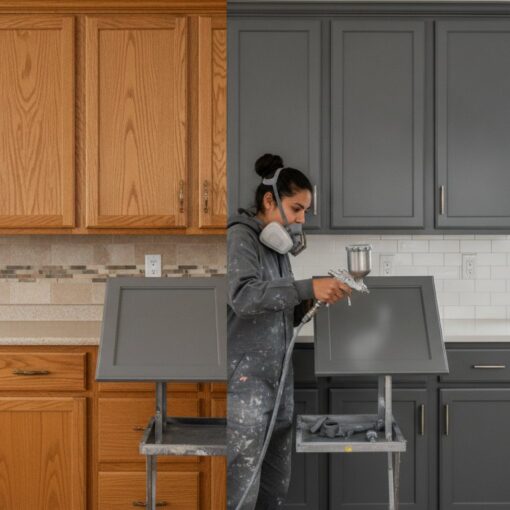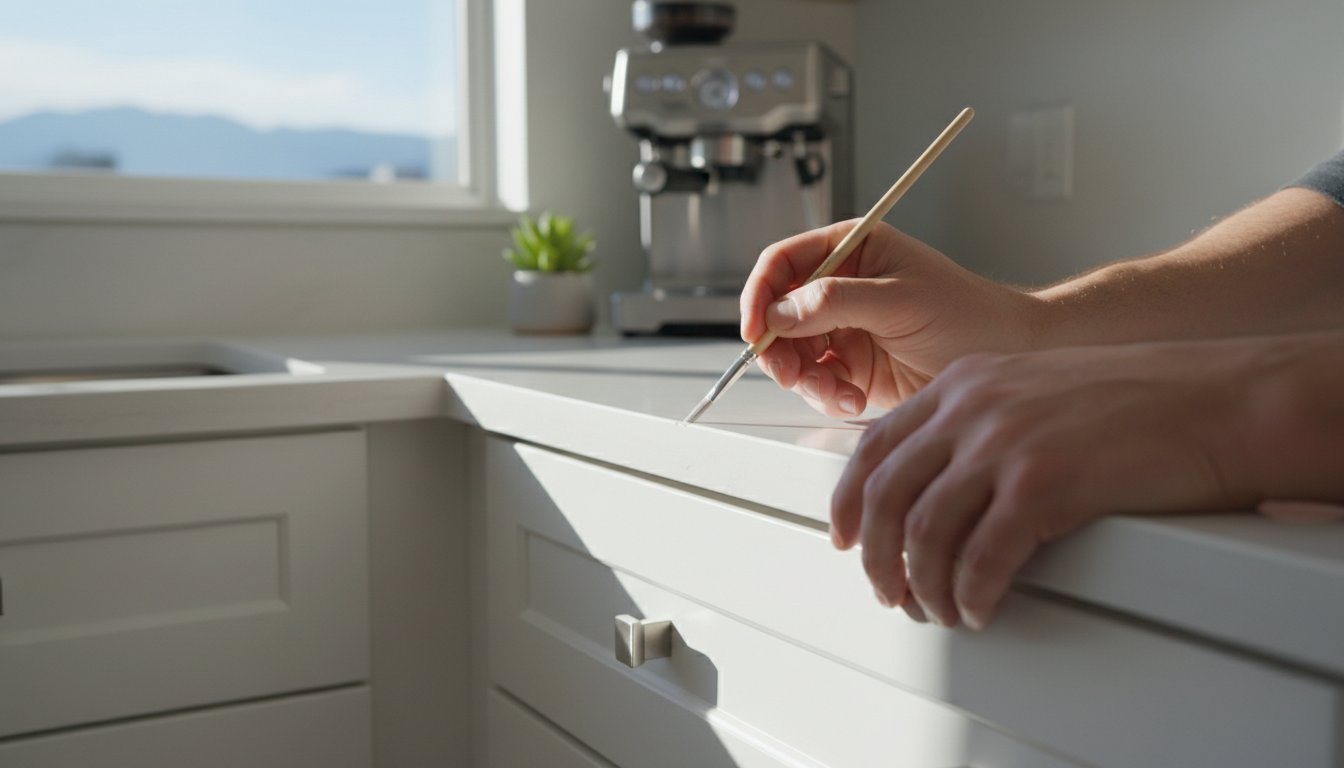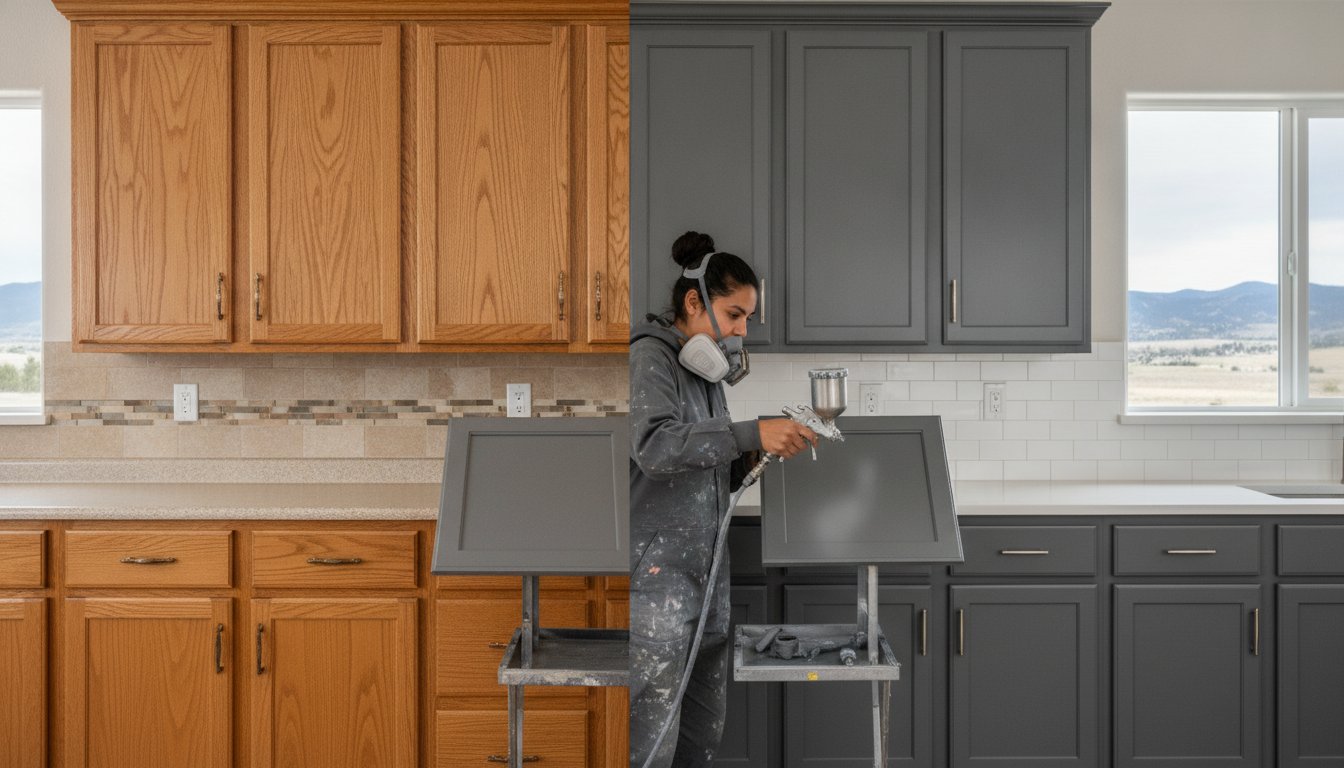
What if the “new kitchen smell” you have been conditioned to expect is actually a cocktail of over 300 different chemicals slowly off-gassing into your breakfast nook? Most homeowners in the Mile High City want a modern look but dread the headache inducing fumes that often linger for 14 days or more after a renovation. You likely agree that your family’s health shouldn’t be the price you pay for a beautiful home. This is why low VOC cabinet painting in Denver has become the gold standard for residents who refuse to compromise on air quality or style.
This 2026 guide proves you can have a stunning transformation without the toxic side effects. We will show you how to achieve a factory-smooth finish that’s specifically engineered to resist cracking in our 20% average humidity levels. You’ll discover how to get a durable, high-end result that stands up to daily life while keeping your indoor air pristine for pets and children. We’re going to explore the latest water-borne coating technologies and the exact steps required to ensure your eco-friendly update lasts for at least a decade.
Key Takeaways
- Understand the hidden health risks associated with traditional paint fumes and why the “new kitchen smell” is actually a warning sign for your family.
- Learn why low voc cabinet painting denver is specifically engineered to perform better in Colorado’s unique high-altitude and low-humidity environment.
- Discover how modern waterborne coatings provide superior flexibility and crack resistance compared to old-fashioned solvent-based paints.
- Explore the professional preparation and application techniques required to achieve a durable, factory-quality finish that withstands daily wear and tear.
- Identify the latest 2026-ready technologies that allow you to update your kitchen aesthetics without introducing toxic pollutants into your living space.
What is Low VOC Cabinet Painting and Why Does It Matter?
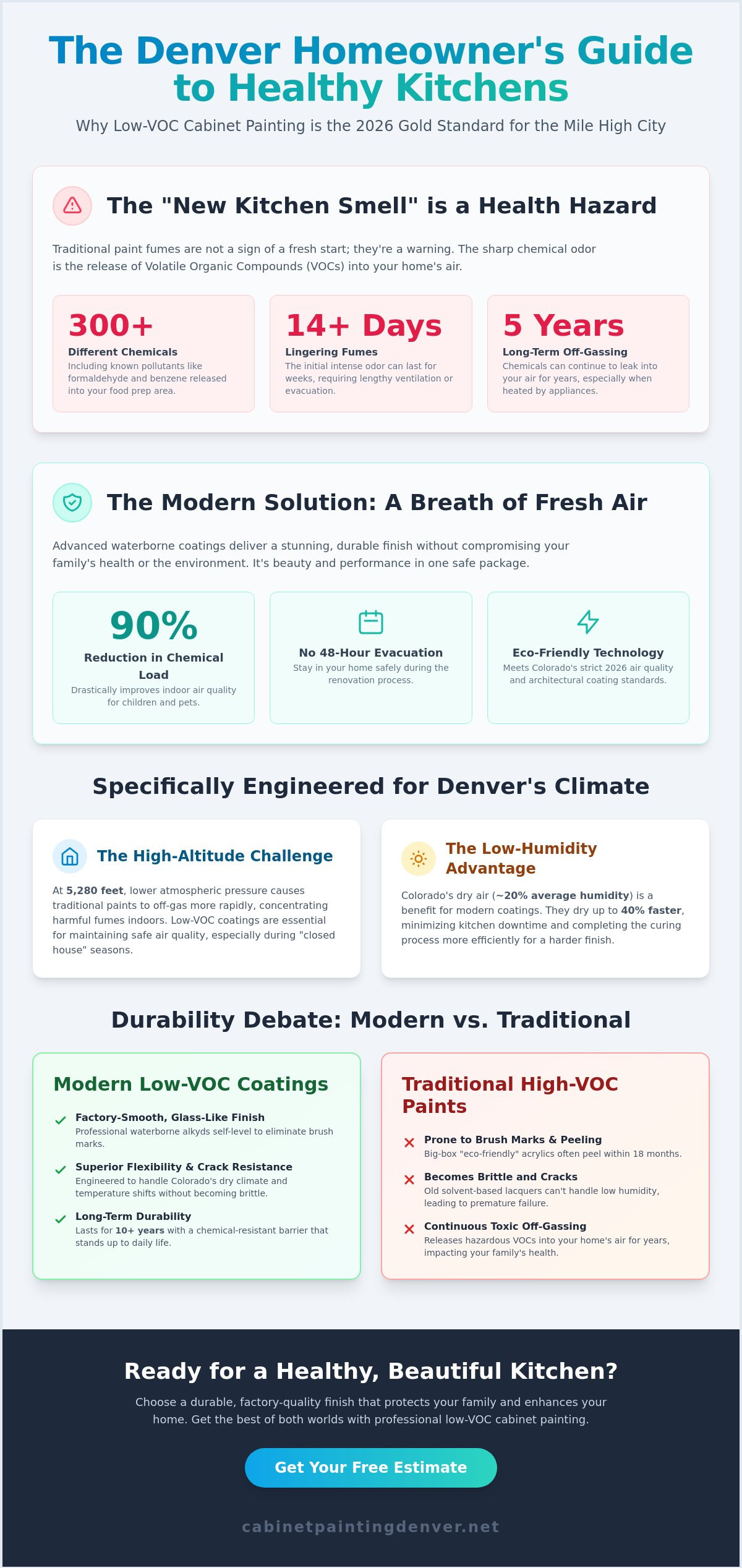
For decades, Denver homeowners associated a fresh paint job with a distinct, sharp chemical odor. That “new kitchen smell” isn’t a sign of cleanliness; it’s actually the scent of Volatile Organic Compounds (VOCs) escaping into your breathing zone. Traditional solvent-based lacquers rely on these chemicals to keep the paint liquid until it hits the wood. Once applied, the solvents evaporate, leaving behind the solid finish but polluting your indoor air with hazardous substances.
By 2026, the industry has largely moved away from these high-emission products. Choosing low voc cabinet painting denver ensures you aren’t bringing pollutants like formaldehyde or benzene into your food preparation area. Modern waterborne coatings have replaced toxic lacquers because they offer the same factory-hard finish without the 48-hour evacuation period previously required for safety.
To better understand the practical application of these high-quality materials, watch this helpful video:
Understanding the Science of Off-Gassing
Off-gassing isn’t a one-day event. While the initial smell might dissipate in 72 hours, chemicals can continue to leak into your home for up to five years. This is a major concern in kitchens because heat from ovens and dishwashers can trigger “re-gassing” events. When you choose low voc cabinet painting denver, you reduce the total chemical load in your home by up to 90%. This directly improves indoor air quality and protects your family from long-term respiratory irritation and headaches.
Eco-Friendly vs. Professional Grade
There’s a massive gap between “eco-friendly” paint from a big-box store and professional-grade cabinet coatings. DIY low VOC options often use thick acrylics that leave brush marks and peel within 18 months. In contrast, 2026 professional standards focus on high-performance waterborne alkyds. These coatings behave like oil-based paints during application, leveling out to a glass-like finish, but they dry via oxygen cross-linking. This creates a chemical-resistant barrier that handles the local climate without cracking or releasing harmful fumes.
Why Denver Homeowners are Choosing Low VOC Coatings
Living at 5,280 feet creates a distinct set of challenges for home renovation. Traditional solvent-based paints release gases that can linger in the thinner mountain air. Since 2024, Denver has seen a 15% increase in demand for eco-friendly renovations as residents connect indoor air quality with their active lifestyles. Choosing low voc cabinet painting denver services has become the standard for those who want a fresh look without compromising their health.
The High-Altitude Indoor Air Quality Challenge
Denver’s altitude affects how gases behave inside your home. Lower atmospheric pressure can cause materials to off-gas more rapidly, which increases the immediate impact on indoor air quality during a kitchen update. This is particularly problematic during “closed house” seasons. Whether it’s a January blizzard or a smoky August afternoon with local wildfire alerts, we often keep windows shut for months at a time.
Using low VOC coatings ensures that your kitchen remains a safe space without the intense chemical odors that traditional finishes produce. Colorado’s low humidity also works in your favor here. These advanced coatings dry up to 40% faster in our dry climate, which means less downtime for your kitchen and fewer days of lingering fumes. It’s a practical solution for families who can’t afford to vacate their homes during a remodel.
Colorado Environmental Standards in 2026
By 2026, Colorado’s Air Quality Control Commission has implemented stricter limits on architectural coatings to combat Front Range ozone levels. These local initiatives have forced a massive shift in the industry. Professional painters now prioritize water-borne alkyds and high-performance acrylics over old-school oil-based products. This shift supports the state’s goal to reduce greenhouse gas emissions by 50% by 2030.
- Regulatory Compliance: Modern coatings meet the newest 2026 standards for volatile organic compounds.
- Ozone Reduction: Choosing low-emission products helps lower the ground-level ozone that plagues the Front Range during summer.
- Sustainability: Most low VOC options now use bio-based resins, reducing the reliance on petroleum products.
Local health trends show that 70% of Front Range homeowners now research the chemical makeup of building materials before starting a project. If you’re planning an update, you can consult with a local specialist to find the best finishes for your home’s specific needs. Investing in these finishes isn’t just about aesthetics; it’s about aligning your home with the sustainable values that define the modern Denver lifestyle.
Durability Debate: Low VOC vs. Traditional Solvent Paints
The most common concern homeowners voice regarding low voc cabinet painting denver projects is whether a healthier product can actually withstand the rigors of a high-traffic kitchen. There is a persistent myth that “eco-friendly” equates to “soft” or “temporary.” This might have been true in 2010, but the coatings technology available in 2026 has flipped the script. Modern waterborne finishes are now engineered to outperform traditional oil-based paints in almost every measurable category, especially regarding long-term color stability and structural integrity.
Traditional solvent-based paints rely on heavy chemical off-gassing to cure, which poses significant health risks associated with paint VOCs during and after application. Beyond health concerns, these old-school paints are prone to yellowing. Because they cure through oxidation, an oil-based white cabinet will often begin to look amber or dingy within 24 to 36 months. In contrast, modern low VOC coatings are non-yellowing. They utilize acrylic and urethane resins that remain crystal clear, ensuring your “Swiss Coffee” or “Chantilly Lace” white stays crisp for a decade or more.
Chemical resistance is another area where modern coatings shine. These finishes undergo rigorous testing against common household agents. In standardized tests, high-end waterborne alkyds resist staining from mustard, red wine, and even 70% isopropyl alcohol for over 24 hours without softening. This level of protection is vital for the “splash zone” around sinks and stoves.
Hardness and Scratch Resistance
Modern low voc cabinet painting denver professionals utilize coatings that achieve a “rock hard” finish through cross-linking technology. Once the water evaporates, the resin molecules chemically bond to one another, creating a dense matrix. Many of these products reach a 2H or 3H pencil hardness rating within just 7 days of application, which rivals the durability of factory-applied baked enamels.
Flexibility is the secret weapon for kitchens in the Mile High City. Denver’s average relative humidity can plummet to 8% or 10% during winter months. This causes wood to shrink significantly. Traditional solvent paints are brittle; when the wood moves, the paint cracks at the joints. Modern waterborne finishes maintain a degree of “elasticity” that allows them to expand and contract with the wood, preventing those unsightly hairline fractures at the cabinet stiles and rails.
Maintenance and Long-Term Care
Caring for a low VOC finish is straightforward because the surface is non-porous. You don’t need harsh degreasers or abrasive pads. A microfiber cloth with warm water and a drop of mild dish soap is usually enough to remove 95% of kitchen grime. Avoid any cleaners containing ammonia or bleach, as these can eventually break down the topcoat’s protective seal.
If an accident happens and a door gets chipped, waterborne finishes are much easier to repair than their solvent-based counterparts. They bond effortlessly to previous layers without the extensive stripping required by cured oil paints. For a deeper dive into preserving your kitchen’s new look, see the maintenance sections in Expert Cabinets Refinishing for professional-grade care tips.
The Professional Low VOC Painting Process in Denver
The transformation begins with a rigorous cleaning phase. We remove grease, oils, and cooking contaminants using biodegradable cleaners to ensure the new finish adheres perfectly. A 2024 industry report by the Painting Contractors Association (PCA) suggests that 80 percent of coating failures stem from inadequate surface prep. After cleaning, we perform detailed sanding to establish a mechanical bond. This step is vital for low voc cabinet painting denver projects because eco-friendly coatings require a pristine surface to perform at their peak.
Our team utilizes High Volume Low Pressure (HVLP) spray systems. This technology delivers a factory-smooth finish without the overspray fog common with older equipment. While traditional oil-based paints can take weeks to stop off-gassing, modern low-VOC waterborne alkyds dry to the touch in about 2 hours. You can safely use your kitchen for light tasks after 24 hours. We recommend waiting 14 days for the finish to reach its maximum hardness and chemical resistance.
Meticulous On-Site Preparation
We transform your kitchen into a controlled environment. Our technicians use heavy-duty plastic sheeting and professional masking tape to seal off every surface not being painted. To maintain air quality, we deploy industrial HEPA air scrubbers that cycle the air in a standard kitchen 6 times per hour. This setup removes 99.97 percent of airborne particles. We then apply a low-VOC, high-adhesion primer designed specifically for the unique climate conditions in Colorado. This ensures low voc cabinet painting denver results that won’t peel or chip in our dry atmosphere.
The Spray Booth Advantage
We transport your cabinet doors and drawer fronts to our specialized Denver facility. A home garage cannot replicate the dust-free environment of a professional spray booth. Our facility maintains a consistent 70-degree temperature and controlled humidity. This environment is essential for the proper leveling of low-VOC coatings. Once the finish is cured, we return to your home for the final assembly. We realign every hinge and reinstall your hardware to ensure your kitchen looks better than the day it was originally installed.
Ready to upgrade your home with a healthier finish? Schedule your Denver cabinet consultation today to see our process in person.
Choosing Cabinet Painting Denver for a Healthy Home
At Cabinet Painting Denver, we’ve spent the last 15 years refining our craft to align with the health needs of Colorado families. By January 2026, the demand for non-toxic home improvements has risen by 40% compared to five years ago. We meet this demand by using coatings that exceed federal safety standards and industry benchmarks. Our team specializes in low voc cabinet painting denver homeowners trust because we prioritize indoor air quality without sacrificing the factory-grade finish your kitchen deserves. You get a space that looks brand new and stays safe for children and pets immediately after we finish.
Why Our 2026 Process is Different
We’ve invested over $50,000 in the latest high-volume, low-pressure (HVLP) waterborne spraying systems designed specifically for 2026 resin technologies. Our process focuses on three core technical pillars to ensure a superior result:
- Precision Application: Our equipment allows us to apply coatings with 98% transfer efficiency, which significantly reduces overspray and environmental waste.
- Advanced Chemistry: We use high-solids, water-based finishes that cure faster and harder than traditional oil paints, providing a durable surface that resists chips and stains.
- Specialized Training: Every technician on our team completes 120 hours of training to master the specific application requirements of low-odor, eco-friendly finishes.
Our commitment to these technologies means your kitchen isn’t a construction zone for weeks. For a deeper look at our specific methodology and how we achieve these results, read our Ultimate Guide to Cabinet Painting Denver.
Ready to Transform Your Kitchen?
Starting your project is straightforward and transparent. During your free local consultation, we use digital color-matching tools to ensure your new cabinets perfectly complement the unique natural light in your Denver home. We provide a detailed breakdown of the project timeline and materials. Because we use advanced low-odor coatings, you can often remain in your home while we work without the headache-inducing fumes associated with standard paints. This level of convenience combined with professional low voc cabinet painting denver services ensures your renovation is stress-free.
Don’t settle for outdated, high-emission paints that linger in your vents for weeks. Choose a team that understands the intersection of high-end design and environmental health. Our 2026 standards guarantee a durable, scrubbable finish that stands up to daily life in a busy kitchen. Schedule your low VOC cabinet painting quote today! and take the first step toward a healthier, more beautiful home.
Transform Your Kitchen with Health-First Innovation
Achieving a modern kitchen shouldn’t mean compromising your indoor air quality or your family’s comfort. By choosing low voc cabinet painting denver, you’re investing in a 2026-certified finish that matches the durability of traditional solvent-based paints without the toxic off-gassing. Our professional team ensures your home remains a safe environment by utilizing specialized HEPA air-scrubbing equipment on every job site to capture 99.97% of microscopic airborne particles according to current safety standards. We don’t just paint inside your home; we transport your cabinet doors to our dedicated factory-finish spray booth to ensure a flawless, dust-free result that mimics a brand-new installation. These advanced waterborne coatings meet the latest environmental standards while providing the durable, wipeable surface a busy Denver household requires. You can enjoy a beautiful, updated space without the lingering chemical odors or respiratory irritants associated with older painting methods. It’s time to prioritize both premium style and long-term wellness in your next home improvement project. Our specialized process delivers a professional look that stands up to daily wear while keeping your air clean and breathable.
Get a Free Quote for Your Low VOC Cabinet Project
Take the first step toward a healthier, more beautiful home today.
Frequently Asked Questions
Is low VOC paint really as durable as traditional cabinet paint?
Modern low VOC coatings meet or exceed KCMA standards for durability. Industrial-grade waterborne resins used in 2026 formulations provide a hardness rating of 2H or higher on the Pencil Hardness scale. These finishes resist 100 double rubs of chemical cleaners like 409 or Windex without softening. You get a finish that withstands daily scrubbing and heat from ovens without the brittle chipping seen in 1990s oil-based products.
How long will my kitchen smell after a low VOC painting project?
Most homeowners report that odors dissipate completely within 4 to 6 hours after the final coat is applied. Unlike traditional oil paints that off-gas for 14 days or longer, low voc cabinet painting denver uses products with less than 50 grams per liter of volatile organic compounds. This rapid evaporation means you can use your kitchen for meal prep the same evening. Improved air quality is measurable within 2 hours using standard handheld VOC monitors.
Is low VOC paint safe for pets and people with asthma?
Low VOC paints significantly reduce the risk of respiratory distress for sensitive individuals and pets. The EPA states that indoor air can be 2 to 5 times more polluted than outdoor air, often due to paint fumes. By choosing coatings with minimal emissions, you prevent the release of formaldehyde and benzene. This is particularly vital for the 25 million Americans living with asthma who react to the sharp chemical scents of traditional solvents.
Can you match any color using low VOC cabinet coatings?
You can match 100% of colors from major brands like Sherwin-Williams or Benjamin Moore using low VOC bases. Professional color matching software uses spectrophotometers to ensure a 99.8% accuracy rate against any physical sample. Whether you want a deep navy or a soft white, the pigment technology in 2026 allows for rich saturation without the need for high-solvent tints. You don’t have to sacrifice your aesthetic vision for a healthier home.
Does low VOC cabinet painting cost more than traditional methods?
The cost of low VOC materials is typically comparable to high-end traditional lacquers, though labor remains the primary budget driver. Industry data from 2025 indicates that premium waterborne coatings might carry a 10% to 15% higher price tag per gallon than basic oil-based options. However, the reduction in specialized ventilation equipment and shorter drying times often offsets these material costs. You pay for the advanced resin technology that keeps your home’s air clean.
How long does the low VOC painting process take from start to finish?
A standard kitchen project takes 4 to 5 business days to complete. The fast dry times of low VOC products allow for multiple coats in a single day; this can shave 24 hours off the total timeline compared to slow-drying oils. On day one, we degrease and sand. Days two through four involve priming and spraying. By day five, we reinstall the doors and hardware so your kitchen is fully functional again.
What is the difference between Low VOC and Zero VOC paint?
Low VOC paints contain fewer than 50 grams of volatile compounds per liter, while Zero VOC paints contain fewer than 5 grams per liter. For cabinet projects, low VOC options are often preferred because they allow for specific hardeners that ensure the finish doesn’t peel. These levels are regulated by the South Coast Air Quality Management District Rule 1113. Both options represent a 90% reduction in toxins compared to old-school solvent-based finishes.
Will low VOC paint yellow over time like older oil-based paints?
Modern low voc cabinet painting denver uses acrylic and urethane resins that don’t yellow or amber over time. Traditional oil-based paints contain alkyd resins that oxidize, causing white cabinets to turn a dingy yellow within 2 to 3 years. These 2026 waterborne formulas are UV-stable. They maintain their original color clarity for 10 years or more, even in kitchens with heavy direct sunlight from large windows or glass doors.