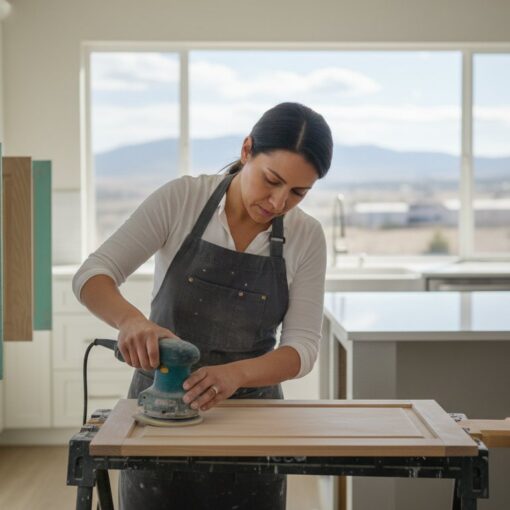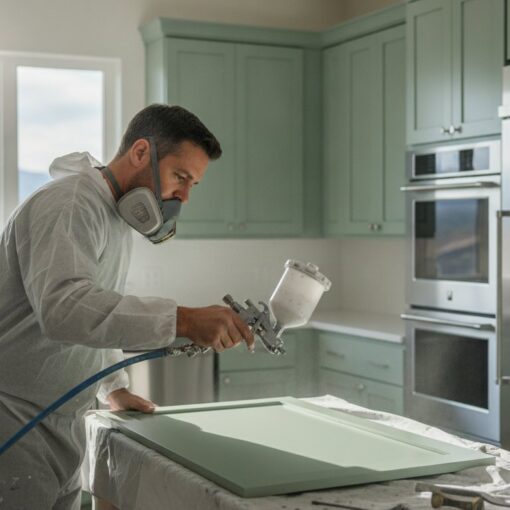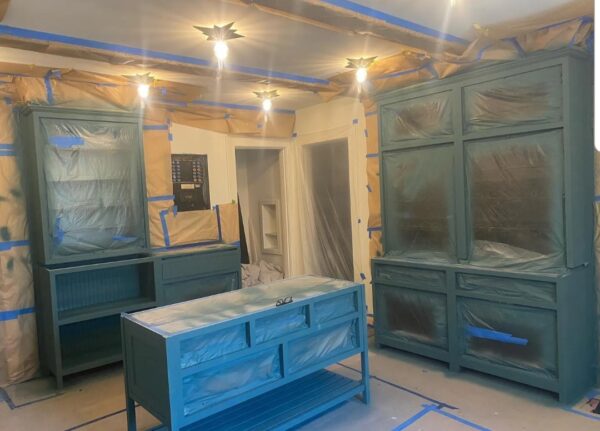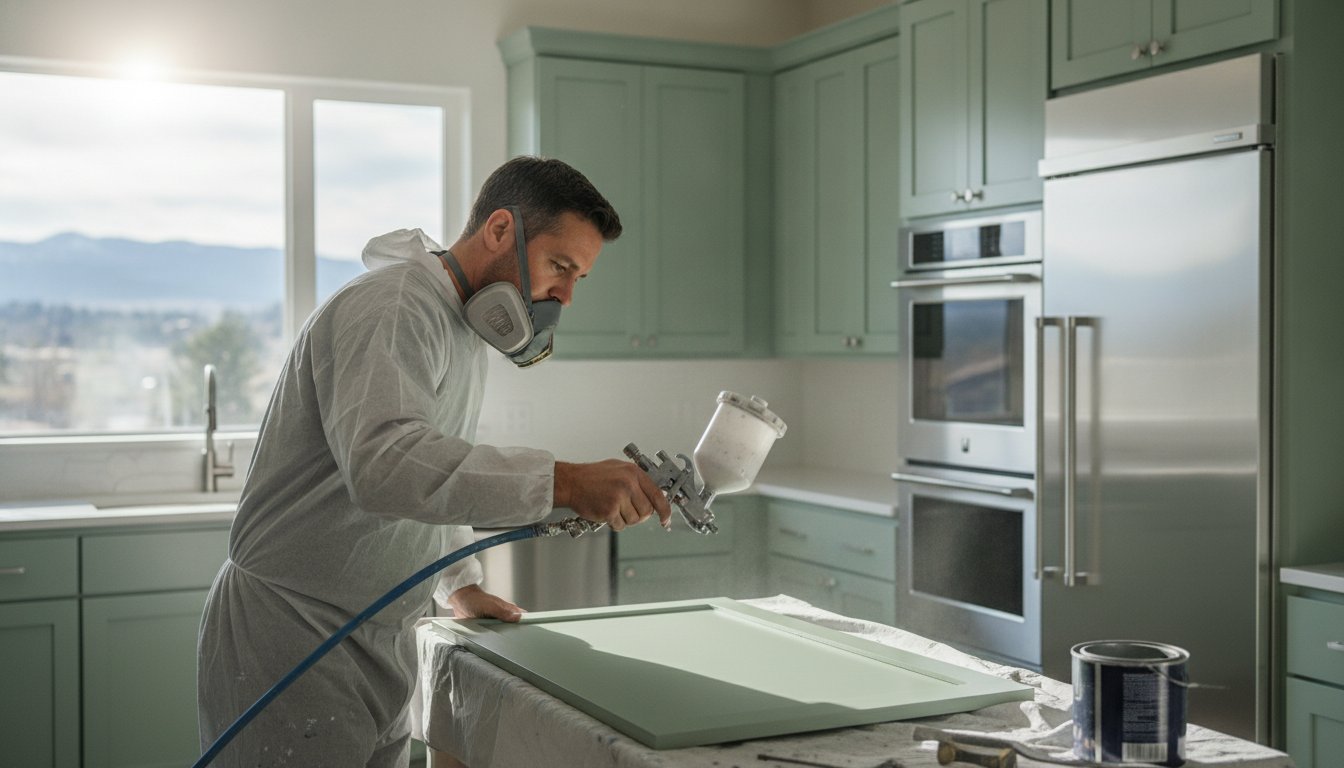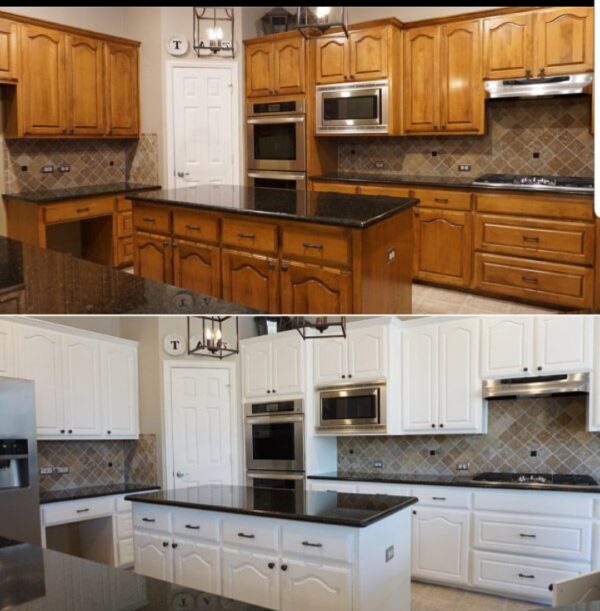
Last week, a homeowner in Denver felt her freshly painted cabinet door, thrilled her kitchen renovation was finally done. The paint felt completely dry to the touch. But the next morning, she discovered a small, tacky peel mark right where the door bumper met the frame, a tiny but permanent flaw in her otherwise perfect finish. It’s a frustratingly common story, and one we hear all the time. You’ve invested hundreds, if not thousands, of dollars into a beautiful new look, and the final hurdle is a confusing waiting game where one wrong move can cause nicks, chips, or tacky marks.
This guide will clear up all the confusion. We’ll give you a definitive answer to how long does cabinet paint take to cure and explain the critical difference between a ‘dry’ surface and a rock-hard, fully-cured finish that will last for years. You’ll get a clear, realistic timeline for today’s advanced paint formulas, learn three safe ways to speed up the process, and discover the simple ‘thumbnail test’ to know for sure when it’s safe to fully use your kitchen again.
Key Takeaways
- Understand the crucial difference between “dry to the touch” and a fully “cured” finish to prevent accidental smudges and dings on your new cabinets.
- Discover how long does cabinet paint take to cure based on key factors like the specific paint you use and the humidity in your home.
- Learn simple, non-damaging tests you can perform to confidently determine if your cabinets are truly ready for daily use.
- Get a clear timeline for when it’s safe to handle your cabinets, re-install hardware, and return your kitchen to normal without ruining the finish.
Dry vs. Cured: Why Your Cabinet Paint Feels Ready But Isn’t
You’ve just had your kitchen cabinets professionally painted. After 24 hours, you run your hand over a door. It feels smooth, solid, and completely dry. It seems ready for action, but this is one of the most critical and misunderstood phases of the entire project. The difference between “dry” and “cured” paint is massive, and ignoring it can undermine the durability of your beautiful new finish.
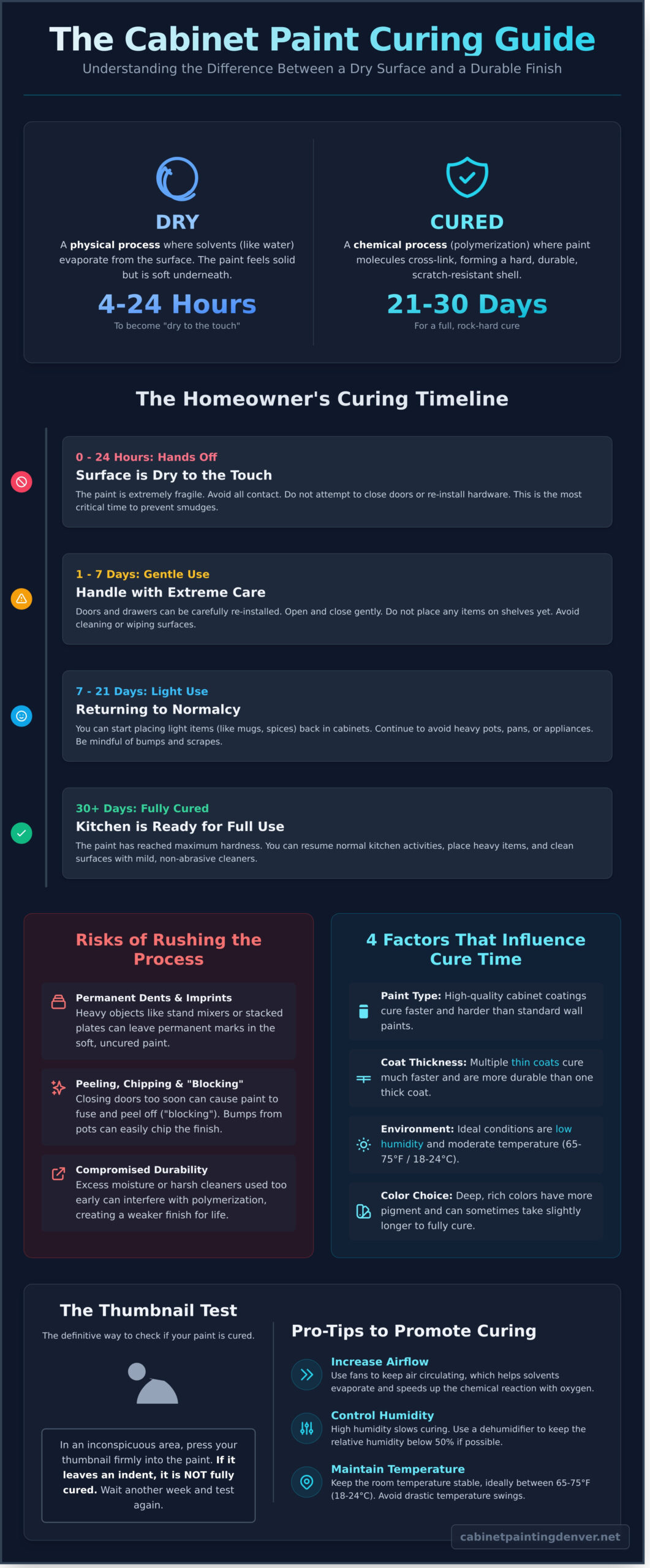
Paint being dry to the touch simply means the solvents (like water in latex paints) have evaporated from the surface layer. This typically happens within 4 to 24 hours, depending on the paint type and ambient conditions. Curing, however, is a much deeper, longer process. It’s the chemical transformation where the paint’s resins and polymers cross-link to form a hard, resilient film. Answering the question of how long does cabinet paint take to cure requires understanding this fundamental distinction: drying is a physical process, while curing is a chemical one.
The Science of Polymerization
As the initial water or solvent evaporates, it leaves behind the paint’s solid components: pigments and binders. This is just the first step. The real strength comes from polymerization, where these binders, or resins, react with oxygen in the air. This reaction creates long, interconnected molecular chains. Curing is a chemical process that transforms the liquid paint into a solid, plastic-like shell. Think of it less like a puddle drying and more like liquid epoxy hardening. Curing is a molecular bond, not just moisture loss.
This is why a cabinet door can feel dry but remain soft and vulnerable underneath. The surface layer hardens first, but the complete chemical reaction throughout the entire paint film takes time. A full, proper cure is what gives professional cabinet finishes their signature durability against scratches, stains, and daily wear. The timeline for this process isn’t hours; it’s weeks. For most high-quality cabinet coatings, you can expect a full cure to take between 21 and 30 days.
One of the biggest risks during this period is “blocking.” This happens when two painted surfaces are pressed together before they’ve fully cured, like closing a cabinet door against its frame. The pressure and lack of airflow can cause the two surfaces to fuse. When you eventually open the door, the paint can peel right off the frame or the door edge, creating a costly and frustrating repair.
The Risks of Rushing the Process
Treating your cabinets with care during the 30-day curing window is non-negotiable for a long-lasting finish. The paint is still chemically active and susceptible to damage that can become permanent. Rushing back to normal kitchen use can lead to several preventable problems:
- Permanent Dents and Imprints: Placing a heavy object, like a 10-pound stand mixer or a stack of ceramic plates, on a newly painted shelf within the first two weeks can leave a permanent impression in the soft paint film.
- Peeling and Chipping: Beyond the risk of blocking, aggressively wiping the cabinets with harsh cleaners or accidentally bumping them with pots and pans can easily cause the uncured paint to chip or peel away.
- Compromised Durability: Exposing the finish to excessive moisture or steam, for example from a dishwasher’s vent cycle, before day 30 can interfere with the polymerization process. This can result in a weaker final finish that’s more prone to staining and damage for its entire lifespan.
Patience during this final stage is your best investment. By understanding how long does cabinet paint take to cure and respecting the process, you ensure the professional finish you paid for will look great and stand up to the rigors of daily life for years to come.
Factors Influencing Your Cabinet Paint Cure Time
The question “how long does cabinet paint take to cure?” doesn’t have a single, simple answer. A durable, factory-finish cure is a chemical process influenced by a precise combination of factors. The timeline can shift from a few days to over a month depending on the product used, the environment it’s applied in, and even the technique of the painter. Think of it less like a set time and more like a scientific formula with four key variables.
First, consider the application itself. A common DIY mistake is applying one thick, heavy coat of paint to save time. This is counterproductive. A heavy coat traps solvents and water beneath a quickly-formed surface skin, dramatically slowing the final cure. Professionals always apply multiple thin coats, typically aiming for a total dry film thickness (DFT) of 3-5 mils. Two thin coats will cure significantly faster and create a much harder, more durable surface than one thick coat of the same total thickness.
Your color choice also plays a role. Deep, rich colors like navy blue or charcoal gray require a higher concentration of pigments. These fine particles, known as colorants, can slightly interfere with the paint’s polymer chains as they cross-link during the curing process. While the difference isn’t huge, you can expect a dark color to take an extra 2-3 days to reach full hardness compared to a standard white or off-white.
Denver’s Climate: The High-Altitude Factor
Here in Denver, our semi-arid climate creates a unique set of challenges. The extremely low humidity, often dipping below 20%, can cause “flash drying.” This is where the paint’s surface hardens almost instantly, trapping moisture and solvents underneath. The cabinet feels dry, but it’s not curing properly from the inside out. This can lead to a soft, easily-damaged finish weeks later. Maintaining stable indoor temperatures between 65°F and 75°F is absolutely critical, especially during our cold winters, to ensure a controlled and complete cure.
Product Chemistry and Cure Rates
The single biggest variable is the paint’s chemical makeup. Different products are engineered for different performance levels and have vastly different curing timelines. Understanding how long cabinet paint takes to fully cure is essential for choosing the right product for your kitchen’s demands. Here’s a breakdown of the most common options:
- Water-based Acrylics: These are high-quality DIY-friendly paints. They are known for low odor and easy cleanup, but they require patience. Expect a full cure time of 14 to 30 days before the surface achieves maximum scratch and chemical resistance.
- Hybrid Alkyds: Products like Benjamin Moore ADVANCE offer the smooth, hard finish of an oil-based paint with the convenience of water cleanup. This superior finish comes at a cost: time. These paints have the longest cure window, often needing 30 days or more to reach their final hardness.
- Professional 2K Coatings: This is what professional shops use. These are industrial-grade products, like two-component (2K) polyurethanes, that use a chemical catalyst to force the cure. Instead of waiting for water to evaporate, a chemical reaction creates an incredibly durable finish that is fully cured in just 24 to 72 hours.
Juggling these environmental and chemical factors is precisely why achieving a durable cabinet finish is so complex. Getting an expert opinion on how these variables apply to your specific home and kitchen is the surest path to success. For a precise evaluation of your project’s needs, an experienced professional Denver cabinet painter can provide a timeline you can trust.
The ‘Thumbnail Test’ and Other Ways to Check Readiness
After weeks of careful prep and painting, the final hurdle is patience. While your cabinets might feel dry to the touch within 24 hours, they are far from cured. The paint film is still undergoing a chemical process to achieve its maximum hardness and durability. Rushing this stage can lead to nicks, dents, and peeling. The ultimate answer to how long does cabinet paint take to cure is revealed not by a calendar, but by the paint itself. Here’s how to check if your cabinets are ready for action.
Performing the Thumbnail Test Correctly
This is the industry-standard method for checking paint hardness. First, choose an inconspicuous spot, like the back of a lower cabinet door or the inside lip of a drawer front. Press your thumbnail firmly, but not aggressively, into the painted surface. If it leaves a permanent indent or feels soft and gummy, the paint has failed the test and needs more time. If your nail glides over the surface without leaving a mark, the paint has achieved a sufficient cure for careful use.
If your paint still feels soft after 14 days, don’t panic. This usually points to an environmental factor, not a product failure. The first step is to check the room’s humidity and temperature. If conditions are off, adjust them and give the cabinets another 7 days before re-testing. Patience now prevents costly touch-ups later.
Beyond the physical test, you can use your other senses to gauge readiness. These methods provide valuable clues throughout the 21 to 30-day curing window:
- The Sniff Test: That distinct “fresh paint” smell is the scent of solvents, or Volatile Organic Compounds (VOCs), evaporating from the paint film. This process, called off-gassing, is a direct part of curing. When the smell has completely dissipated from the room, it’s a strong indicator that the chemical hardening process is nearly finished.
- The Paper Test: If you must close doors or place items on shelves before the full 30-day cure is up, use this trick. Place a small piece of parchment paper (not wax paper) between the door and the cabinet frame or under an object on a shelf. Check it after 24 hours. If the paper doesn’t stick at all, your paint is well on its way. If it peels off with a slight tackiness, you definitely need more time.
- Visual Cues: A fully cured paint job has a uniform and consistent appearance. Look at the surface from an angle in good light. The sheen should be even, without any dull or overly glossy patches. The paint should also be fully “leveled,” meaning any tiny ridges from a brush or roller have settled into a smooth, factory-like finish.
Monitoring Your Kitchen Environment
Your kitchen’s climate is the single most important factor influencing how long does cabinet paint take to cure. For optimal results, you need to manage it proactively. Use a digital hygrometer to monitor indoor humidity; the ideal range is between 45% and 55%. Running a dehumidifier can be essential, especially during humid summer months. High humidity, anything over 70%, can nearly double the required curing time.
Your HVAC system is your best ally. Set your thermostat to maintain a steady temperature around 70°F (21°C). Avoid wild temperature swings, as they can cause the paint film to expand and contract, hindering the curing process. Finally, avoid creating excess moisture. Boiling a large pot of pasta, for example, can spike a kitchen’s humidity to over 80% in just 15 minutes. During the first 7-10 days of curing, consider using a slow cooker or microwave to minimize airborne moisture.
The Homeowner’s Survival Guide: Living with Curing Cabinets
Your kitchen looks brand new, but the work isn’t finished. The next 30 days are just as crucial as the prep work. Paint curing is a chemical process where the paint film hardens to its maximum durability. Treating your cabinets with care during this time is the single best way to protect your investment and ensure a finish that lasts for years. Think of it as a timeline with specific rules for each phase.
This guide breaks down exactly what to do, and what not to do, as your new cabinet finish completes its transformation from a delicate coating to a rock-hard protective layer.
The Curing Timeline: A Day-by-Day Plan
- Day 1-3: The ‘No Touch’ Zone. For the first 72 hours, the paint is extremely vulnerable. While dry to the touch, the surface is soft and can be easily dented, smudged, or imprinted. The goal here is zero contact. Avoid closing doors completely, leaning against surfaces, or placing any items on shelves. This initial period allows the majority of the paint’s solvents to evaporate, which is a critical first step in the hardening process.
- Day 4-7: Light Usage. You can now begin to use your kitchen with caution. This is the ideal window for carefully re-installing hardware and hanging doors. Gentle use is key. You can close doors, but don’t slam them. You can place a few light items inside, but avoid anything that could scrape the new surface.
- Day 8-21: Strategic Storage. The paint is now significantly harder, achieving approximately 75% of its final cure strength. You can start re-stocking your cabinets, but be strategic. Place lighter items like mugs, glasses, and plastic food containers back on the shelves. Hold off on heavy items, especially those with small contact points. A 25-pound stack of 12 ceramic plates, for example, can still leave compression marks on a shelf that hasn’t fully hardened.
- Day 22-30: Full Durability Achieved. Welcome to the final stretch. In this last week, the paint’s polymer chains are cross-linking completely, creating the tough, non-porous surface you paid for. The question of how long does cabinet paint take to cure is answered here; by day 30, the finish has reached about 99% of its maximum hardness and chemical resistance. You can now resume normal use, stock heavy items, and clean with confidence.
Hardware and Door Re-installation
Re-installing your hardware seems simple, but doing it wrong can ruin a perfect paint job. First, using small silicone bumpers or felt pads on the inside corners of every door and drawer front is non-negotiable. These dots create a 1-2 millimeter air gap, preventing the fresh paint on the door from sticking to the fresh paint on the cabinet frame. When tightening screws for knobs and pulls, turn until they are just snug, then stop. Over-tightening can twist the still-soft paint, creating a permanent circular blemish around the hardware base.
Cleaning and Maintenance During Cure
Patience is paramount when it comes to cleaning. For the first 30 days, your cabinets are on a strict “no-cleanse” diet. You must avoid all chemical cleaners, even gentle soap and water. The solvents in cleaning agents can interfere with the curing process, softening the paint and dulling its sheen. If a spill happens, don’t panic. Gently dab the spot immediately with a clean, dry microfiber cloth. Do not wipe or scrub. Any abrasive action, even with a soft sponge, can create micro-scratches that will become a permanent part of the finish. The no-scrub rule is absolute for one full month.
Navigating this delicate curing period is a major part of a professional project. It highlights the difference between a quick paint job and a long-term factory finish. To learn how our process accounts for every detail, from the first spray to the final cure, our experts are ready to help you achieve a flawless, durable cabinet finish that stands the test of time.
Why Professional Cabinet Painting Ensures a Faster, Harder Finish
The difference between a DIY paint job and a professional finish isn’t just about technique; it’s about chemistry, equipment, and environment. When homeowners ask how long does cabinet paint take to cure, the answer is dramatically different for a professional process. What takes a DIYer 30 days to achieve a fragile finish, a professional can accomplish in 24 hours with superior durability.
It starts with the product itself. The “paint” you buy at a hardware store is typically a single-component latex or alkyd product designed for easy application. It “dries” as water or solvents evaporate. A professional uses industrial-grade wood coatings, such as two-component (2K) polyurethane or catalyzed conversion varnish. These products don’t just dry; they cure through a chemical reaction. A catalyst is added just before application, creating a powerful cross-linking process that forges a significantly harder, more resilient surface that’s chemically bonded to your cabinets.
Application and environment are just as critical. Professionals use HVLP (High Volume, Low Pressure) spray systems to apply a thin, even film, typically between 3 and 5 mils thick. This precision is impossible with a brush or roller, which leaves a thick, uneven coat that traps solvents and dramatically extends cure time. We spray all doors and drawers off-site in a climate-controlled spray booth, maintaining a constant 70°F temperature and 50% relative humidity. This controlled environment eliminates dust, debris, and atmospheric fluctuations, ensuring the chemical cure happens perfectly and predictably.
The result is a finish that meets or exceeds Kitchen Cabinet Manufacturers Association (KCMA) standards. This certification isn’t just a label; it’s a guarantee of durability. To pass, a finish must withstand a battery of 14 rigorous tests, including 24-hour exposure to substances like vinegar, lemon juice, coffee, and mustard without any noticeable discoloration or damage. It’s a level of resilience that standard house paint simply cannot achieve.
The Cabinet Painting Denver Advantage
We leverage these professional principles to deliver a superior finish tailored for Colorado homes. Our process uses premium Italian catalyzed finishes that achieve 90% hardness in just 24 hours. By spraying all removable items at our dedicated Denver facility, we control every variable. We understand Colorado’s unique environmental challenges, from low humidity that can make some coatings brittle to the intense high-altitude UV light that causes lesser paints to fade and yellow. Our coatings are specifically chosen for their UV-inhibitors and flexibility, ensuring a lasting finish.
Get Your Kitchen Back Faster
Our off-site process means your home doesn’t become a construction zone for weeks on end. The kitchen remains functional while we do the meticulous work at our shop. Once cured, your cabinets will provide decades of beauty and service with simple care. To maintain their factory-new look:
- Clean surfaces with a soft, lint-free cloth and a mild soap-and-water solution.
- Avoid abrasive cleaners, scouring pads, and harsh chemicals like bleach or ammonia.
- Wipe up spills, especially acidic ones like coffee or tomato sauce, promptly.
- Use felt pads on the bottom of any small appliances or items stored on your countertops that might touch the cabinet bases.
Ready for a cabinet finish that’s harder, cures faster, and lasts longer? Let’s transform your kitchen with a truly professional process. Get a Free Quote from Denver’s Cabinet Experts today.
Ensure a Durable, Cured Finish That Lasts for Years
Patience is the final, crucial ingredient for a successful cabinet painting project. Remembering that ‘dry to the touch’ isn’t the same as ‘fully cured’ is the number one way to prevent nicks, dents, and smudges on your beautiful new finish. The answer to how long does cabinet paint take to cure can stretch from 14 to 30 days, heavily influenced by your home’s humidity and the type of paint used.
You don’t have to navigate that waiting game alone. We’ve transformed over 100+ Denver kitchens by taking the process off-site to our professional spray booth. Using specialized, KCMA-rated industrial coatings in this controlled environment gives your cabinets a durable, factory-grade finish that cures faster and harder than any DIY method can promise.
Schedule Your Free Cabinet Painting Estimate in Denver Today!
Let’s build the beautiful, long-lasting kitchen you’ve been dreaming of.
Frequently Asked Questions
Can I use my cabinets after 24 hours of painting?
No, you should not use your cabinets for at least 72 hours after the final coat. While the paint may feel dry to the touch in 24 hours, it has not yet cured and is still soft. Placing items on shelves or closing doors too soon can cause dents, chips, or peeling. For very light use, wait 3-5 days. For full, normal use and to ensure maximum durability, you should wait for the full 21 to 30-day cure period to complete.
How can I make my cabinet paint cure faster?
You can accelerate the curing process by controlling the environment. Maintain a consistent temperature between 65-75°F (18-24°C) and keep the relative humidity below 50%. Using a dehumidifier can significantly help in damp conditions. Gentle, indirect airflow from a fan also promotes curing by circulating the air, but avoid pointing it directly at the surface. Using a premium acrylic urethane enamel can also reduce the full cure time compared to standard latex paints.
Why is my cabinet paint still tacky after a week?
Your cabinet paint is likely still tacky due to high humidity or low temperatures. A key factor in how long does cabinet paint take to cure is the environment. If indoor humidity is above 60% or the temperature is below 60°F (15°C), the process slows dramatically. Another common cause is applying the paint too thickly. A thick coat traps solvents, preventing the paint from hardening properly. Always apply two thin coats, allowing 4-6 hours between them.
Is it okay to use a fan to speed up paint curing?
Yes, you can use a fan, but only to create gentle, indirect airflow. Pointing a fan directly at a freshly painted surface can cause the top layer to dry too quickly. This process, known as “skinning over,” traps solvents underneath and results in a weak, under-cured finish. It can also blow dust onto the wet paint. Instead, place an oscillating fan on a low setting in the center of the room to improve overall air circulation.
When can I put shelf liners on my newly painted cabinets?
You must wait until the paint is 100% cured before applying any shelf liners. This process typically takes a full 21 to 30 days. Placing a liner on a surface that isn’t fully hardened can cause the liner’s adhesive or plastic material to fuse with the paint. When you eventually try to remove or adjust it, the liner will pull the paint right off the shelf, ruining your new finish. Mark your calendar for 30 days out to be completely safe.
Does humidity really matter if I’m painting indoors?
Yes, indoor humidity is one of the most critical factors affecting paint curing. Most professional-grade cabinet paints require a relative humidity level below 50% for an optimal cure. High humidity introduces excess moisture into the air, which dramatically slows the solvent evaporation and chemical cross-linking needed for the paint to harden. In conditions with 70% humidity or higher, a standard 7-day cure can easily stretch to 14 days or more, leaving the surface vulnerable.
What is the best temperature for curing cabinet paint in Colorado?
The ideal temperature for curing cabinet paint in Colorado’s climate is between 65°F and 75°F (18-24°C). While Colorado’s low humidity is a major advantage for painting, it’s crucial to maintain a stable indoor temperature. Avoid painting if you can’t keep the temperature within this range for at least the first 72 hours. Significant temperature drops, especially below 55°F (13°C) overnight, can stall the chemical curing process and result in a brittle, less durable finish.
How do I know if my paint is cured or just dry?
You can perform a simple “press test” to determine if the paint is fully cured. After at least 21 days, press your fingernail firmly into the paint in an inconspicuous area, like the back of a cabinet door. If it leaves an indent, the paint is still curing and needs more time. If the surface feels rock-hard and resists the pressure without marking, it’s fully cured and ready for heavy use. This test provides a definitive answer for your project.