A high-quality house painter is not automatically qualified to refinish your kitchen; in fact, hiring a generalist is the most common reason cabinet finishes fail within the first year. Understanding how to hire the best cabinet painter in Denver requires looking past standard reviews and focusing on specialized technical processes. While a general contractor might offer a low bid, the technical demands of cabinet coatings require a level of precision that standard wall paint cannot provide.
It is frustrating to invest in a home upgrade only to worry about peeling paint or contractors occupying your kitchen for weeks. You deserve a durable, smooth finish that looks like it came straight from the factory. This guide provides a clear vetting process to help you identify specialists who use dedicated spray facilities and professional-grade chemical coatings. We will examine the critical differences between brushing and spraying, the specific licensing requirements for Denver contractors, and the exact steps necessary to ensure your cabinets remain beautiful for the next decade.
Key Takeaways
- Distinguish between standard wall paint and the industrial-grade coatings required for Kitchen Cabinet Painting to ensure a durable finish.
- Learn how to hire the best cabinet painter in Denver by evaluating a contractor’s specific equipment and their off-site spray facility capabilities.
- Identify critical preparation requirements such as chemical degreasing and grit progression sanding to avoid the common mistakes of generalist painters.
- Use a vetting checklist to verify local Denver licensing and insurance while reviewing “cured” project portfolios that are at least one year old.
- Understand the procedural differences between brushing and spraying to achieve a smooth, factory-like result for Bathroom Cabinet Painting or bookshelves.
Hiring the Best Cabinet Painter in Denver: Why Specialization Matters
The primary challenge in updating your home is distinguishing between a surface-level aesthetic change and a durable structural finish. When researching how to hire the best cabinet painter in denver, homeowners often mistake general painting experience for technical expertise. A house painter is trained to apply architectural coatings to drywall and trim; however, kitchen cabinets are high-use furniture that requires a different chemical bond. Professional specialization isn’t just about the tools used, but the chemistry of the coatings applied.
Standard latex paint doesn’t have the hardness to withstand hand oils, steam, and frequent cleaning. Professional Kitchen Cabinet Painting relies on industrial-grade coatings that provide a factory-like finish. It’s essential for maximizing the ROI of your Denver property, as a smooth, durable surface suggests a high-end custom build rather than a DIY project. The Refinishing Process for cabinets is more akin to automotive painting than home maintenance.
To better understand this concept, watch this helpful video:
The Cabinet Specialist vs. The House Painter
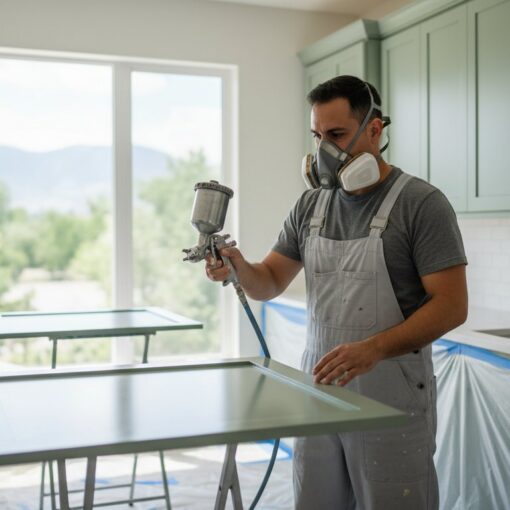
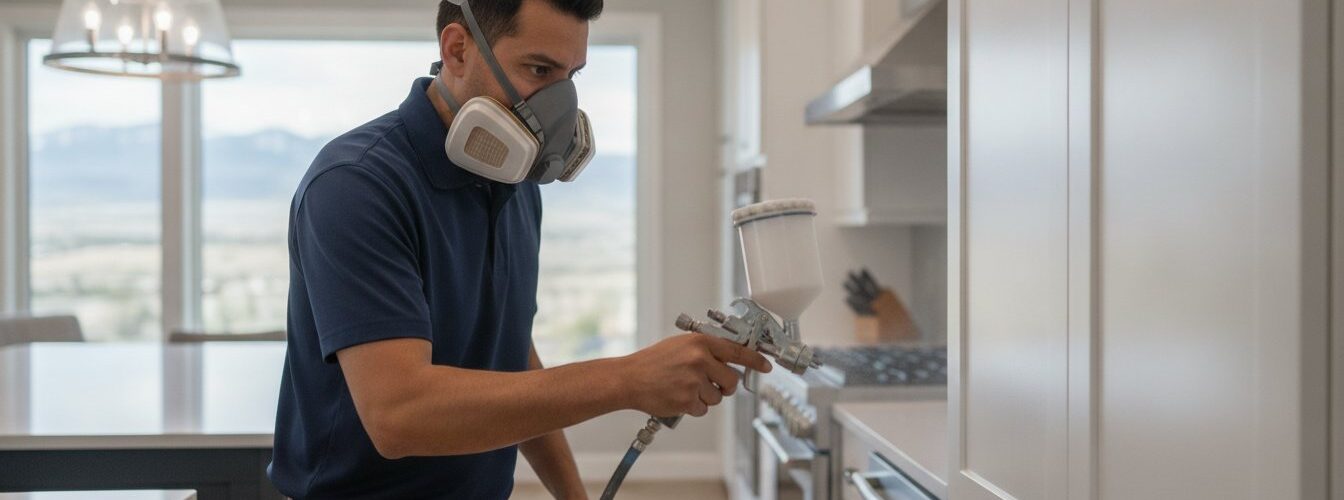
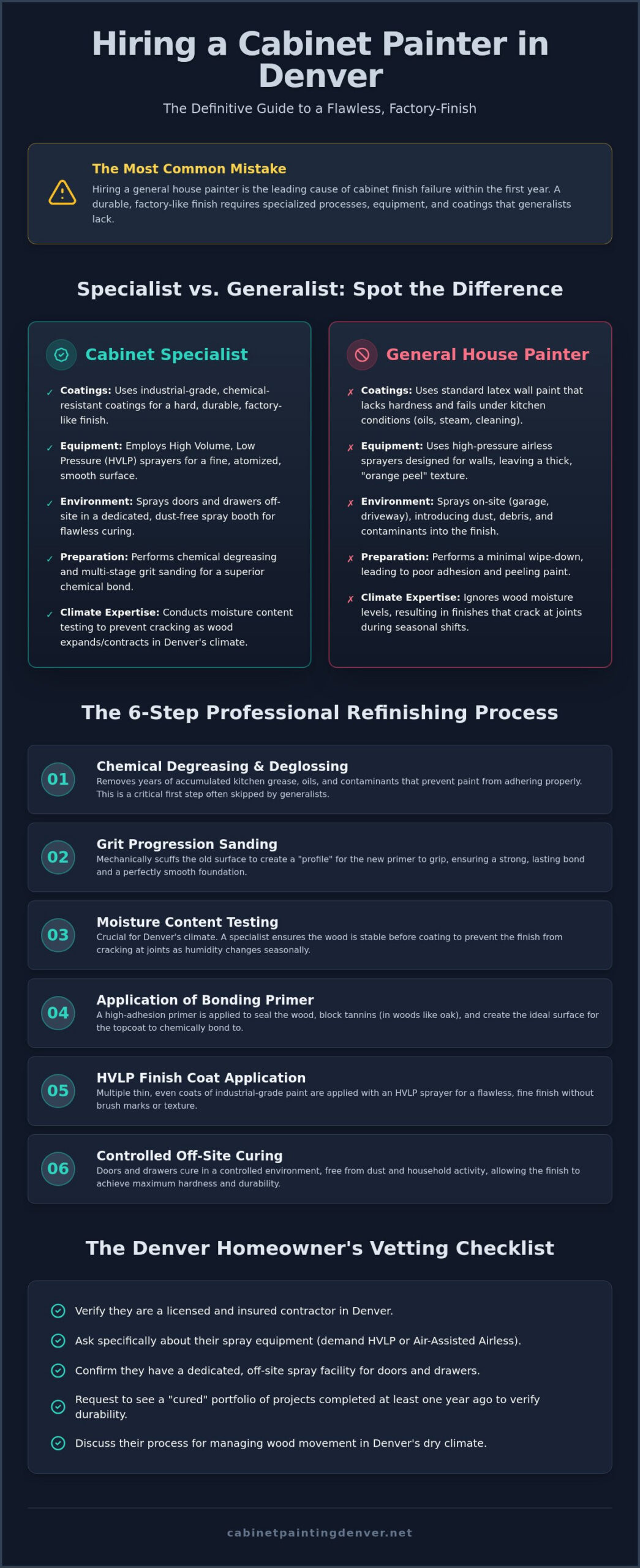
The distinction between a specialist and a generalist often comes down to equipment and environment. While a house painter typically uses an airless pump for speed and volume, a specialist utilizes High Volume Low Pressure (HVLP) sprayers to achieve a fine, atomized finish without excessive overspray. Specialists also understand the nuances of wood species, such as the need for grain filling in porous woods like oak or the specific primer requirements for maple. A cabinet specialist is a professional who uses off-site spray booths for doors to ensure a dust-free environment and proper curing.
Why Denver’s Climate Requires a Specific Approach
Denver’s semi-arid climate and low humidity levels significantly impact how coatings dry and how wood behaves. Rapid evaporation can cause paint to “skin over” before it levels out, which leads to brush marks or orange peel textures. Additionally, the extreme seasonal shifts in moisture cause wood to expand and contract. A top-tier Denver professional uses moisture content testing to ensure the wood is stable before any coating is applied. This technical step prevents the finish from cracking at the joints during the dry winter months. Selecting a contractor who understands these atmospheric variables is a key part of learning how to hire the best cabinet painter in denver. Proper moisture management ensures the finish remains flexible enough to move with the wood, protecting the integrity of your Bathroom Cabinet Painting or kitchen project.
Specialist vs. Generalist: How to Spot a True Professional
Spotting the difference between a generalist and a specialist begins with their equipment. If a contractor uses the same airless sprayer for your backyard fence as they do for your kitchen, it is a significant red flag. These high-pressure pumps are designed for volume, not the delicate atomization required for fine furniture. Learning how to hire the best cabinet painter in denver involves asking about their specific spray systems. Specialists use HVLP or Air-Assisted Airless setups that provide a smooth surface without the heavy “orange peel” texture left by standard house painting tools.
Preparation techniques also separate the professionals. A generalist might perform a quick wipe with a damp cloth and start painting. A specialist performs a chemical deglossing followed by mechanical sanding to create a profile for the primer. This procedural clarity is essential for a bond that lasts ten years instead of two. Following The Denver Homeowner’s Vetting Checklist ensures you verify these technical steps before signing a contract for your home improvement project.
The Dedicated Spray Booth Advantage
Spraying doors in a driveway or an open garage introduces environmental contaminants like dust, hair, and insects into the wet finish. A true specialist operates a dedicated off-site spray booth. This controlled environment ensures a “mote-free” finish that mimics factory production. Understanding the logistics of a dedicated spray booth is a vital step in how to hire the best cabinet painter in denver who can deliver professional results. Booths also allow for vertical spraying systems and specialized drying racks. These systems provide even coverage and prevent the drips or runs that occur when doors are painted while lying flat on a workbench.
Chemical Coatings vs. House Paint
Many painters use standard retail-store latex or acrylic paints designed for walls. These products are too soft for the constant contact cabinets endure. Professional specialists use industrial wood coatings that meet Kitchen Cabinet Manufacturers Association (KCMA) standards for chemical and heat resistance. These professional coatings are resistant to kitchen grease and frequent cleaning; they won’t soften or peel when exposed to moisture. Using the right chemistry ensures that your Kitchen Cabinet Painting project withstands the rigors of a busy household.
Primer selection is equally critical to the longevity of the project. Low-cost water-based primers often fail to block tannins or grease, leading to yellowing or peeling over time. Specialists prioritize stain-blocking alkyd or shellac-based primers to create an impenetrable barrier between the wood and the topcoat. This ensures the finish stays vibrant and adheres perfectly to the substrate. When you hire a specialist, you’re paying for this technical knowledge and the high-grade materials that general house painters rarely carry on their trucks.
The Technical Standard: Evaluating the Refinishing Process
Identifying technical standards is the most reliable way to vet a contractor. When you are researching how to hire the best cabinet painter in denver, you must look beyond the final photo and examine the steps taken to reach it. De-greasing is the most critical stage of any cabinet project. Kitchen surfaces accumulate a layer of aerosolized cooking oils that standard sanding cannot remove. If a painter applies a coating over this invisible film, the finish will eventually bubble or peel. Consulting Federal Trade Commission consumer advice can help you spot contractors who cut corners on these essential technical steps.
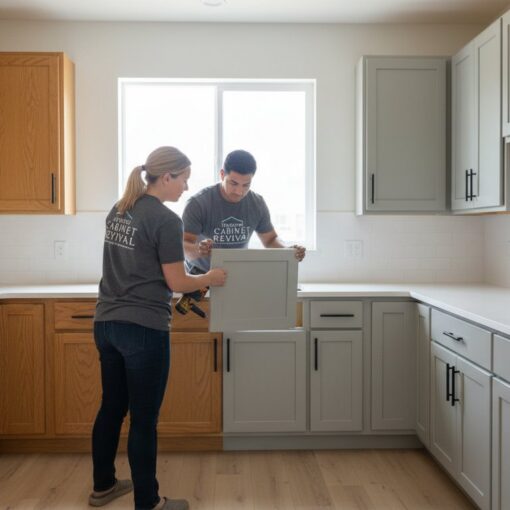
A professional refinishing process relies on mechanical adhesion through grit progression sanding. This isn’t a single pass with a sanding block. It involves a sequence of progressively finer abrasives, typically starting at 120-grit to remove the old finish and ending at 220-grit to create a smooth substrate. Between every coat of primer and paint, a specialist uses tack-clothing to remove microscopic dust particles. This ensures the environment remains sterile for the next layer of coating. The process concludes with a precise re-installation that includes hinge adjustment and the replacement of clear bumpers to ensure doors sit flush and close quietly.
Preparation: More Than Just Sanding
Top-tier specialists use Trisodium Phosphate (TSP) or industrial-strength deglossers to break down stubborn kitchen contaminants. This chemical cleaning ensures the primer creates a permanent bond with the wood. For homeowners with oak cabinets, filling the heavy grain is a vital service that transforms the look of the wood into a modern, smooth surface. Choosing the right coating is as important as the prep, which is why you should review The Best Paint for Cabinets: A Professional Painter’s Guide to understand the materials involved.
Professional Spraying Techniques
A specialist understands the physics of paint application, specifically the difference between wet film thickness and dry film thickness. Wet film thickness is measured during application with a specialized gauge to ensure the coat is heavy enough to level out but light enough to avoid drips. Two coats of primer are often mandatory for high-tannin woods like cherry or oak to prevent “bleed-through” over time. Before any door leaves the shop, it undergoes a quality control check under high-intensity lighting to identify any imperfections in the cured finish. This level of detail is a hallmark of how to hire the best cabinet painter in denver who prioritizes longevity over speed.
The Denver Homeowner’s Vetting Checklist: Insurance and Expertise
Vetting a contractor in the Mile High City requires more than reading a few five-star reviews. To understand how to hire the best cabinet painter in denver, you must start with legal compliance. In Denver, contractors are required to obtain a Supervisor Certificate, which involves passing a technical exam and demonstrating specific years of experience. You should also verify that the company carries workers’ compensation insurance, which is mandatory in Colorado for any business with one or more employees. General liability insurance is equally vital to protect your property during the project. If you are also considering exterior home improvements, you can discover Royalty Construction for specialized restoration services that adhere to these rigorous professional standards.
Beyond the paperwork, transparency in the written estimate is a hallmark of a professional. A vague quote that simply says “paint cabinets” is a risk. A detailed estimate should list specific product brands, such as Sherwin-Williams Gallery Series or Benjamin Moore ADVANCE, and specify the number of coats for both primer and topcoat. If a contractor cannot tell you exactly which chemical coating they plan to use, they are likely using standard house paint. For a deeper look at what to expect from a professional service, review Cabinet Painting Denver: Your Ultimate Guide to a Flawless Finish.
Local Denver References and Portfolios
Ask for references in neighborhoods with similar home ages, such as the Highlands, Cherry Creek, or Central Park. Older homes in these areas often have specific wood types that react differently to Denver’s low humidity. Request a portfolio of “cured” projects that are at least one year old. This allows you to see how the finish holds up against the high-altitude UV exposure and seasonal temperature swings that characterize our climate. When reviewing photos, look for smooth edges around the door profiles and a complete lack of drips or “bridging” across hinge lines.
Reading the Fine Print: Contract Red Flags
A major red flag in any contract is the absence of a warranty against peeling or adhesion failure. While no finish lasts forever, a specialist should stand behind their chemical bond for at least several years. You should also check for clear “change order” policies. These policies should outline how the contractor handles hidden issues, such as damaged wood or hardware that needs replacement. Finally, ensure the contract explicitly states that doors and drawers will be sprayed off-site. This prevents your home from becoming a makeshift paint shop and ensures a cleaner environment for the cabinet boxes. If you are ready to secure a specialist for your home, contact Cabinet Painting Denver to discuss your project requirements.
Denver’s unique atmospheric conditions make containment even more important. Because our air is so dry, dust travels easily and can settle into wet paint within seconds. Ask your contractor about their masking process for the cabinet boxes remaining in your kitchen. They should use zippered plastic barriers and high-efficiency particulate air (HEPA) filtration to keep the rest of your home clean. This level of technical planning is exactly how to hire the best cabinet painter in denver who respects your living space as much as the final finish.
Transform Your Kitchen with Cabinet Painting Denver
Selecting the right contractor involves more than comparing prices; it requires a commitment to technical standards that general house painters often overlook. Learning how to hire the best cabinet painter in denver leads to a single conclusion: specialization is the only path to a durable, furniture-grade finish. Our process aligns with the rigorous vetting standards established in this guide. We prioritize industrial-grade coatings and mechanical adhesion over standard retail paints. Every door and drawer face undergoes professional spraying off-site in a controlled, dust-free environment. This ensures a factory-quality surface that remains free from home-based contaminants like dust, cooking oils, or pet hair.
Consistency in Denver homes is maintained through a strict no-subcontractor policy. We utilize our own trained technicians for every stage of the project, from the initial chemical degreasing to the final re-installation. This direct oversight ensures that the grit progression sanding and tack-clothing procedures are followed to the letter. You receive a predictable, high-quality result because the same team remains accountable for your project from start to finish. Our objective is to provide a finish that withstands the daily rigors of a busy kitchen while enhancing the overall value of your property.
Why Choose Our Specialized Process?
Our business focuses exclusively on Kitchen Cabinet Painting, Bathroom Cabinet Painting, and bookshelves. This narrow focus allows us to refine our techniques for the specific demands of wood furniture and high-traffic surfaces. We don’t split our attention between exterior siding and interior cabinetry; we are specialists in the chemistry of wood coatings. For more context on why this specialization is vital for your home investment, read Hiring a Professional Cabinet Painter: The Ultimate 2026 Guide. Our commitment to procedural clarity ensures that your cabinets receive the exact treatment needed for long-term durability.
Ready for a Kitchen Transformation?
A successful kitchen transformation begins with a clear understanding of the project scope and technical requirements. We invite you to view our local gallery of completed projects to see the level of detail we provide for homeowners across the Denver area. Our consultation process is transparent and task-oriented. We provide a detailed quote that outlines every material, coating brand, and procedural step involved in the refinishing process. This transparency allows you to make an informed decision based on technical facts rather than marketing promises. Get Your Professional Cabinet Painting Quote in Denver Today to start your project with the confidence that only a specialist can provide.
Secure Your Kitchen’s Long-Term Value
A successful cabinet update depends on technical precision and specialized equipment. You now have the vetting tools to distinguish between a general house painter and a dedicated specialist. Industrial-grade coatings and off-site spray facilities are non-negotiable requirements for a factory-quality finish. Understanding how to hire the best cabinet painter in denver involves identifying these technical standards before any work begins on your property. Our team maintains a proven Denver-area portfolio with 2026-ready styles and a strict no-subcontractor policy to ensure consistent quality across every project.
We operate a specialized off-site spray facility to provide the smooth, durable surface your home deserves. This controlled environment eliminates the dust and contaminants common in home-based projects. This procedural clarity protects your investment and ensures a result that resists peeling and chipping. If you’re ready to move forward with a transparent, professional approach, our specialists are prepared to assist. Schedule Your Professional Cabinet Painting Consultation today. You can achieve a kitchen transformation that looks new and remains beautiful for years to come.
For readers planning a broader home transformation, partnering with a full-service general contractor like Lux Renovations LLC can help ensure that every aspect of your remodeling project is handled with professional care.
Frequently Asked Questions
How do I know if a cabinet painter is a specialist or a generalist?
A specialist is identified by their use of High Volume Low Pressure (HVLP) sprayers and a dedicated off-site facility. General house painters usually rely on high-pressure airless pumps that leave a heavy, orange-peel texture on fine surfaces. When you research how to hire the best cabinet painter in denver, ask to see their shop where doors are processed. A specialist will have a controlled environment designed specifically for fine wood finishes rather than spraying in your driveway.
Should I ask a cabinet painter for their specific process for oak cabinets?
You must ask specifically about grain filling and deglossing for oak surfaces. Oak has a deep, open grain that remains visible unless a specialized filler is applied before the primer. A professional should detail a multi-step process involving chemical cleaning and mechanical sanding to ensure the new coating adheres to the porous wood. This level of technical preparation is what separates a furniture-grade finish from a standard paint job that looks like painted wood.
What insurance should a professional cabinet painter in Denver carry?
A professional must carry at least $1 million in general liability insurance and active workers’ compensation. Colorado law requires workers’ comp for all businesses with one or more employees. Additionally, ensure the contractor holds a Denver Supervisor Certificate, which is the local licensing requirement for overseeing projects. Checking these documents protects you from liability if an accident occurs on your property or if the business operates illegally without proper state registration.
Is it a red flag if a painter wants to spray my cabinet doors in my garage?
Spraying doors in a garage is a technical red flag that indicates a lack of professional infrastructure. Garages lack the dust filtration and temperature control found in a dedicated spray booth. Environmental contaminants like dust and hair will settle into the wet coating, resulting in a gritty texture. A true specialist uses a controlled, off-site facility to ensure a smooth, factory-quality result that is impossible to achieve in a driveway or an open garage.
How many references should I check before hiring a cabinet painter?
You should check a minimum of three references, specifically requesting projects that are at least one year old. This is a vital step in how to hire the best cabinet painter in denver because it reveals how the finish handles local humidity swings. A fresh paint job always looks good on the first day. The real test is how the chemical bond performs after twelve months of daily kitchen use and the inevitable expansion of wood during Denver winters.
What is the most important question to ask during a cabinet painting estimate?
Ask the contractor to name the specific brand and product line of the coating they intend to use. Professional specialists use industrial wood coatings like Sherwin-Williams Gallery Series or Benjamin Moore ADVANCE rather than standard wall paint. If the estimate doesn’t list a specific industrial product, the painter is likely using a lower-grade retail paint. This is the most important question because the chemistry of the paint determines the project’s lifespan and resistance to oils.
Can I see samples of a cabinet painter’s work in person?
You should always request physical samples of the finished product on a real wood substrate. A professional contractor provides these samples so you can inspect the sheen and smoothness in your home’s actual lighting. This allows you to verify the quality of their atomization and ensure the finish meets your expectations for a factory-like appearance. Feeling the texture of a physical sample is the only way to confirm the painter’s technical skill level before they start your project.
Does a higher price always mean a better cabinet painting job in Denver?
A higher price doesn’t guarantee quality, but an unusually low bid is a warning sign. Professional cabinet painting in Denver for an average kitchen typically starts at $3,500 and can exceed $8,500 for specialized work. Low-cost painters often skip the chemical degreasing and mechanical sanding steps required to prevent the paint from peeling. These skipped steps lead to finish failure within the first two years, which means you’ll eventually pay more for a professional to fix the mistakes.