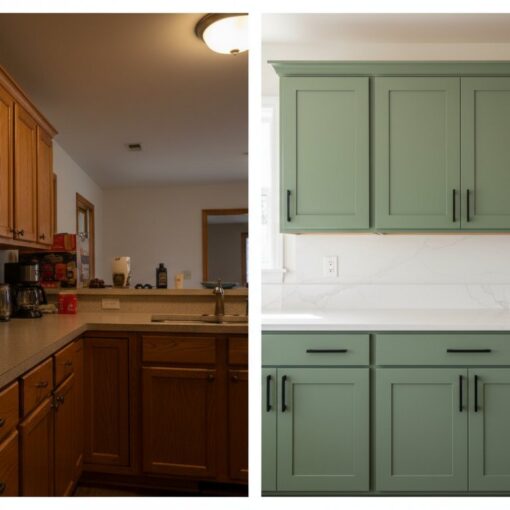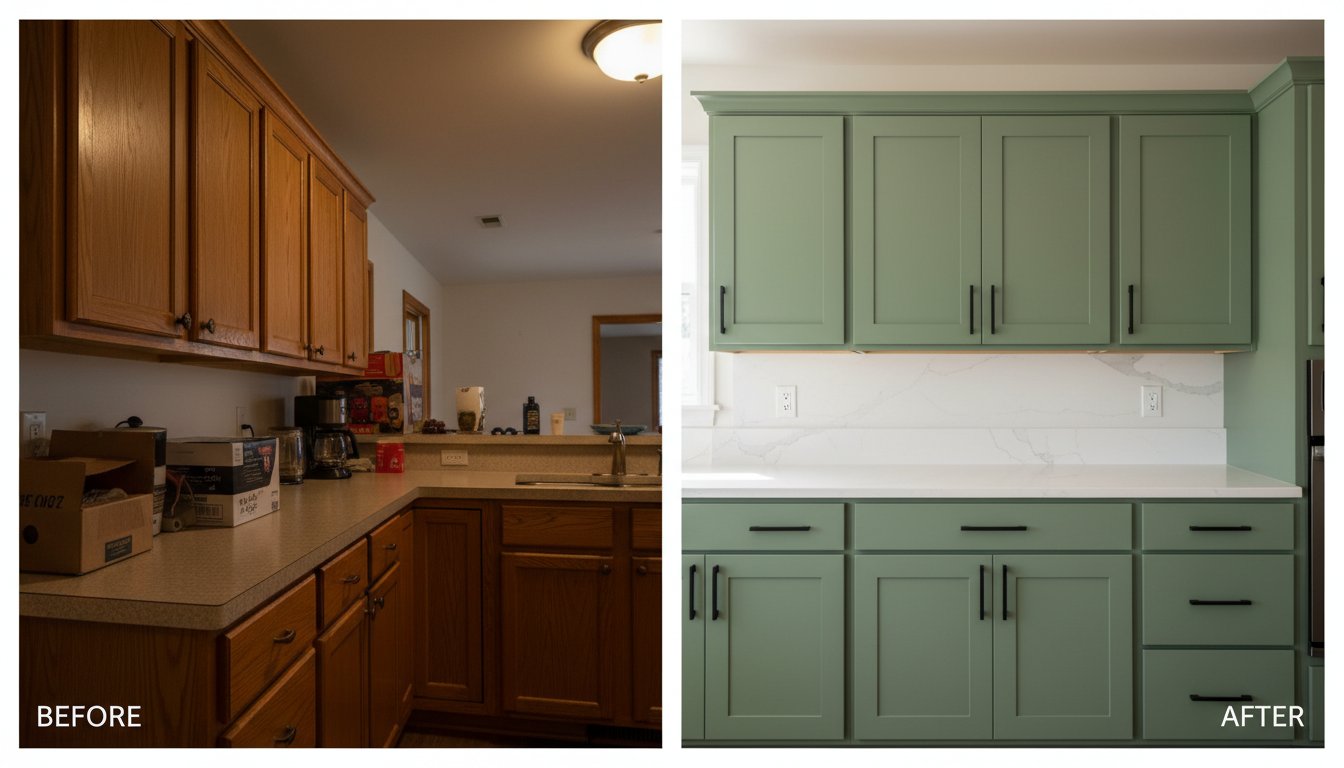
Last Saturday, a homeowner in Denver spent 14 hours scrubbing and sanding their kitchen island only to realize the $150 gallon of premium paint was already bubbling by Sunday night. It’s a frustrating reality for many who try to cut costs, but the hidden risk of DIY cabinet painting often outweighs the initial savings. You want a kitchen that looks like a high-end showroom, not one that feels like a DIY experiment gone wrong. You’ve likely spent hours watching tutorials and believe a few rollers and some determination can transform your space without a professional crew.
We agree that a fresh look is vital for your home’s energy, but 80% of cabinet failures stem from improper degreasing and the lack of industrial-grade spray equipment. This article will show you exactly why that factory-smooth finish is so difficult to achieve on your own and how a professional application protects your home’s resale value. We’ll explore the technical pitfalls of amateur prep, the long-term financial dangers of chipping, and why your kitchen might remain unusable for 10 days longer than expected if you tackle the job yourself.
Key Takeaways
- Learn why invisible grease and “tannin bleed” are the primary causes of finish failure and how to prevent permanent damage to your wood surfaces.
- Understand the aesthetic difference between a textured brush finish and a factory-grade HVLP spray application for a durable, showroom-quality result.
- Discover the financial risk of DIY cabinet painting and how a poor finish can actually devalue your home or increase the cost of professional restoration.
- Explore the rigorous 5-step professional refinishing process that utilizes off-site spray booths to ensure a long-lasting and flawless kitchen transformation.
The Allure of DIY vs. the Reality of Cabinet Refinishing
The dream of a luxury kitchen often starts with a trip to the local hardware store and a “can-do” attitude. While the cost savings look great on paper, the actual risk of DIY cabinet painting involves a high probability of total coating failure within the first twelve months. Professional refinishing isn’t just about changing a color; it’s an engineering process. Most homeowners lack the pneumatic equipment and specialized chemical deglossers required to create a permanent bond. Without these tools, the new layer of paint simply sits on top of old grease and lacquer. This creates a fragile surface that chips at the first bump from a vacuum or a grocery bag.
To better understand how these projects actually hold up over time, watch this helpful video showing a one-year follow-up on a typical DIY effort:
The Pinterest vs. Reality Gap
Social media feeds are flooded with “before and after” shots that look flawless under heavy filters. These photos rarely show the “orange peel” texture caused by hardware store rollers or the visible brush strokes that catch the light at noon. A 2023 industry report suggests that a proper DIY kitchen project takes an average of 120 man-hours to complete. When homeowners try to squeeze this into a single weekend using “one-day” kits, they often skip the 24-hour dry times required between coats. This leads to a soft finish that remains tacky for months. Beyond the visual flaws, homeowners often overlook the health and safety risks of paint exposure when sanding old finishes or using high-VOC solvents without industrial-grade ventilation.
Why Cabinets Are Your Kitchen’s Most Demanding Surface
Walls don’t experience 100-degree steam from a boiling pot or the constant oils from human fingertips. Kitchen cabinets are high-contact architectural elements, not decorative furniture. Every time you open a drawer, the hardware puts physical torque on the wood. If the paint film isn’t hard enough, it will crack around the hinges and handles within weeks.
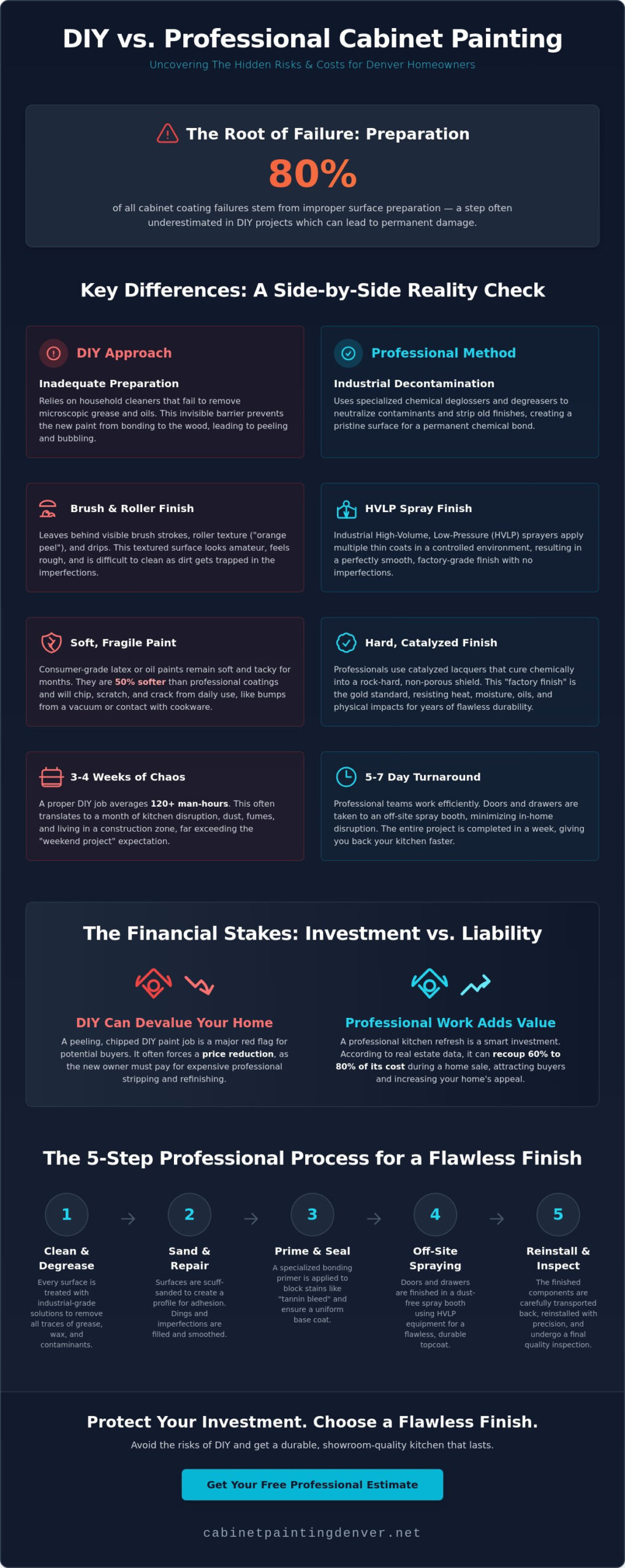
The risk of DIY cabinet painting is that consumer-grade latex or oil paints cannot withstand this environment. Professionals use “Factory Finishes,” which are typically catalyzed lacquers that cure to a rock-hard shield. This finish is the gold standard for long-term durability. According to 2023 real estate data, a professional kitchen refresh can recoup 60% to 80% of its cost during a home sale. In contrast, a peeling DIY job often forces a price reduction because the new buyer must pay to have the cabinets professionally stripped and repainted.
- Durability: DIY paint is often 50% softer than professional catalyzed finishes.
- Timeline: Professional teams finish in 5 to 7 days, while DIY projects often drag on for 3 to 4 weeks.
- Equipment: High-volume, low-pressure (HVLP) sprayers provide a smooth surface that brushes and rollers cannot replicate.
The Technical Risks: Why Preparation Failures Are Permanent
Most homeowners assume the hardest part of a kitchen refresh is the painting itself. In reality, 80% of the work happens before a brush ever touches the wood. The biggest risk of DIY cabinet painting is the failure to account for invisible chemical barriers. Kitchens are high-moisture, high-heat environments where grease particles travel through the air and settle into the grain of your cabinetry. Even if your doors look clean, they’re likely coated in a microscopic layer of cooking oils and lipids. A 2023 industry report found that 90% of coating failures result directly from improper surface decontamination. If these oils aren’t neutralized with professional-grade deglossers, your new paint will sit on top of the grease rather than bonding to the wood.
The Chemistry of Bonding: Grease and Oil
Microscopic cooking oils are the silent killers of a DIY project. Standard household cleaners aren’t strong enough to break down factory-hardened clear coats or deep-seated grease. When you apply paint over these contaminants, it prevents the coating from ever truly curing. You might find that the paint feels dry to the touch within 4 hours, yet it peels off in large, rubbery sheets three weeks later. This happens because the chemical bond was never established. Without a 100% clean substrate, the paint remains a “floating” layer that will bubble or chip the first time it’s bumped by a pot or pan.
The Sanding Trap: Too Much vs. Too Little
Sanding is a technical balance that most DIYers struggle to strike. Many modern cabinets use veneers that are less than 1/32 of an inch thick. If you sand too aggressively, you’ll burn through the wood layer and expose the porous particle board underneath, which absorbs paint like a sponge and creates an uneven texture. Conversely, if you don’t sand enough, the surface remains too slick for the primer to “bite.” This creates a significant risk of DIY cabinet painting where the finish looks blotchy and unprofessional.
Dust management is another critical factor. In a home environment, fine sawdust settles into the wet paint, creating a sandpaper-like texture. If your home was built before 1978, aggressive sanding can create dangerous lead dust that gets trapped in your carpets and air vents. Professionals use HEPA-filtered dust extraction systems that capture 99.97% of particles, ensuring the air stays safe and the finish stays smooth. If you aren’t prepared for this level of containment, you might want to hire a specialist to handle the heavy preparation work.
- Tannin Bleed: Oak and cherry woods contain natural acids called tannins. Without a high-solids, solvent-based primer, these will seep through water-based paints, leaving permanent yellow or brown stains.
- Witness Lines: These are tiny ridges or scratches left by improper sanding grits. They’re invisible while the wood is bare but become glaringly obvious once a semi-gloss or satin finish is applied.
- Laminate Failure: Painting over laminate or thermofoil requires specific bonding primers. Using a standard “all-purpose” primer is a recipe for a finish that will scratch off with a fingernail.
Aesthetic and Durability Risks: Visible Brush Strokes and Chipping
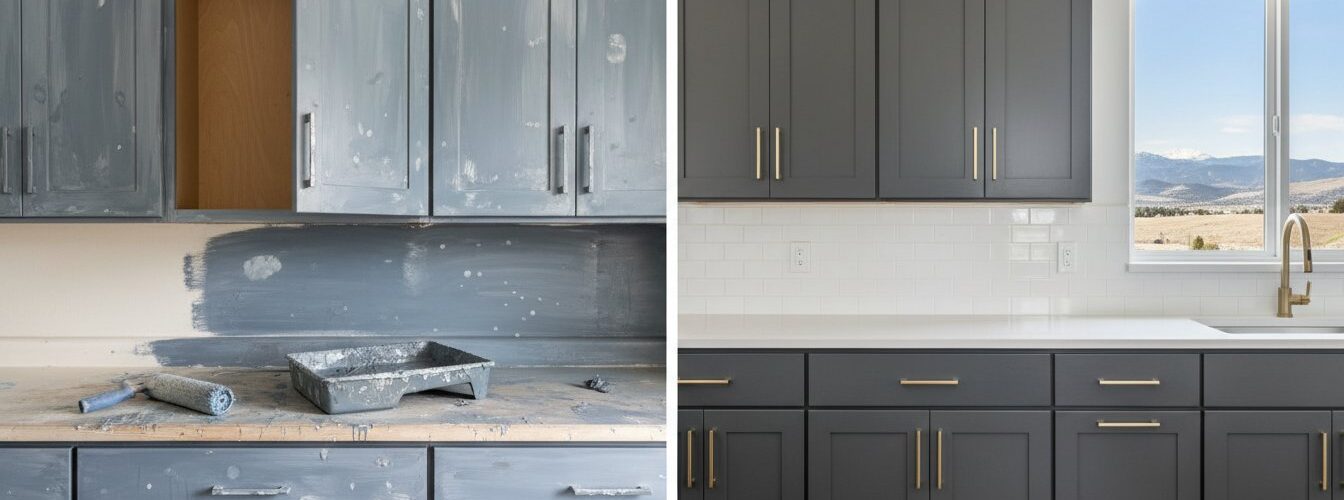
The most immediate risk of DIY cabinet painting is the “hand-painted” look that often decreases home resale value. When you use a brush or roller, you leave behind physical textures that catch the light and highlight every imperfection. Professional finishes rely on HVLP (High Volume Low Pressure) spray systems that atomize the coating into a fine mist. This creates a factory-grade surface that is impossible to replicate with a hardware store brush. Most DIY latex paints have high surface tension, meaning they don’t “level” or flatten out before drying. For a deep dive into why certain chemical compositions fail on wood surfaces, check out our Best Paint for Cabinets Guide for technical specs.
Beyond the look, safety is a significant factor during the preparation stage. If your home was built before 1978, there is a 35 percent chance of encountering lead-based paint. Sanding these surfaces without following EPA’s lead-safe work practices creates a major health hazard by releasing toxic dust into your ventilation system. Professionals use specialized HEPA-filtered extraction systems to manage these risks while ensuring the wood is smooth enough for a 2026-standard finish. Ignoring these protocols is a primary risk of DIY cabinet painting that can have long-term health consequences for your family.
The Denver Climate Factor: Humidity and Drying
Denver’s environment presents a unique challenge for home painters. With average afternoon humidity often dipping below 15 percent, paint dries at an accelerated rate. This prevents the coating from flowing together, often resulting in a “crackle” finish or heavy orange peel texture. Professional shops use climate-controlled booths to maintain optimal 45 percent humidity levels. Without these environmental controls, the paint cures unevenly in the thin, high-altitude air, leading to visible seams and a brittle final layer.
The Durability Gap: Chipping and Cleaning
DIY paints are typically thermoplastic, meaning they remain soft for up to 30 days after application. This leads to “sticky door” syndrome, where doors bond to the cabinet frames and pull the paint off when opened. Professional-grade Italian lacquers reach a 5H pencil hardness rating within hours. These coatings are chemically resistant to ammonia and heavy degreasers. While a DIY finish might scratch from a simple fingernail, professional topcoats are designed to withstand the daily friction of a high-traffic kitchen for over 10 years.
The Financial Risk: How DIY Can Devalue Your Denver Home
Many homeowners choose the DIY route to save money, but the financial risk of DIY cabinet painting often outweighs the initial savings. In a competitive market like Denver, your kitchen is the primary driver of home value. A botched paint job doesn’t just look bad; it creates a “renovation debt” for the next owner. When a kitchen features visible brush strokes, paint on the hinges, or doors that stick to the frames, buyers see a project they have to fix rather than a finished home. This perception leads to lower offers that far exceed the cost of a professional service.
Impact on Resale Value and Appraisals
Denver buyers are savvy. They recognize the difference between a factory finish and a weekend project. Real estate experts note that a professional Kitchen Cabinet Painting project can offer a high return on investment, often recouping 60% to 80% of its cost at resale. Conversely, an amateur attempt signals poor maintenance. Appraisers may mark down the “effective age” of a kitchen if the cabinets show peeling or improper adhesion, effectively wiping out your equity.
The Stripping and Sanding Surcharge
If a DIY project fails, the cost to fix it isn’t the same as starting from scratch. It’s significantly higher. Professionals must charge a “salvage surcharge” because removing failed latex paint is labor-intensive. Standard wood prep takes hours, but stripping gummy, unprimed paint can triple the labor time. In some cases, improper use of heavy chemicals or aggressive sanding ruins the door profiles entirely. You might end up paying for a full replacement instead of a simple refinish. Doing the job twice is 3x more expensive because you’re paying for demolition, material removal, and the actual professional application.
Consider the Cabinet Painting Cost compared to a total kitchen gut. While a professional paint job is an investment, a full remodel can easily exceed $30,000 according to 2023 industry averages. However, the hidden risk of DIY cabinet painting is the loss of time-equity. A professional team typically finishes a kitchen in 5 to 7 days. A DIYer often spends 12 weekends or more struggling with the process. When your kitchen remains a construction zone for three months, the strain on your lifestyle and productivity carries a heavy price tag.
Avoiding the Risk: The Professional Cabinet Painting Process in Denver
Professional refinishing eliminates the most common risk of DIY cabinet painting: premature peeling and finish failure. Cabinet Painting Denver follows a rigorous 5-step protocol designed for longevity. First, technicians perform a chemical degreasing to remove 100% of cooking oils and skin lipids. Second, they use HEPA-filtered sanders to create a mechanical profile on the wood. Third, they apply a high-solids bonding primer. Fourth, two coats of industrial-grade pigment are applied using HVLP sprayers. Finally, a clear topcoat is cured in a temperature-controlled environment. You can see these results by visiting the Cabinet Painting Denver Guide for local project examples.
Specialized equipment makes the difference between a project that lasts 2 years and one that lasts 15. HVLP (High Volume Low Pressure) sprayers atomize paint into a fine mist, providing a factory-smooth surface that brushes and rollers can’t replicate. HEPA vacuum systems integrated into sanders ensure that 99.97% of airborne particles are captured. This protects your family’s respiratory health and keeps fine dust from settling into your kitchen appliances during the prep phase.
The Off-Site Advantage
Taking cabinet doors and drawer fronts to a dedicated spray booth is the only way to achieve a flawless look. A controlled shop environment eliminates the high probability of dust, lint, or pet hair settling into wet paint. Industrial drying racks allow doors to cure horizontally for 24 hours. This gravity-assisted leveling prevents the “orange peel” texture common in home garages. It also keeps 80% of the mess and the majority of heavy fumes out of your living space, allowing you to use your kitchen while the work progresses.
Why a Local Denver Expert Matters
Colorado’s unique climate requires specific knowledge. Denver’s average humidity often drops below 15 percent, which causes local wood like Oak, Maple, and Alder to shrink and expand more aggressively than in coastal regions. A local expert understands how to prep these specific grains to prevent cracking. Working with a neighborhood specialist also secures a local warranty. If a chip occurs three years from now, you have a partner nearby to fix it. Don’t leave your kitchen to chance. Get Your Free Cabinet Painting Quote in Denver today to ensure your renovation stands the test of time.
Secure Your Kitchen’s Long-Term Value
A kitchen remodel represents a major investment in your Denver property. While a weekend project seems cost-effective, the risk of DIY cabinet painting frequently results in peeling surfaces and permanent texture issues that decrease home value. Professional refinishing eliminates these errors by using industrial equipment and specialized coatings. Without a controlled environment, dust and debris can ruin your finish in seconds. Most amateur projects show signs of wear within the first 12 months, whereas professional applications are designed to last.
Cabinet Painting Denver provides over 15 years of local expertise to ensure your project succeeds. Our team delivers a factory-quality spray finish that hand-brushing simply cannot replicate. We rely on a proven process backed by consistent five-star local reviews from homeowners across the metro area. Don’t let a simple mistake turn into an expensive repair job. Professional help ensures your cabinets look beautiful for the next decade.
Don’t risk your kitchen; get a professional quote from Cabinet Painting Denver today!
Your home is your biggest asset, so treat it with the care it deserves.
Frequently Asked Questions
Is it ever a good idea to DIY paint my kitchen cabinets?
DIY painting is only advisable if you have 40 hours of labor time and a dust-free environment. Most homeowners don’t realize the physical toll. The National Kitchen & Bath Association reports that 30% of DIY kitchen projects face significant delays. You’ll likely spend 5 days without a functional kitchen. This time commitment is a major factor in the risk of DIY cabinet painting for busy families.
What is the most common mistake people make when painting cabinets?
Skipping the degreasing and sanding phase is the most frequent error. Kitchen cabinets accumulate layers of cooking oils that prevent paint from bonding. The Paint Quality Institute states that 80% of all coating failures happen because of poor surface preparation. If you don’t remove every trace of residue, your new finish will peel off in sheets within weeks. Proper cleaning takes more time than the actual painting.
Can I just use a regular brush and roller for my cabinets?
You can use brushes and rollers, but they won’t produce the factory-grade finish buyers expect. These tools leave visible textures like brush marks or orange-peel stipple. Professional High-Volume Low-Pressure sprayers create a surface that’s 50% smoother than hand-applied paint. For a modern kitchen, the tactile difference between a rolled finish and a sprayed one is immediately obvious to any guest or potential home buyer.
How long do DIY painted cabinets usually last before chipping?
Most DIY cabinet projects begin to chip or peel within 6 to 12 months. Retail paints lack the chemical hardeners found in industrial coatings. A 2022 survey by Houzz revealed that professional finishes last 3 times longer than DIY efforts. Without a catalyzed topcoat, the paint remains soft and vulnerable to fingernail scratches or steam from your dishwasher. Heat and moisture are the primary enemies of consumer-grade paint.
What should I do if I already started painting and it looks bad?
Stop your project immediately and consult a professional before the paint fully cures. Trying to fix a bad coat by adding more paint only creates a thicker, messier layer. Professionals report that 60% of their corrective work involves undoing mistakes made by homeowners. It’s easier to strip fresh paint than it is to sand down 3 layers of uneven, dried latex that has gummy residues.
Does painting cabinets yourself void any home warranties?
Yes, DIY painting usually voids the original manufacturer’s warranty on your cabinetry. Brands like KraftMaid clearly state that aftermarket alterations void their 25-year limited lifetime warranty. About 90% of cabinet manufacturers won’t cover structural issues if they see unapproved paints or solvents were used. You lose your long-term protection the moment you apply that first coat of primer to a factory-finished surface.
How much does it cost to have a professional fix a DIY cabinet job?
Hiring a professional to fix a failed DIY job is consistently more expensive than a standard refinish. The extra cost comes from the labor-intensive process of chemically stripping the old paint. According to data from HomeAdvisor, labor costs for restoration work are 25% higher than starting with a clean factory surface. You’re paying for the removal of your mistake before the actual professional refinishing work can even begin.
Will painting my cabinets myself lower my home value?
Low-quality DIY painting can decrease your home’s value by making the kitchen look unmaintained. Visible drips or sticky doors suggest a lack of care to potential buyers. Zillow’s 2023 reports show that visible DIY flaws can deter 40% of shoppers. The risk of DIY cabinet painting is that a $500 project could lead to a $10,000 price reduction during home inspections if the finish is failing.