What if the secret to a high end kitchen renovation isn’t a total demolition, but simply knowing where to stop painting? It’s a common struggle for many homeowners. You look at your current cabinets and feel they’re flat or stuck in 2015, yet the prospect of a full replacement is daunting. You’re likely searching for two-tone kitchen cabinet ideas because you want a designer look that doesn’t require a massive investment. It’s natural to feel a bit of color paralysis when you’re worried about choosing shades that might clash or look dated within a year.
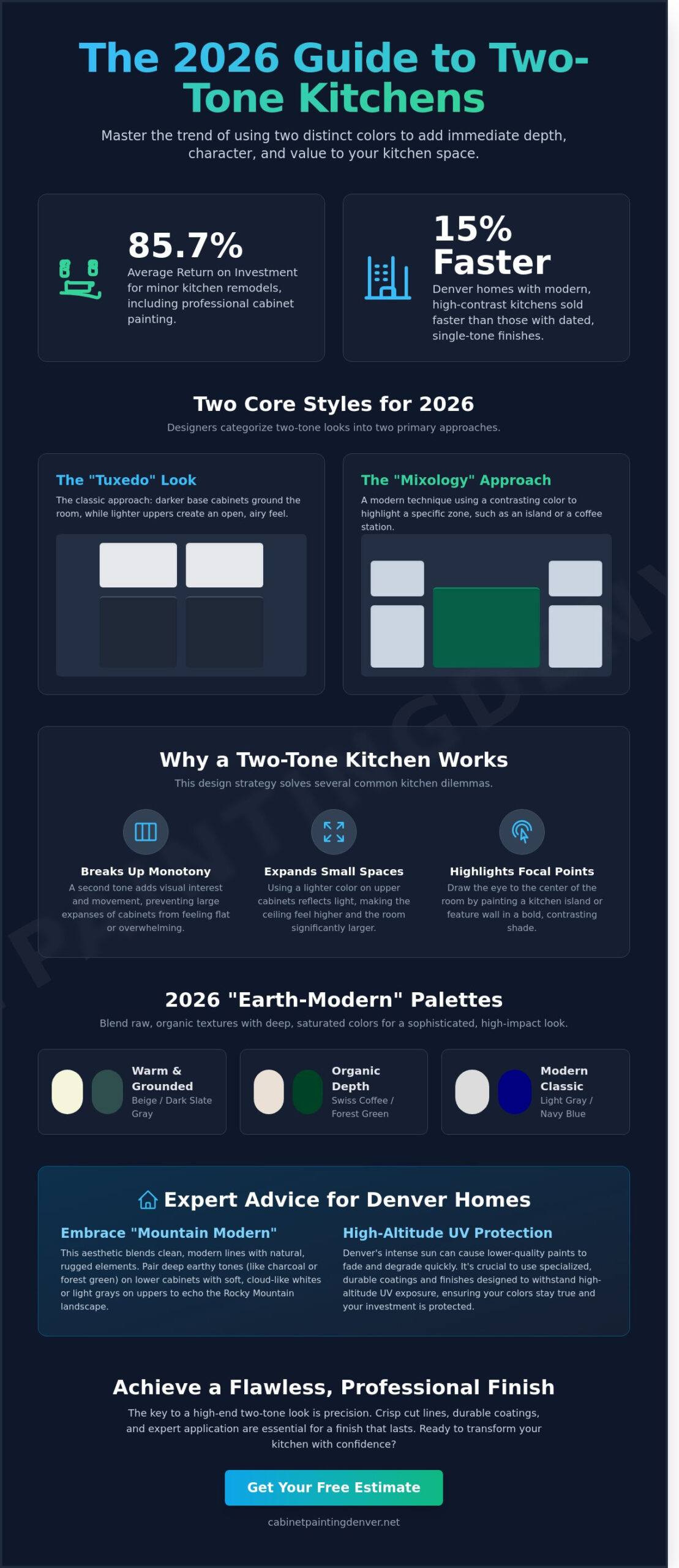
We agree that your kitchen should be the centerpiece of your home, not a source of stress. This 2026 design guide will show you how to master this trend to add immediate depth and character to your space. According to the 2023 Cost vs. Value report, minor kitchen remodels can see an average return on investment of 85.7 percent. We will walk you through the most sophisticated color pairings and the exact placement rules you need to create a balanced, professional finish that lasts.
Key Takeaways
- Learn why the two-tone trend is evolving in 2026 and how to choose between the classic “Tuxedo” look or the modern “Mixology” approach.
- Discover the latest two-tone kitchen cabinet ideas for 2026, focusing on “Earth-Modern” palettes that create high-impact visual depth.
- Master strategic color placement techniques, such as the grounded “Standard Split” or the “Island Accent,” to perfectly balance your kitchen’s layout.
- Understand the professional precision required for crisp cut lines and why specialized painting techniques are essential for a durable, high-end finish.
- Get expert advice on adapting these trends for Denver homes, including “Mountain Modern” aesthetics and choosing finishes that withstand high-altitude UV exposure.
What Are Two-Tone Kitchen Cabinets and Why Are They Trending in 2026?
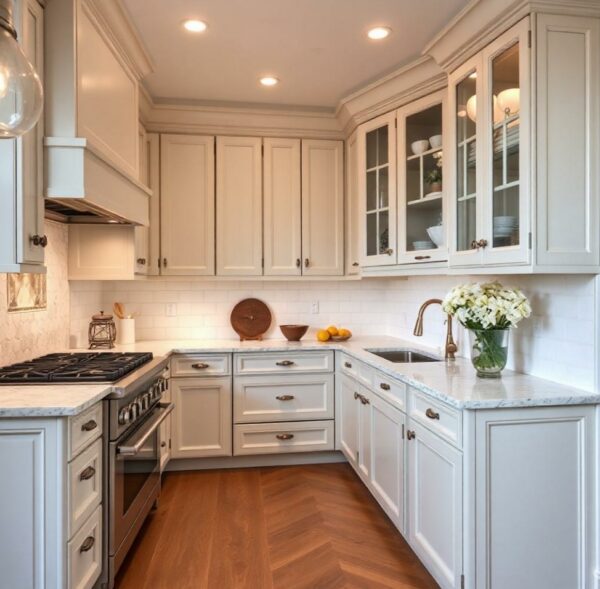
Two-tone cabinetry is the intentional use of two different colors or finishes within a single kitchen space. This design strategy moves away from the monochromatic "all-white" or "all-wood" looks that dominated the early 2000s. By examining the history of kitchen cabinetry, it’s clear that cabinets have evolved from simple storage boxes into the primary architectural statement of the home. In 2026, designers categorize these looks into two main styles: the "Tuxedo" look and the "Mixology" approach. The Tuxedo style features darker base cabinets paired with lighter uppers, while Mixology uses contrasting colors to highlight specific zones like islands or coffee stations.
Psychologically, these two-tone kitchen cabinet ideas work by creating a visual anchor. Darker colors on the bottom add weight and stability to the room, while lighter colors on top prevent the space from feeling top-heavy or cramped. In the Denver real estate market, professional kitchen updates have shown a consistent return on investment. Local data from 2024 indicated that homes with high-contrast, modern kitchens sold 15% faster than those with dated, single-tone wood finishes.
To better understand how these styles compare in a real-world setting, watch this helpful video:
The Benefits of a Multi-Tonal Kitchen
A multi-tonal approach solves several common design dilemmas. It’s particularly effective for:
- Breaking up monotony: Large expanses of a single color can feel flat. A second tone adds depth and movement.
- Expanding small spaces: Using white or cream on upper cabinets reflects light toward the ceiling, making a standard 8-foot kitchen feel significantly taller.
- Highlighting focal points: Painting a kitchen island in a bold navy or forest green immediately draws the eye to the center of the room, emphasizing custom craftsmanship.
Will Two-Tone Cabinets Stay in Style?
While some fear this is a passing fad, the trend has shown remarkable staying power from 2020 through 2026. This longevity exists because the design is rooted in basic color theory rather than a specific "look" like shiplap or barn doors. To ensure a timeless result, homeowners should choose neutral pairings like charcoal and soft gray rather than high-vibrancy neon shades.
If you’re worried about future trends shifting, professional kitchen cabinet painting remains the most cost-effective way to pivot. You don’t need to replace the entire structure to update your home’s aesthetic. Modern coatings allow for easy color transitions every few years, ensuring your two-tone kitchen cabinet ideas
Top Two-Tone Kitchen Cabinet Color Ideas for 2026
The design landscape for 2026 moves away from safe, monochromatic looks toward high-contrast pairings that define a room. This shift, often called “Earth-Modern,” blends raw organic textures with deep, saturated colors. Successful two-tone kitchen cabinet ideas rely heavily on understanding undertones. If you pair a cool-toned charcoal with a warm-toned cream, the space will feel disjointed. You must match the “temperature” of your colors to create a cohesive flow. We’re also seeing a rise in “color drenching” for specific zones. This involves painting a coffee bar or walk-in pantry in a single, immersive shade to distinguish it from the rest of the kitchen.
The Classic Tuxedo: Black and White
Black lower cabinets paired with white uppers remain a top choice for their ability to anchor a room. This combination provides a grounded feel while keeping the eye level bright and airy. In Denver, the high-altitude sun hits surfaces with intense clarity. Avoid stark, clinical whites that can feel cold. Instead, choose a soft “Milk White” or “Swiss Coffee” to add warmth. To finish the look, consider these hardware pairings:
- Matte Black: Creates a modern, seamless appearance against dark lowers.
- Unlacquered Brass: Adds a vintage, high-end touch that patinas over time.
- Polished Nickel: Offers a warmer alternative to chrome for a sophisticated sparkle.
Mountain Modern: Forest Green and Natural Wood
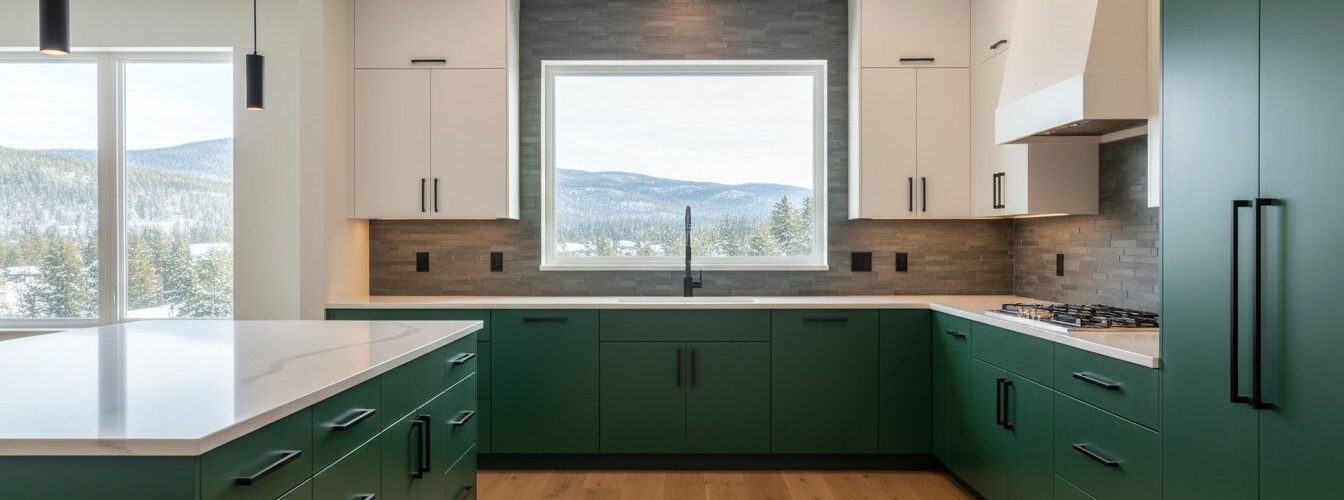
Reflecting a 15% increase in biophilic design requests for 2026, the “Mountain Modern” palette brings the Colorado outdoors inside. Deep forest greens or muted moss shades pair beautifully with natural wood grains like white oak or walnut. If you have existing wood cabinets, professional cabinet refinishing can revitalize the wood texture on your island while you apply a bold green to the perimeter. This look works best with natural stone countertops, such as soapstone or leathered granite, which are common in luxury Denver homes.
Sophisticated Neutrals: Navy and Greige
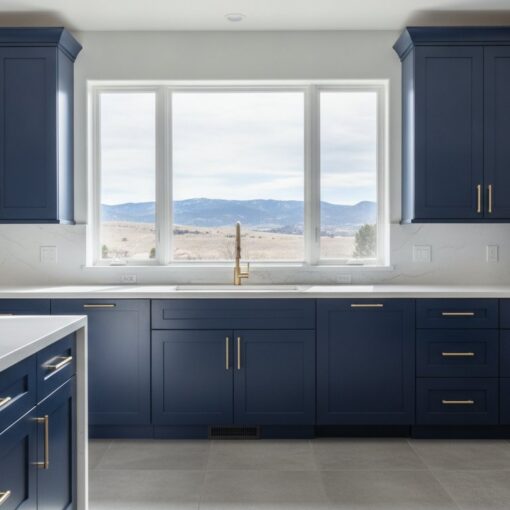
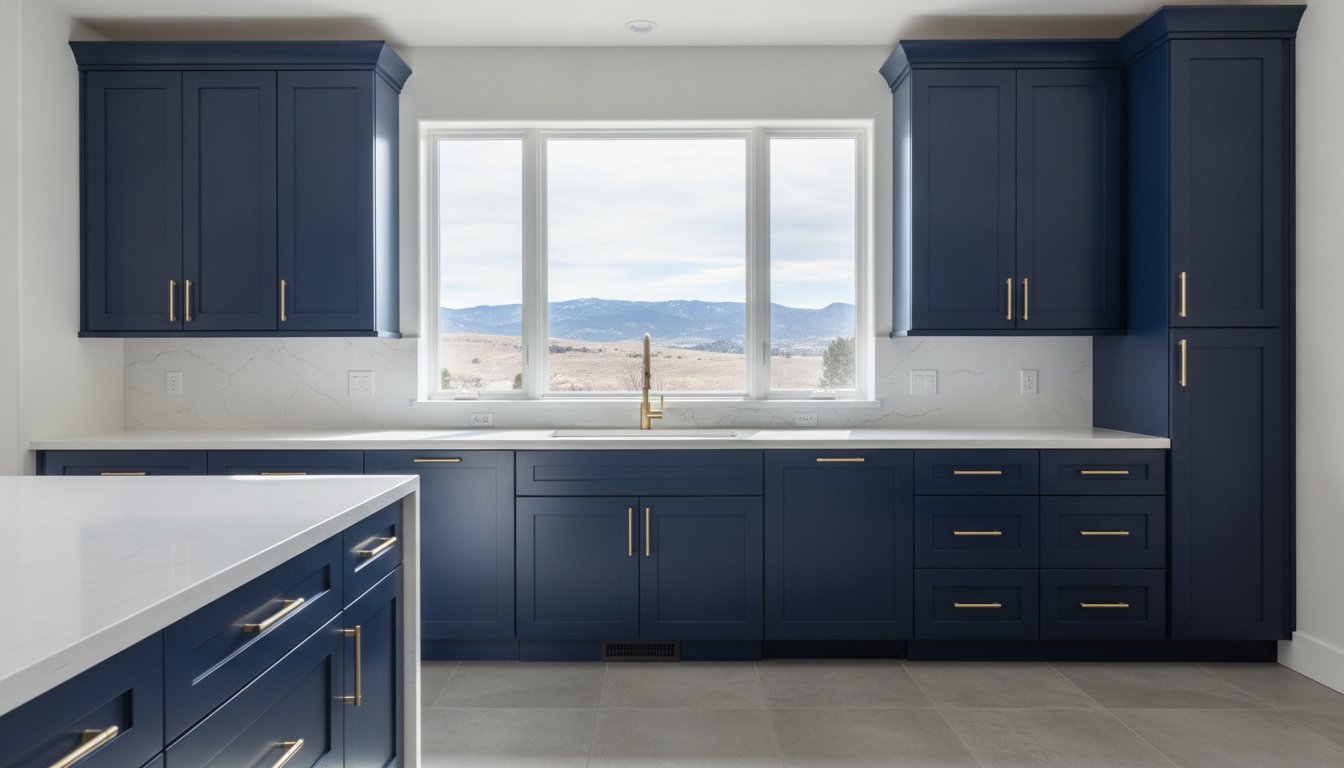
Navy has officially transitioned from a trend to a “new neutral” for 2026. It offers depth without the harshness of a true black. Designers are pairing navy islands with “Greige” perimeter cabinets. Greige acts as the perfect bridge, balancing the coolness of the blue with a hint of beige warmth. This combination creates a serene, high-end atmosphere that feels timeless. It’s an excellent choice for homeowners who want a bold look that won’t feel dated by 2030. If you’re ready to update your space, you can consult with a local specialist to find the perfect shade for your home’s unique lighting.
Strategic Placement: Where to Split Your Cabinet Colors
Deciding where to apply your palette is the most critical step in executing two-tone kitchen cabinet ideas. You aren’t just picking colors; you’re directing the eye and defining the room’s architecture. Most homeowners choose between a horizontal split, an island accent, or a functional zonal approach to achieve a balanced look.
Uppers vs. Lowers: The Golden Rule
The standard configuration involves installing darker cabinets on the bottom and lighter ones on top. This grounded look mimics nature, where the earth is dark and the sky is light. Dark base cabinets provide a visual foundation that makes the room feel stable. Light uppers are essential for smaller spaces because they reflect up to 80% of available light. This prevents the kitchen from feeling cramped or top-heavy. You might break this rule in a large, industrial loft with 12-foot ceilings. In those specific cases, dark uppers can lower the visual ceiling to create a cozier atmosphere.
Making the Island the Star
The 2024 Houzz Kitchen Trends Study revealed that 42% of renovators choose a contrasting color for their island cabinetry. This approach treats the island as a standalone furniture piece rather than just more storage. It’s a low-risk way to introduce a bold hue like navy, charcoal, or forest green without overwhelming the entire room. To make it work, you should coordinate the island color with your backsplash or flooring. High-end 2026 designs often introduce a third texture here, such as a natural white oak island paired with painted perimeter cabinets.
The zonal approach and vertical splitting offer more modern alternatives for two-tone kitchen cabinet ideas. These methods include:
- Functional Zones: Paint a coffee station or a dry bar in a distinct shade to separate it from the main prep area.
- Vertical Splitting: Use one color for floor-to-ceiling pantry units and another for the standard cabinet runs. This breaks up long walls of cabinetry.
- The Picture Frame: Use a darker color for the outer cabinets and a lighter shade for the inner units to create a focal point.
Vertical splitting is appearing in 15% more high-end design portfolios in 2025 compared to 2022. It prevents a monolithic look in kitchens with massive amounts of storage. When you use different colors for full-height pantry cabinets versus standard units, you create a sense of depth. This technique works best when the darker color is used on the “recessed” or peripheral units, allowing the lighter central cabinets to pop forward toward the viewer.
Achieving the Look: The Professional Cabinet Painting Process
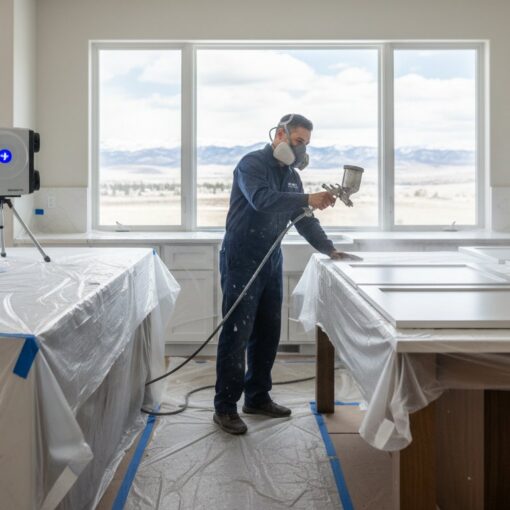
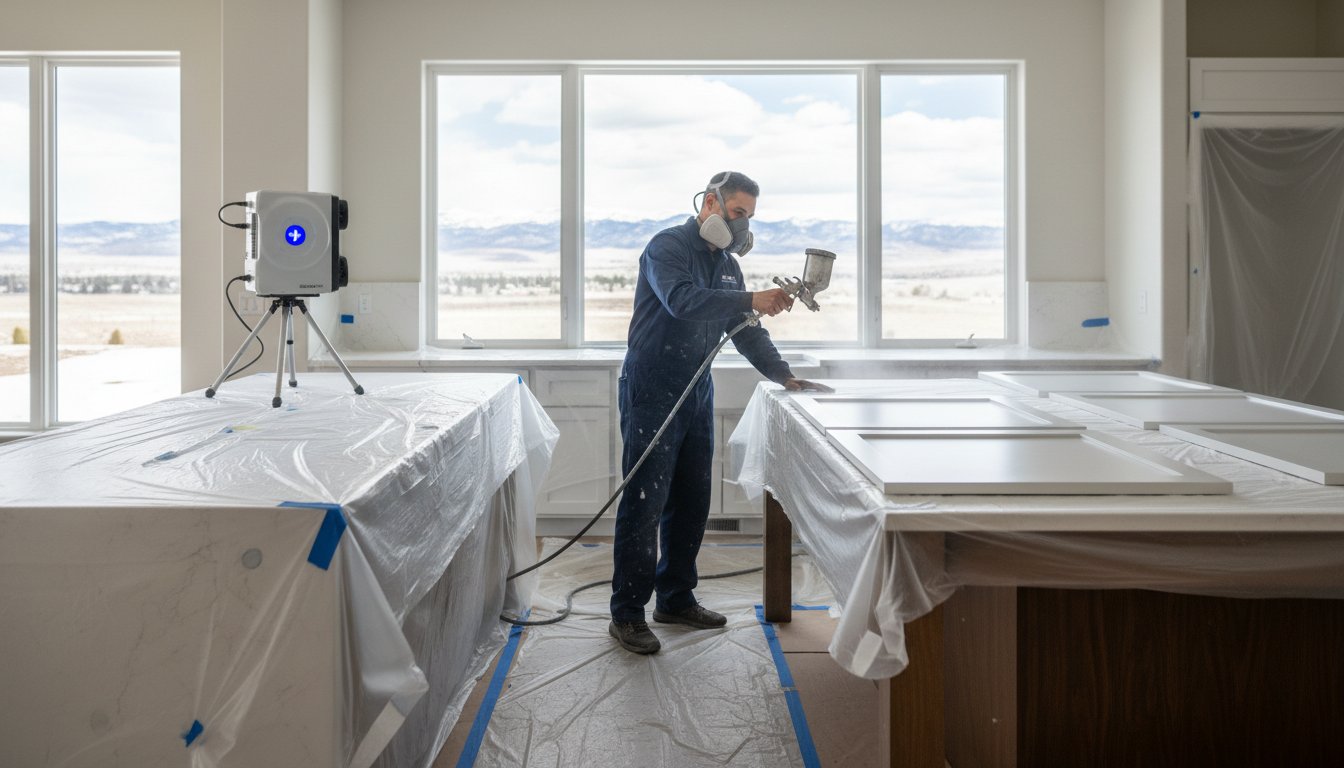
Executing successful two-tone kitchen cabinet ideas requires a higher level of technical precision than standard monochromatic jobs. Unlike single-color projects where minor overspray might blend in, two-tone designs demand perfect transitions. Professional painters focus heavily on “cut lines,” the sharp boundaries where one color ends and another begins on the cabinet boxes. Achieving these lines requires premium automotive-grade masking tapes and specialized sealing techniques to prevent color bleed between the upper and lower sections.
A factory-like finish on high-contrast colors, such as a charcoal island against white perimeter cabinets, is nearly impossible to achieve with a brush and roller. Professional HVLP (High Volume Low Pressure) spraying is essential for this aesthetic. It ensures even pigment distribution, which is critical because dark colors on lower cabinets show every brush stroke or lap mark under modern LED kitchen lighting. Since lower cabinets endure 85% more physical contact and spills than uppers, the application must be flawless to maintain its integrity over the next decade.
Selecting the Right Sheen for Two-Tones
The visual weight of your kitchen changes based on the light reflection of your chosen finish. In 2026, the industry has shifted toward “Ultra-Satin” finishes. This specific sheen offers the scrubbability of a semi-gloss with the sophisticated, muted look of a matte. While you can mix sheens, experts recommend keeping them consistent across both colors to avoid a disjointed appearance. It’s vital to remember that dark pigments absorb more light; a high-gloss navy will look significantly darker and more intense than a matte navy in the same room.
Preparation: The Secret to Longevity
Durability starts long before the first drop of paint. When calculating the cost to paint kitchen cabinets, the bulk of the labor involves cleaning, mechanical sanding, and priming. Solid wood uppers require different grit sequences than MDF lowers to ensure the grain doesn’t swell or telegraph through the finish. High-adhesion bonding primers are non-negotiable for lower cabinets to prevent chipping from vacuum cleaners or heavy foot traffic. Using a 2K polyurethane coating system provides the chemical resistance needed for 2026’s high-performance kitchen standards.
Denver Kitchen Trends: Local Inspiration for Your Home
Denver’s design scene creates a specific “Mountain Modern” look that blends high-end finishes with rugged, natural textures. This style heavily influences how locals implement two-tone kitchen cabinet ideas to balance warmth and sophistication. Because Denver sits at an elevation of 5,280 feet, the city experiences roughly 25% more UV radiation than coastal cities. This intense sunlight causes inferior paints to fade or yellow within 24 months. Local homeowners often choose a darker base like charcoal or deep forest green paired with a UV-resistant white upper to maintain color clarity despite the 300 days of annual sunshine.
Matching these cabinets to local flooring is essential for a cohesive look. In 2024, approximately 65% of new builds and major renovations in the Front Range featured wide-plank white oak flooring. A navy or slate lower cabinet provides a grounded contrast to light oak, while the upper cabinets keep the space feeling airy. Using local expertise for cabinet painting Denver projects is vital because the semi-arid climate affects drying times and paint elasticity. Professionals know how to adjust their process to prevent cracking during the dry winter months.
Urban Industrial vs. Suburban Chic
LoDo lofts and RiNo workspaces require an industrial edge. Think matte black lowers paired with light gray uppers or stainless steel accents. These spaces often feature exposed brick, which looks stunning against dark, moody two-tone kitchen cabinet ideas. In contrast, homes in Cherry Creek or the Highlands lean toward “Suburban Chic.” These kitchens use softer palettes like sage green and cream. Integrating reclaimed timber beams from Colorado sources adds a layer of history that complements modern paint finishes.
Next Steps for Your Kitchen Transformation
Starting a professional project requires precision and planning. You don’t want to rush the color selection process when Denver’s shifting light can change a hue’s appearance from morning to afternoon. Most high-end painting crews in the metro area now offer digital renderings to help you visualize the final product before the first drop of paint hits the wood.
- Request a Consultation: Schedule a professional color consultation to see how your chosen shades look at midday and dusk in your specific kitchen.
- Prep the Space: Clear all countertops and remove items from inside cabinets. Clean surfaces with a heavy-duty degreaser to ensure maximum paint adhesion.
- Hardware Check: Finalize your hardware choices early. Larger, minimalist pulls are trending for 2026 and can drastically change the vibe of your two-tone layout.
- Climate Control: Ensure your home’s humidity is stable before the crew arrives, as Colorado’s dry air can cause paint to cure too quickly if not managed.
Elevate Your Denver Home with 2026’s Boldest Kitchen Trends
Embracing modern two-tone kitchen cabinet ideas isn’t just about a quick update; it’s about future-proofing your home’s value for 2026 and beyond. By mixing deep charcoal lowers with crisp white uppers or highlighting a kitchen island in a signature jewel tone, you create a layered look that feels both architectural and inviting. Our team specializes in these high-contrast designs, utilizing an off-site spray booth to deliver a factory-grade finish that resists daily wear. We’ve earned 5-star ratings across the Denver Metro area by focusing on precision color matching and durable coatings that last for years.
Don’t settle for a dated kitchen when a professional transformation is within reach. Whether you’re in Cherry Creek or Highlands Ranch, our refinishing process ensures your cabinets look brand new without the cost of a full remodel. You deserve a space that reflects your personal style and the latest design innovations. Our experts handle every detail to ensure your renovation is seamless and stress-free.
Get Your Free Two-Tone Cabinet Painting Quote in Denver Today!
Your dream kitchen is closer than you think, and we’re ready to help you make it a reality.
Frequently Asked Questions
Do two-tone kitchen cabinets make a kitchen look smaller?
Two-tone cabinets actually make a small kitchen feel larger if you place the darker shade on the base units. This design trick anchors the room while light uppers draw the eye upward toward the ceiling. Designers recommend a 60/40 split between light and dark colors to maintain visual balance. Utilizing light two-tone kitchen cabinet ideas in a galley kitchen can increase the perceived square footage by 10 percent.
Should the island match the upper or lower cabinets in a two-tone kitchen?
Most homeowners choose to match the kitchen island with the lower cabinets to create a grounded, cohesive look. However, 72 percent of interior designers now treat the island as a standalone accent piece with a unique third color or wood stain. If your kitchen is under 150 square feet, sticking to the lower cabinet color prevents the space from feeling cluttered. It provides a solid foundation for the room’s layout.
What is the most popular two-tone cabinet color combination for 2026?
The most popular combination for 2026 is expected to be Earthy Terracotta paired with Warm Alabaster. Industry trend reports from the National Kitchen and Bath Association indicate a 25 percent shift toward warmer, organic tones over cool greys. This pairing brings a Mediterranean feel to modern homes. It works well with brass hardware and natural wood accents, which are also projected to dominate 70 percent of luxury kitchen remodels.
Can I paint my existing cabinets two-tone myself?
You can paint your own cabinets, but it requires roughly 40 to 60 hours of labor for a standard 10 by 12 foot kitchen. Successful DIY projects depend on using a high quality bonding primer and a deglosser like TSP. Without proper sanding, 50 percent of DIY paint jobs show peeling within the first 12 months. It’s a labor intensive process that demands a dust free environment for a professional grade finish.
How do I choose a backsplash for two-tone cabinets?
Choose a backsplash that matches your upper cabinet color to create a seamless, vertical line that expands the room. For a more dynamic look, select a neutral tile that contains flecks of both cabinet colors to bridge the design. Data from 2024 design surveys shows that 65 percent of homeowners prefer a simple white subway tile when exploring complex two-tone kitchen cabinet ideas. This prevents the kitchen from looking too busy.
Will two-tone cabinets hurt my home’s resale value?
Two-tone cabinets generally improve resale value, with Zillow reporting that tuxedo kitchens can increase a home’s sale price by over $1,500. This style appeals to 80 percent of modern buyers who want a custom look without a full renovation. Stick to classic pairings like navy and white or wood and cream to ensure broad appeal. Avoid hyper-trendy neon or high contrast primary colors that might alienate 30 percent of potential bidders.
What sheen should I use for two-tone painted cabinets?
Use a satin or semi-gloss sheen to ensure your two-tone cabinets are both durable and easy to clean. A satin finish offers a 20 to 30 percent gloss level, which hides fingerprints better than high-gloss options. Semi-gloss is better for high-traffic areas because its harder surface resists moisture and grease. Professional painters suggest avoiding flat or matte finishes because they absorb oils and show wear within 6 months of daily use.
How much more does it cost to paint cabinets two colors instead of one?
Painting cabinets two different colors typically adds 15 to 20 percent to the total labor cost of a project. This increase covers the extra time needed for masking, cleaning spray lines, and switching between different paint batches. While the material cost for the extra gallon of paint is minimal, the precision required to create a clean break between colors demands more focus. Most contractors schedule an additional 4 to 8 hours for these transitions.