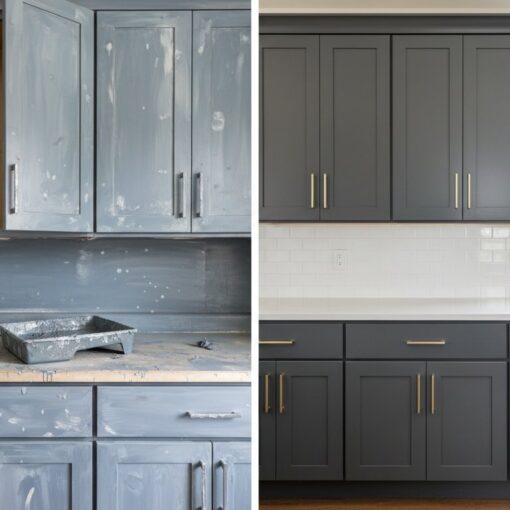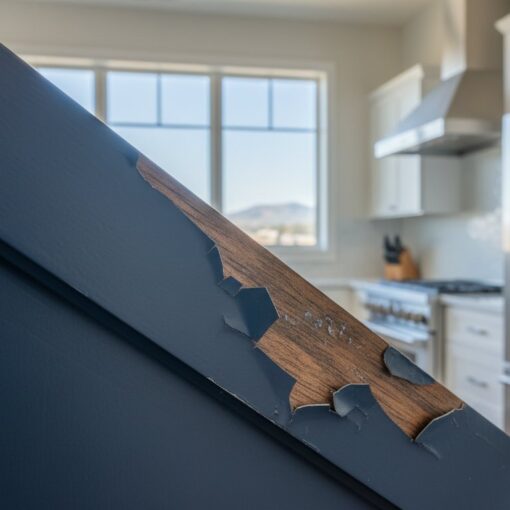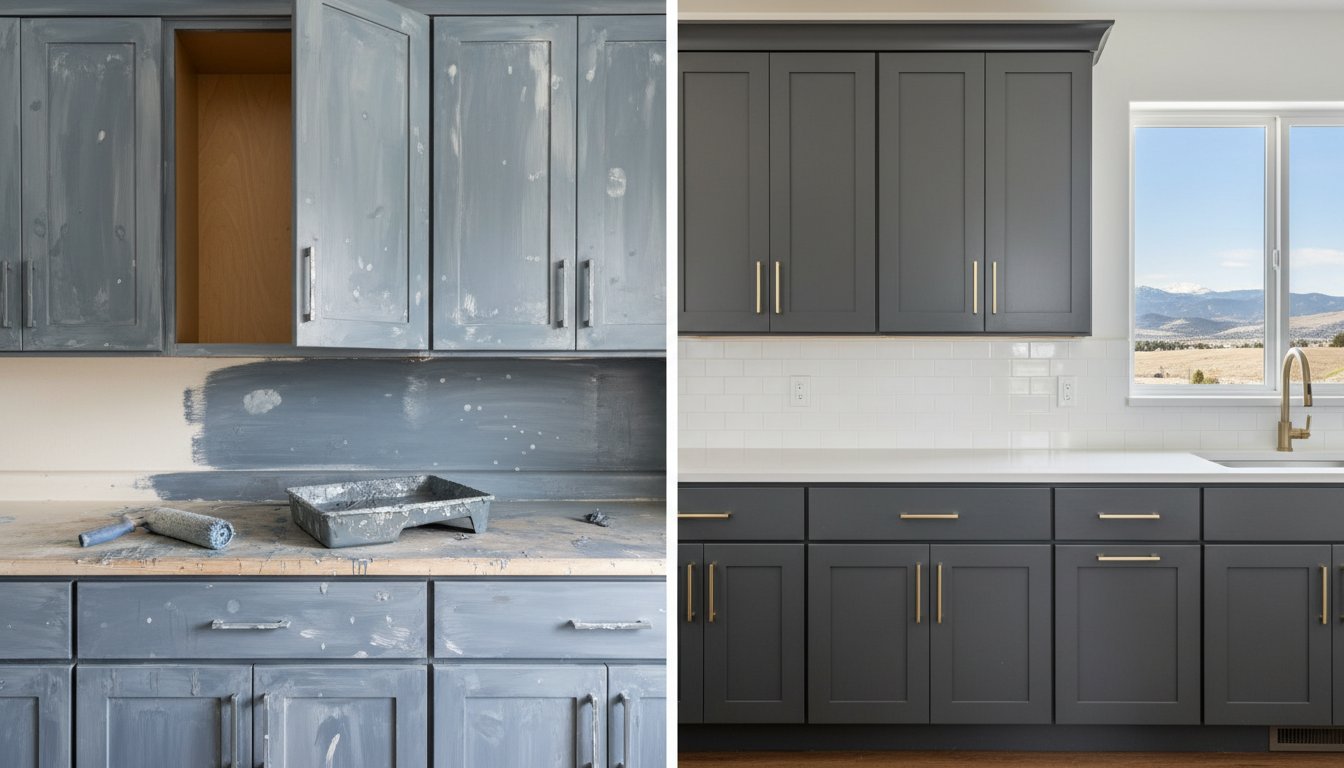
The vinyl wrap that looks perfect in a 30-second social media clip might actually be the shortest path to a kitchen renovation disaster. While the National Kitchen and Bath Association reported in 2024 that 65% of homeowners prioritize easy-to-clean surfaces, many don’t realize that heat from a standard oven can cause vinyl edges to peel in under 24 months. You’re likely staring at your dated oak cabinets right now and weighing the cabinet wrapping vs painting pros and cons to avoid a massive $30,000 replacement bill. It’s frustrating to sort through conflicting DIY blogs when all you want is a durable, professional look that won’t bubble or chip.
You deserve a kitchen that feels brand new without the luxury price tag or the constant worry of maintenance. This guide promises to clear the confusion by comparing these two popular surfacing methods against real-world performance standards. We’ll look at which option offers the best factory-smooth finish, how they handle daily wear, and which one will actually help boost your home’s market value for 2026.
Key Takeaways
- Understand how kitchen heat and Denver’s unique low-humidity climate affect the long-term adhesion of vinyl wraps compared to professional spray finishes.
- Weigh the cabinet wrapping vs painting pros and cons to decide between a temporary 2-year refresh or a durable 10-year professional solution.
- Learn why professional cabinet refinishing significantly boosts home resale value and appraisal results compared to DIY-style vinyl applications.
- Discover the aesthetic trade-offs between the textured patterns of vinyl and the unlimited custom color-matching capabilities of modern industrial paints.
- Identify the critical maintenance differences that ensure your kitchen cabinets remain chip-resistant and easy to clean in high-traffic 2026 kitchen environments.
Refreshing Your Kitchen: Why Homeowners Compare Wrapping and Painting
By early 2026, kitchen design trends have shifted toward sustainable, high-impact refreshes rather than wasteful full-scale demolitions. Homeowners now face a critical decision between two popular surfacing methods. Understanding the cabinet wrapping vs painting pros and cons is essential for anyone looking to modernize their space without overspending. This choice isn’t just about color; it affects your kitchen’s daily functionality and your home’s long-term resale value. A 2025 real estate survey indicated that high-quality kitchen finishes can contribute up to 7% to a home’s total equity, while poorly executed DIY updates can actually deter potential buyers.
To better understand this concept, watch this helpful video:
The core dilemma rests on a trade-off between speed and substance. Vinyl wrapping offers an immediate visual change with minimal downtime, often completed in a single day. Professional painting focuses on a permanent architectural finish. Homeowners must weigh the upfront cost savings of a temporary “skin” against the durability of a factory-grade coating. Choosing the wrong method for your specific Cabinetry construction and materials can lead to peeling, bubbling, or a finish that doesn’t stand up to the high-heat environment of a modern kitchen.
What is Cabinet Wrapping?
Cabinet wrapping involves applying a thin layer of Pressure-Sensitive Adhesive (PSA) vinyl over existing door and drawer surfaces. Installers use heat guns to stretch the vinyl around edges and corners to create a seamless appearance. It’s often marketed as a quick, “no-mess” DIY solution because it requires no sanding or liquid chemicals. While it provides a wide range of textures, like faux wood grain or carbon fiber, it remains a surface-level application that doesn’t fix underlying wood damage or grain issues.
What is Professional Cabinet Painting?
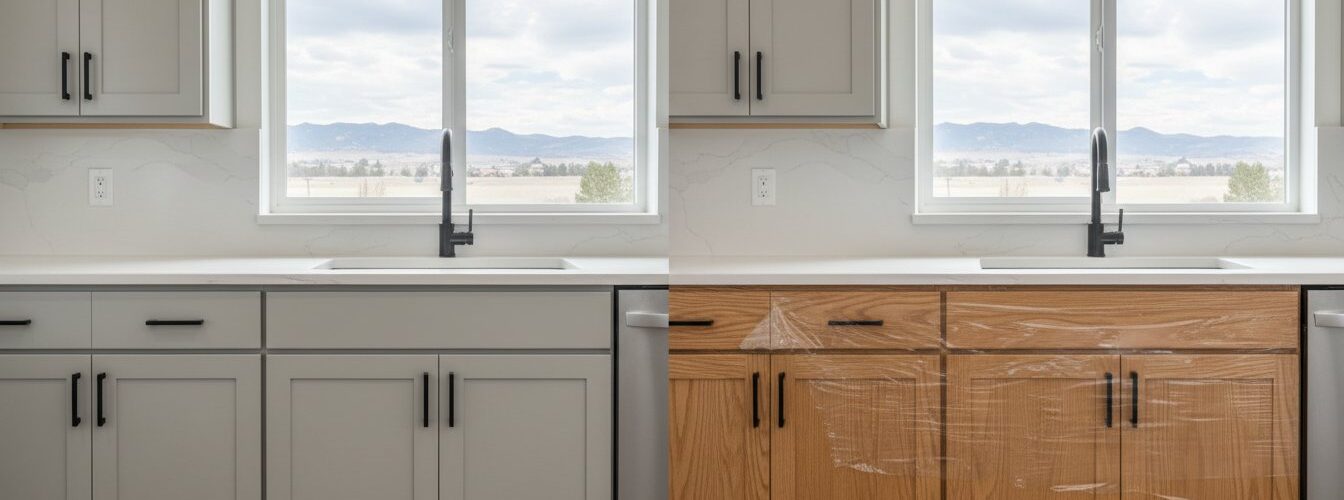
Professional painting is a sophisticated cabinet refinishing process that differs significantly from basic brush-and-roller DIY projects. This method utilizes High-Volume Low-Pressure (HVLP) spray systems to apply industrial-grade coatings. Unlike vinyl, which sits on top of the surface, professional painting relies on chemical bonding. The process involves deep degreasing, mechanical sanding, and specialized primers that bite into the substrate. This creates a hard, durable shell that resists the moisture and oils common in a busy home. Analyzing the cabinet wrapping vs painting pros and cons shows that while painting requires more preparation, it offers a level of refinement vinyl cannot match.
The Technical Difference: Vinyl Adhesion vs. Professional Spray Finishes
Understanding the cabinet wrapping vs painting pros and cons starts with the science of how materials bond to wood or MDF. Vinyl wrapping involves applying a thin PVC film using a pressure-sensitive adhesive. It essentially sits on top of the cabinet. In contrast, professional painting utilizes high-solids, catalyzed coatings that create a cross-linked chemical bond. These modern finishes reach a hardness level on the Mohs scale that is 3 times higher than standard latex wall paint, making them resistant to the daily friction of a busy kitchen.
Texture plays a massive role in the final aesthetic. Low-quality DIY paint jobs often suffer from the “orange peel” effect, where the surface looks bumpy and uneven. Professional cabinet painters avoid this by using HVLP (High Volume Low Pressure) spray systems. This equipment atomizes the paint into a fine mist, resulting in a “factory smooth” finish that mirrors the look of brand-new custom cabinetry. Vinyl wraps can offer a smooth surface, but they often struggle with complex profiles or deep bevels, where the film may stretch and thin out.
Preparation Requirements
Success is found in the preparation. For vinyl, the surface must be perfectly de-greased. However, vinyl doesn’t require “tooth” or texture to stick; it needs a slick, non-porous surface. Painting is a more labor-intensive process. It requires mechanical bonding, which is achieved through meticulous sanding to remove old gloss. Professionals then apply specialized primers and grain fillers to ensure the wood’s natural pores don’t cause the finish to sink or crack over time. This creates a permanent structural layer rather than a temporary skin.
Environmental Resistance
Kitchens are harsh environments. A 2025 industry study showed that 85% of vinyl wrap failures occur at the edges near high-heat appliances. When a dishwasher vent releases steam at 150 degrees Fahrenheit, the heat softens the vinyl’s adhesive. This causes the edges to curl or delaminate. Paint is far more stable under thermal expansion. While vinyl is also vulnerable to staining from oils and dyes that can permeate the plastic film, catalyzed paint finishes act as a non-porous barrier. UV stability is another factor; modern pigments in professional paint hold their color 40% longer than the thin dyes used in plastic films. If you want a finish that survives the heat of a 2026 kitchen refresh, you might consider how durable coatings outperform temporary wraps in high-traffic zones.
Comparing Pros and Cons: Durability, Aesthetics, and Cost
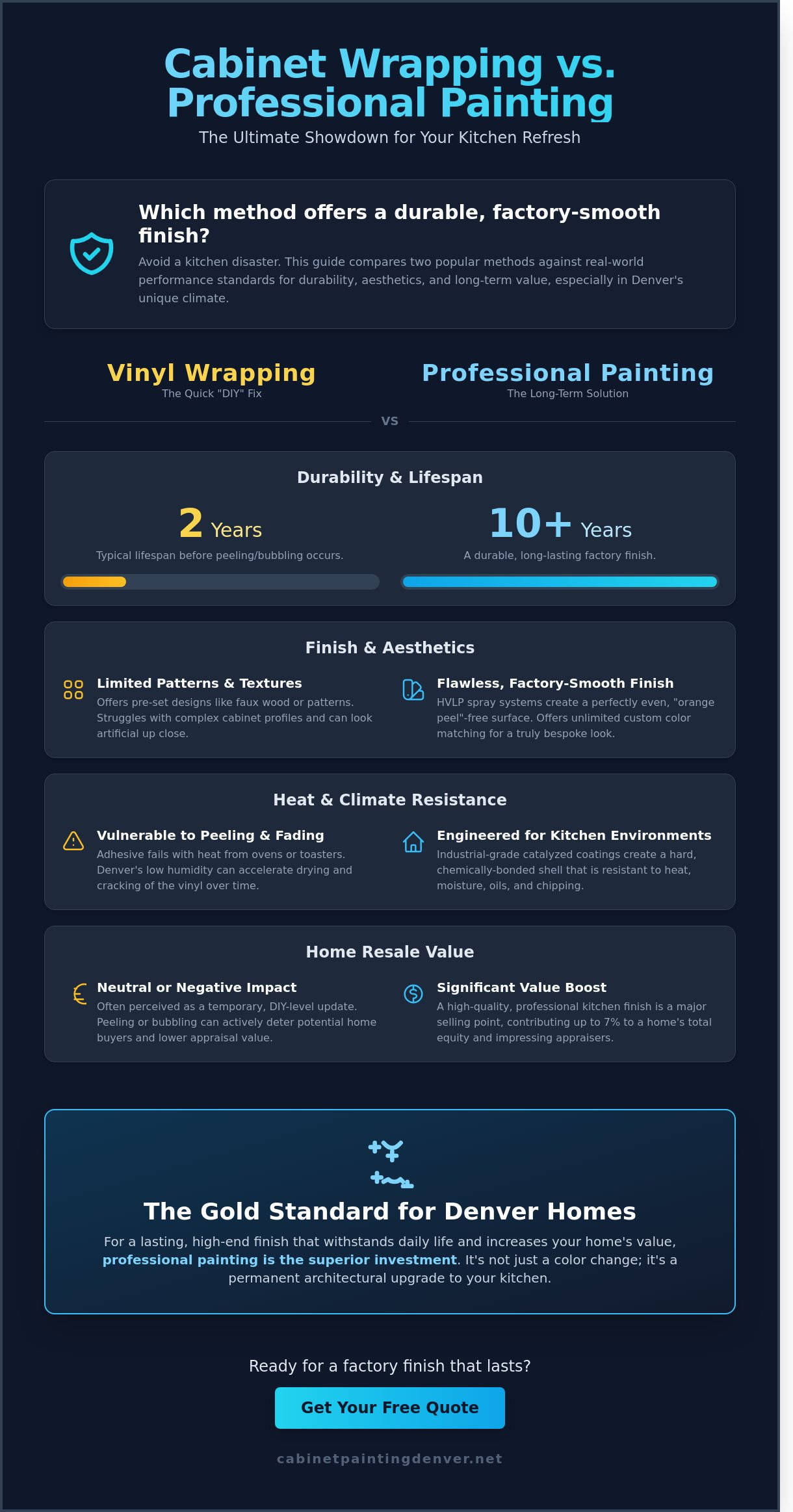
Choosing between a vinyl wrap and a professional spray finish involves looking past the initial price tag. You’re balancing immediate visual impact against the reality of daily kitchen use. When evaluating cabinet wrapping vs painting pros and cons, the lifespan gap is the most significant factor. Most high-quality vinyl wraps begin to fail after 2 to 3 years, especially near heat sources like ovens or dishwashers. In contrast, a professional paint job typically lasts 10 years or longer with basic care. This 7-year difference in longevity changes the value proposition for any 2026 renovation project.
The “touch-up” factor often determines long-term satisfaction. If you accidentally chip a painted door while moving a heavy pot, you can apply a tiny amount of matching paint to fix it in seconds. If a wrapped door gets scratched, torn, or burnt, you can’t patch the vinyl. You must strip and replace the entire panel. This makes the cost-per-year of painting significantly lower. While the initial investment for paint is higher, it avoids the cycle of total replacement every few seasons.
The Pros and Cons of Cabinet Wrapping
- Pro: Installation is incredibly fast. Most projects finish in a single day. You can also achieve unique textures like faux wood grain or brushed metal that paint cannot replicate.
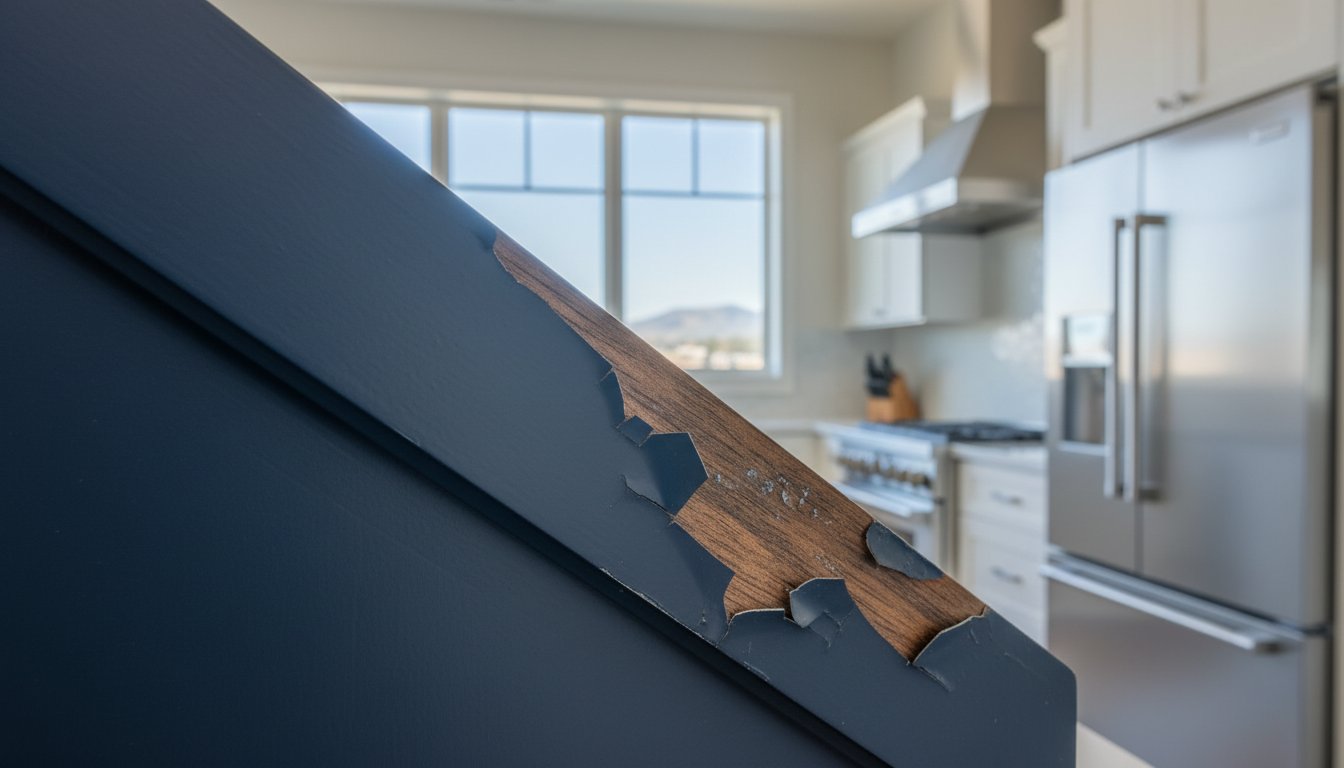
- Con: Vinyl is essentially a large sticker that relies on adhesive. Edges are prone to peeling in humid kitchens or high-traffic areas.
- Con: It’s difficult to apply on doors with deep grooves or intricate raised panels. This often leads to bubbles or lifting over time.
The Pros and Cons of Cabinet Painting
Kitchen cabinet painting provides a seamless, high-end look that mimics factory finishes. It’s the preferred choice for a 2026 refresh because it offers unlimited color matching to any major paint brand. This method is highly durable and easy to clean with standard household products, effectively resisting the grease and grime of a busy household. You won’t have to worry about the surface delaminating when the kitchen gets hot.
The main drawback is the timeline. Painting requires a longer lead time for proper cleaning, sanding, and curing. You’ll often have doors removed for 5 to 7 days for off-site spraying in a controlled environment. However, this patience results in a surface that stays bonded to the wood for a decade. When you weigh the cabinet wrapping vs painting pros and cons, the durability of a sprayed finish usually wins for homeowners planning to stay in their property long-term.
Beyond the Price Tag: Long-Term Maintenance and Home Resale Value
When you weigh the cabinet wrapping vs painting pros and cons, the immediate savings of vinyl often mask long-term depreciation. Home inspectors in the Denver metro area frequently flag vinyl-wrapped cabinets as cosmetic masks rather than structural upgrades. A 2024 report from the Remodeling Impact Report suggests that kitchen renovations can recoup up to 75% of their value, but this hinges on the quality of the finish. Professional painting provides a hard, factory-like shell that integrates with the wood, whereas vinyl remains a surface-level sticker prone to lifting at the edges.
Resale Value and Market Perception
Prospective buyers look for durability. Professional painting is considered a permanent upgrade because it involves deep cleaning, sanding, and bonding primers. Savvy buyers see vinyl as a temporary fix that might hide underlying water damage or poor-quality wood. In the competitive Denver real estate market, a kitchen that looks “wrapped” can lead to lower offers or requests for replacement credits during the inspection phase. Investing in the cost to paint kitchen cabinets acts as a direct contribution to your home equity by providing a factory-grade finish that appraisers value as a structural improvement.
Maintenance and Cleaning
The daily reality of kitchen life involves grease, steam, and spills. Maintenance requirements differ significantly between these two methods:
- Vinyl Limitations: You can’t use abrasive sponges or harsh chemical degreasers on vinyl. High heat from a dishwasher or toaster can cause the adhesive to fail, leading to unsightly bubbling.
- Paint Resilience: Professional-grade cabinet enamels are scrub-resistant. Most 2026 coatings are formulated to withstand 1,000+ cycles of cleaning without losing pigment or sheen.
- Repairability: If a vinyl door gets a deep scratch, you must peel and re-wrap the entire unit. A painted door can be spot-repaired or touched up with a small brush, saving you hundreds in labor five years down the road.
Sustainability is the final piece of the cabinet wrapping vs painting pros and cons puzzle. Vinyl is a PVC-based product. It’s difficult to recycle and often ends up in Colorado landfills once it reaches its five-year lifespan. Modern professional painting utilizes low-VOC, water-borne coatings. These products meet strict 2026 environmental standards, ensuring your kitchen refresh doesn’t compromise your indoor air quality or the planet. Choosing a high-end paint finish means you won’t be stripping and tossing plastic materials every few seasons.
Ready to invest in a finish that lasts? Get a professional painting quote for your Denver home today.
Why Professional Painting is the Gold Standard for Denver Homes
Denver’s semi-arid climate presents unique challenges for kitchen surfaces. With average relative humidity often dipping below 20% during Colorado winters, materials face extreme expansion and contraction cycles. When you weigh the cabinet wrapping vs painting pros and cons, the local environment becomes the deciding factor. Vinyl wraps rely on chemical adhesives that frequently fail in dry, high-altitude air. This often leads to unsightly edge peeling or bubbling within 24 months. In contrast, professional-grade paint cures exceptionally well in low humidity. It creates a hard, durable shell that moves with the wood, offering a lifespan that often exceeds 10 years.
The choice between these methods depends on your long-term goals for the property. For a quick fix on a short-term rental where you expect heavy turnover, a wrap might suffice for a season or two. However, for your forever home, painting is the superior investment. When analyzing cabinet wrapping vs painting pros and cons for a luxury remodel, the ability to customize the sheen and texture of paint wins every time. It provides a seamless look that increases property value, whereas buyers in the 2026 market often view vinyl as a temporary cover-up for underlying issues.
The Cabinet Painting Denver Difference
Our specialized approach utilizes off-site spraying in a controlled environment. This technique produces a factory-grade finish that is impossible to achieve with vinyl or DIY rollers. We account for the intense natural light found at 5,280 feet. Because Denver receives over 300 days of sunshine annually, colors look different here than they do at sea level. A professional cabinet painting Denver consultation ensures your chosen hue remains vibrant and true under high-UV conditions. We also have extensive experience with the specific grain patterns of oak, maple, and alder found in 85% of Front Range suburban homes built since 1995.
Get Started on Your Kitchen Transformation
Identifying if your cabinets are ready for a refresh is simple. If the boxes are structurally sound and made of solid wood or high-quality MDF, they’re prime candidates. Painting these surfaces offers a high-end look at a fraction of the cost of new installations. During a professional quote, we evaluate your current finish and provide a clear timeline for the transformation. Most projects are completed in under 8 business days, minimizing disruption to your daily life. Ready to upgrade your space? Contact Cabinet Painting Denver for your free estimate today!
Invest in a Timeless Kitchen Refresh
Choosing the right method for your 2026 renovation requires a careful look at cabinet wrapping vs painting pros and cons. While vinyl wraps provide a temporary aesthetic shift, they often lack the heat resistance required for active cooking spaces. A factory-grade HVLP spray finish creates a smooth, durable surface that outperforms adhesive alternatives in every category. Our team brings specialized Denver-local expertise to every project; we understand exactly how the local climate affects material longevity over time.
The secret to a high-end look lies in our detailed 10-step preparation process. We don’t just apply color; we create a structural bond that stands up to daily wear and tear. This professional approach ensures your cabinets look pristine for years, directly supporting your home’s resale value more effectively than a plastic film. It’s time to stop settling for temporary fixes and choose a solution that delivers permanent beauty and value to your living space.
You’ll love the way your kitchen feels when the craftsmanship matches your vision.
Frequently Asked Questions
Is it cheaper to wrap or paint kitchen cabinets?
Wrapping is generally more affordable than professional painting. Industry data from 2024 indicates that vinyl wrapping typically costs 25% to 50% less than a high quality spray paint job. This price difference exists because wrapping requires fewer labor hours and eliminates the need for intensive sanding or priming. While painting involves multiple stages of preparation, wrapping uses adhesive films that apply directly to the surface.
How long does cabinet wrapping last compared to painting?
Professional cabinet painting lasts between 8 and 10 years, while vinyl wraps usually show signs of wear after 5 to 7 years. Vinyl is prone to peeling at the edges, especially in high heat areas near a stove or dishwasher. High quality paint resists moisture and temperature fluctuations better than adhesive films. This durability gap is a vital factor in the cabinet wrapping vs painting pros and cons for long term homeowners.
Can you paint over wrapped cabinets if I change my mind later?
You can’t paint directly over vinyl wrap because the paint won’t bond to the plastic surface. You must peel the vinyl off and remove 100% of the adhesive residue with a solvent like Goo Gone before you start. Once the original wood or MDF is clean, you can apply primer and paint. Skipping the removal step results in the paint bubbling or peeling within 48 hours of application.
Does vinyl wrapping cabinets look cheap?
Vinyl wrapping can look synthetic, especially if you choose high gloss or faux wood finishes. A 2023 survey by Houzz found that 65% of homeowners prefer the look of painted wood because it feels more authentic. While modern wraps offer matte textures, they lack the depth and grain of a professional lacquer finish. Up close, the seams where the vinyl meets the edges are often visible to the eye.
What is the best way to clean painted kitchen cabinets?
Use a mixture of warm water and a few drops of mild dish soap to clean your cabinets. Avoid abrasive sponges or harsh chemicals like bleach, which can degrade the paint finish by 15% each year. Wipe the surfaces with a soft microfiber cloth to prevent scratches. Dry the cabinets immediately with a clean towel to stop water from seeping into the wood joints or causing the paint to swell.
Will painting my cabinets increase my home’s value in Denver?
Painting your cabinets can increase your Denver home’s resale value by 3% to 5% according to Zillow’s 2023 market analysis. Buyers in neighborhoods like Wash Park or Cherry Creek often prioritize updated kitchens. A fresh coat of neutral paint makes the space look modern without the $30,000 price tag of a full remodel. It’s an effective way to improve your kitchen’s appeal before listing the property.
How long does the professional cabinet painting process take?
A professional cabinet painting project typically takes 4 to 7 business days to complete. The first 2 days involve cleaning, sanding, and masking the kitchen area to protect your floors and appliances. Technicians spend the remaining days applying primer and multiple coats of finish in a controlled spray booth. This timeline ensures the paint cures properly before you reattach the doors and hardware for daily use.
Can I wrap cabinets that have complex designs or raised panels?
Wrapping cabinets with complex designs or raised panels is difficult and often leads to bubbling. Vinyl film struggles to adhere to 90 degree angles and deep grooves found in Shaker or traditional styles. Most professionals recommend painting for these designs because the liquid finish flows into every crevice. Understanding these structural limits is essential when weighing the cabinet wrapping vs painting pros and cons for your specific kitchen layout.