What if that dated, honey-oak kitchen isn’t a demolition candidate, but actually a high-end designer showroom waiting to happen? If you’re tired of staring at heavy, orange-toned wood grain every morning, you’re likely wondering is it better to stain or paint oak cabinets to finally achieve a modern aesthetic. It’s a tough choice because you don’t want to trade one dated look for a finish that chips or peels within the first year of heavy use.
You’ve probably felt the frustration of trying to hide that 1990s texture while worrying about the long-term investment. This 2026 guide provides the definitive comparison between these two popular finishes, showing you how to maximize your kitchen’s durability and style. We’ll explore how specific choices can increase your home’s resale value by up to 7 percent, based on recent Zillow market data. You’ll get a clear breakdown of costs, grain-filling techniques, and the professional secrets to a high-end transformation that survives daily life.
Key Takeaways
- Learn how to balance oak’s prominent open-pore grain with 2026’s trend toward natural textures while moving past the dated “honey oak” look.
- Discover why professional staining offers superior long-term durability and impact resistance compared to traditional paint applications.
- Evaluate how a factory-smooth painted finish can completely transform a 30-year-old kitchen into a modern space with trending earthy tones.
- Analyze the cost and maintenance trade-offs to determine is it better to stain or paint oak cabinets based on your specific lifestyle and budget.
- Get localized advice on how Denver’s unique dry climate impacts wood expansion and the overall longevity of your cabinet finish.
The Oak Dilemma: Why Your Choice Matters in 2026
Oak cabinets are the workhorses of the kitchen. Since the early 1980s, builders favored red and white oak for their incredible durability and dense composition. Oak ranks approximately 1,290 on the Janka hardness scale, making it far more resistant to dents and scratches than softer woods like pine or cedar. While many homeowners feel trapped by the “Honey Oak” aesthetic that peaked in 1995, the 2026 design trend focuses on biophilic elements and visible wood textures. This makes oak a premium asset if you know how to handle its distinct personality.
To better understand how these finishes interact with wood surfaces, watch this helpful video comparison:
Determining is it better to stain or paint oak cabinets depends largely on your desired texture and the specific era of your home. Oak is an open-pore hardwood, which means its surface is covered in deep, tactile “valleys” that don’t disappear easily. Staining highlights these organic patterns, while painting requires a specific technique to prevent the grain from looking like an accidental texture. Because oak is so structurally sound, it’s the most common candidate for a high-end makeover. It’s often more practical to invest in a professional finish than to spend $30,000 on new semi-custom cabinetry that might actually be lower quality than your existing solid wood.
The Anatomy of Oak Wood Grain
Oak’s open-pore structure is its most defining trait. Unlike maple, which has a smooth and tight grain, oak has large vessel elements that create a rugged profile. If you paint without a grain filler, you’ll see every line and pit in the wood. You also have to manage tannins. These are organic phenolic compounds in the wood that react with water-based coatings. If you don’t use a specialized, high-solids primer, these tannins will migrate to the surface and cause “tannin bleed,” resulting in unsightly yellow or brown spots on your new finish within 48 hours of application.
Evaluating Your Cabinet’s Current Condition
Check your doors for structural integrity before making a final choice. Look for loose joints or significant grease buildup near the stove, as these factors affect how well a new finish adheres. The style of your doors also dictates the outcome. Arched “cathedral” doors often look best with a modern, darker stain that leans into a traditional vibe. Conversely, shaker doors are the perfect canvas for a solid paint color. If your boxes are in good shape, cabinet refinishing offers a 60% to 70% savings compared to the waste and expense of a full kitchen remodel.
Staining Oak Cabinets: Preserving Character and Durability
Staining remains the gold standard for homeowners who value the organic texture and tactile feel of hardwood. While paint creates a uniform film over the surface, stain penetrates deep into the wood fibers. This creates a chemical bond that is nearly impossible to chip or flake. In high-traffic kitchens where pots, pans, and heavy activity frequently collide with base cabinets, a stained finish often outlasts a painted one by 10 to 15 years. When homeowners ask is it better to stain or paint oak cabinets, the answer often hinges on how much wear and tear the surfaces will face daily.
Many people struggle with the dated, orange-heavy “honey oak” look that dominated the 1990s. However, modern finishing techniques can transform these surfaces without hiding the wood’s soul. Using reactive stains or specialized toners can neutralize those stubborn brassy undertones. Looking ahead, 2026 design forecasts indicate a massive shift toward “Cerused” or “White Oak” aesthetics. This look involves using a light or white pigment to fill the grain while keeping the rest of the wood a soft, neutral tan. If you are weighing is it better to stain or paint oak cabinets, consider that stain is the only way to achieve this high-end, organic look that is currently trending in luxury homes.
If you’re unsure which direction fits your kitchen’s layout, a professional consultation on cabinet refinishing can help identify if your current wood grade is a good candidate for a lighter, modern stain.
Pros of Staining Oak
The primary draw is the celebration of natural beauty. Stain allows the intricate patterns of the oak to show through, which has been a staple of custom cabinetry for decades. Longevity is another critical factor. Because the pigment lives inside the wood, it doesn’t peel when exposed to the 40% to 60% humidity fluctuations common in kitchens. Maintenance is also remarkably simple. If a door gets a small scratch, you don’t need to sand and repaint the entire face. A color-matched stain pen can hide the damage in seconds.
Cons of Staining Oak
Your color palette is largely limited to wood tones. You can’t achieve a crisp navy or a soft sage green with traditional stain. Additionally, oak is a heavy-grain wood. If you prefer a sleek, modern, or “hidden” grain appearance, stain will likely disappoint you because it highlights every pore and cathedral. Finally, the preparation is grueling. To change a stain color effectively, you must remove 100% of the existing finish. This process typically takes 25% to 35% longer than the preparation required for a high-quality paint job.
Painting Oak Cabinets: Achieving a Modern, Factory-Smooth Finish
Paint offers the most dramatic transformation for outdated oak. While oak stood as the gold standard in the 1980s and 1990s, its heavy orange and honey undertones often clash with contemporary design. Applying a high-performance coating can make a 30-year-old kitchen look like a custom installation from 2024. This versatility allows you to move beyond wood tones into 2026’s projected color trends, such as “Earthy Greens” and “Deep Midnight Blues.” A 2023 Houzz study found that 41% of homeowners choosing to renovate their kitchens opt for white cabinets, proving that paint remains the top choice for brightening dark spaces. When homeowners ask is it better to stain or paint oak cabinets, the answer often hinges on their desire for a complete stylistic overhaul.
Managing the Oak Grain with Paint
Oak is a ring-porous hardwood. This means it has deep, open physical pores that remain visible even after several layers of standard latex paint. If you simply brush on a finish, these pores appear as tiny pits or “craters” across the surface. To achieve a factory-smooth look, professionals utilize high-build primers and specialized grain fillers. These products level the surface by filling the valleys of the wood grain before the topcoat is applied. Choosing the right sheen is equally vital; a satin or semi-gloss finish is the preferred paint for cabinets because it balances scrub resistance with a modern, low-glare aesthetic.
The Professional Painting Process
Achieving a durable finish isn’t just about picking a color. It’s a complex chemical bonding process. A professional kitchen cabinet painting project involves several technical steps:
- Industrial Degreasing: Professionals use heavy-duty cleaners to remove decades of cooking oils and skin oils that prevent paint adhesion.
- Mechanical Sanding: This creates a “profile” on the wood, giving the primer a physical texture to grab onto.
- HVLP Spraying: Using High Volume Low Pressure sprayers ensures a finish free of brush marks or roller stipple.
This systematic approach ensures the coating doesn’t just sit on top of the wood but bonds to it at a molecular level. When deciding is it better to stain or paint oak cabinets, remember that professional spraying provides a uniformity that DIY methods can’t replicate. Industry data suggests that sprayed finishes can last 40% longer than hand-applied finishes because the film thickness is perfectly consistent across every door and drawer front. It’s the difference between a project that looks “painted” and one that looks “manufactured.”
Head-to-Head Comparison: Stain vs. Paint for Your Kitchen
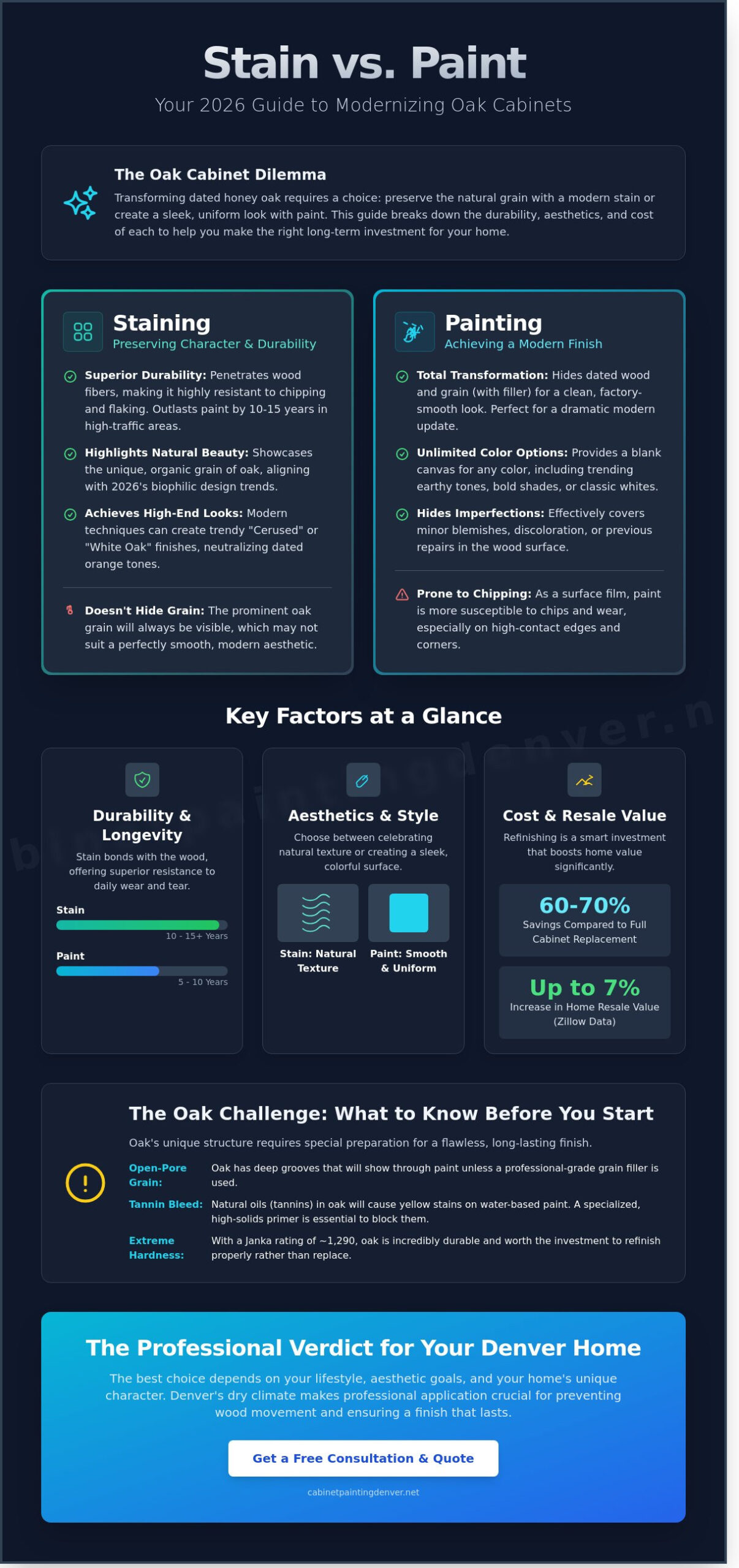
Choosing between finishes requires a look at how your kitchen functions daily. When deciding if is it better to stain or paint oak cabinets, consider that stain penetrates the wood grain while paint creates a thick, opaque shell. Stain offers superior impact resistance. If you drop a heavy pot against a stained door, the wood might dent, but the color remains. Paint provides better surface protection against kitchen grease and food acids, but it can chip if struck by sharp objects.
The financial investment varies significantly between the two methods. When you analyze the cost to paint kitchen cabinets, it is generally more affordable than professional restaining. Restaining oak is labor intensive; it requires stripping the old finish down to the bare wood pores, which can take 30% more man-hours than a standard paint prep.
Timeline is another critical factor for busy households. A professional painting crew can typically finish a standard 25-piece kitchen in 5 to 7 days. Restaining often keeps your kitchen out of commission for 10 to 14 days because of the extensive sanding and the longer cure times required for deep-penetrating oils. In the 2026 real estate market, 74% of home buyers indicate a preference for painted cabinets, as they make the space feel larger and more modern during open houses.
Maintenance and Longevity Over Time
Paint handles frequent wiping with mild detergents effectively, but it’s susceptible to the “hairline effect.” Because oak is a porous hardwood, it expands and contracts with seasonal humidity. This movement causes tiny cracks in the paint film at the joints where the cabinet frame meets the center panel. Stain hides these shifts perfectly. You can expect a professional paint job to look pristine for 8 to 10 years. A high-quality stain job often lasts 15 to 20 years before it shows significant wear around the handles.
Aesthetic Trends in 2026
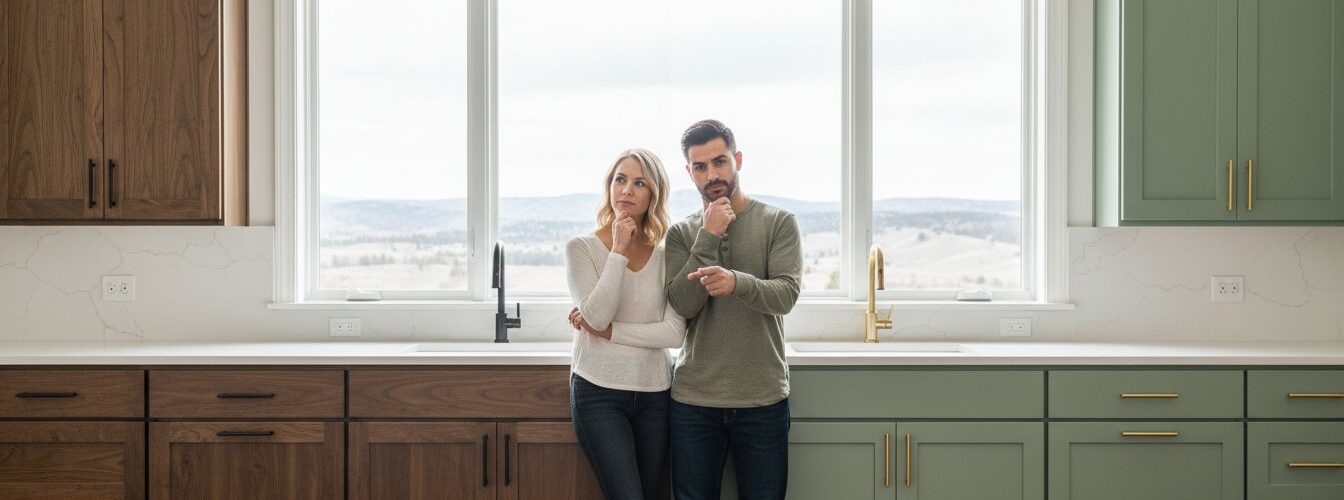
Current design data shows a 45% rise in two-tone kitchen configurations. Many homeowners now use a “Muted Oak” or “Weathered Gray” stain on the kitchen island to ground the room, while using “Greige” or soft white paint on the perimeter wall cabinets. This hybrid approach helps you decide if is it better to stain or paint oak cabinets by giving you the best of both styles. For hardware, pair stained oak with matte black or oil-rubbed bronze to lean into a rustic-modern vibe. Painted surfaces currently pair best with brushed champagne bronze or oversized knurled pulls.
Want to see which finish works best for your Denver home? Schedule a professional color consultation to explore your options.
The Professional Verdict: How to Choose for Your Denver Home
Deciding is it better to stain or paint oak cabinets often comes down to your home’s specific environment. Denver’s semi-arid climate, where afternoon humidity levels average just 33% year-round, creates a unique challenge for natural wood. Oak is a porous material that reacts to these dry conditions by shrinking. If you choose paint, this movement can cause tiny cracks at the joints of the cabinet doors. Staining is more forgiving in this regard because it moves with the wood grain rather than sitting on top of it.
You can use a simple “Eye Test” to make your final choice. Walk through your home and look at your largest pieces of furniture. If you find yourself drawn to the visible textures and organic patterns of wood, you are a “wood person.” Staining will satisfy that preference. If you prefer the crisp, uniform look of a modern kitchen that feels larger and brighter, you are a “color person.” In that case, paint is your best bet. Before you sign any contracts, consult a Cabinet Painting Denver expert to see physical samples of both finishes in your kitchen’s specific lighting.
- Does my kitchen receive heavy, direct sunlight that might cause stain to fade?
- Am I okay with seeing the deep texture of oak grain through a painted finish?
- Does my home have a whole-house humidifier to stabilize wood expansion?
- Is my goal to modernize a dated space or preserve a classic look?
- What is the long-term maintenance level I’m willing to commit to?
Local Considerations for Colorado Homeowners
Denver’s 5,280-foot elevation means your kitchen faces 25% more UV radiation than homes at sea level. This intense sun exposure can yellow low-quality paints or bleach out dark stains within just a few years. It’s vital to find a cabinet painter who uses industrial-grade, UV-resistant coatings. Ensure your contractor uses climate-controlled off-site spraying for doors and drawers. This controlled environment prevents the finish from drying too quickly in Colorado’s thin air, which often leads to a brittle, chalky surface.
Next Steps: Starting Your Transformation
To get an accurate quote, have a professional measure your linear footage and count your door and drawer fronts. Most homeowners spend between 3 and 5 days preparing their kitchen by emptying cabinets and clearing counter space for the crew. When you’re ready to decide if is it better to stain or paint oak cabinets for your specific layout, professional guidance makes the difference. Transform your kitchen today with a professional touch that stands up to the Colorado climate.
Transform Your Denver Kitchen for 2026 and Beyond
Deciding is it better to stain or paint oak cabinets depends on your specific goals for style and long-term durability. Staining celebrates the organic grain patterns that 2026 interior design forecasts highlight as a top trend for warm, textured spaces. If you prefer a sleek, modern look, professional painting hides that heavy grain under a smooth, resilient finish. Denver’s semi-arid climate, which often sees relative humidity levels drop below 15 percent, requires expert handling to prevent wood panels from shrinking or cracking over time.
Our team brings specialized professional spraying equipment to every project, ensuring a factory-smooth result that standard brush methods can’t replicate. We manage the entire multi-stage process, covering everything from intensive surface prep to the final precision re-installation of your doors and hardware. By choosing a local expert who understands Colorado’s unique environmental impact on timber, you ensure your cabinetry remains beautiful for years to come. Don’t settle for a temporary fix when you can have a permanent transformation that adds real value to your home.
Get Your Free Cabinet Refinishing Quote in Denver Today!
Your refreshed kitchen is just a few steps away from becoming the highlight of your home.
Frequently Asked Questions
Is it more expensive to paint or stain oak cabinets?
Painting typically costs more than staining because it requires more labor steps like priming and grain filling. According to 2024 HomeAdvisor data, professional cabinet painting ranges from $1,000 to $7,000, while staining usually falls between $1,500 and $4,000. The extra labor for cleaning and sanding oak’s deep grain often adds 15 percent to the total project time compared to smoother woods.
Will painting my oak cabinets hide the wood grain completely?
Standard painting won’t hide the prominent texture of oak grain on its own. You’ll still see the physical indentations of the wood pores through the finish even after multiple coats of paint. To achieve a 100 percent smooth surface, professionals apply 2 or 3 coats of high-build grain filler before priming. This process levels the surface so the final result looks like factory-finished furniture rather than textured wood.
Do painted oak cabinets chip easily in high-traffic kitchens?
Modern industrial coatings prevent chipping even in kitchens used 3 times daily by large families. When deciding if is it better to stain or paint oak cabinets, consider that paint sits on the surface while stain soaks into the fibers. Using a KCMA-certified finish ensures the paint withstands 24 hours of exposure to substances like vinegar and lemon juice without failing or peeling. Proper prep work accounts for 80 percent of the finish’s durability.
Can I stain over already painted oak cabinets?
You can’t apply stain directly over paint because stain needs to penetrate the raw wood fibers to work. You’ll need to remove 100 percent of the existing paint using chemical strippers or heavy sanding first. This labor-intensive process often takes 40 to 60 hours for a medium-sized kitchen. Most homeowners find it’s more efficient to repaint the existing surfaces or replace the doors entirely if they want a wood look.
What is the best color to paint oak cabinets in 2026?
Trend forecasts for 2026 suggest a shift toward earthy grounding tones, featuring colors like sage green and muted terracotta. Sherwin-Williams and Benjamin Moore reports indicate that 65 percent of homeowners now choose warm neutrals over the stark whites that dominated the last decade. These organic tones complement the natural texture of oak while providing a modern aesthetic that feels cozy rather than clinical.
How long does the professional cabinet refinishing process take?
A professional crew typically finishes a standard 20-piece kitchen in 3 to 5 business days. The first day involves masking the area and cleaning surfaces with a degreaser to remove 100 percent of cooking oils. Days 2 and 3 focus on priming and sanding between coats. By day 5, the final topcoats are cured enough for you to use your drawers and doors again without damaging the finish.
Does staining or painting provide better ROI for home resale?
Painting provides a higher return on investment because it appeals to a broader range of contemporary buyers. Zillow’s 2023 interior design reports show that homes with updated, light-colored kitchens sell for $1,547 more than expected. When homeowners ask is it better to stain or paint oak cabinets for resale, the 80 percent preference for painted finishes among modern buyers makes paint the more profitable choice.
How do I clean and maintain my refinished oak cabinets?
Clean your cabinets using a mixture of 95 percent warm water and 5 percent mild dish soap. Avoid using sponges with abrasive backing or cleaners containing ammonia, as these can degrade the clear coat within 12 months of regular use. Wiping down spills immediately prevents moisture from seeping into the joints. This simple habit prevents 90 percent of finish failures in high-moisture areas like the sink base.